If you’ve ever tasted a classic King Cake, you’ll understand that the hardest part of going gluten-free isn’t letting go of the sprinkles. It’s creating a gluten-free version that is equally soft, festive, and worthy of serving at the Mardi Gras table.
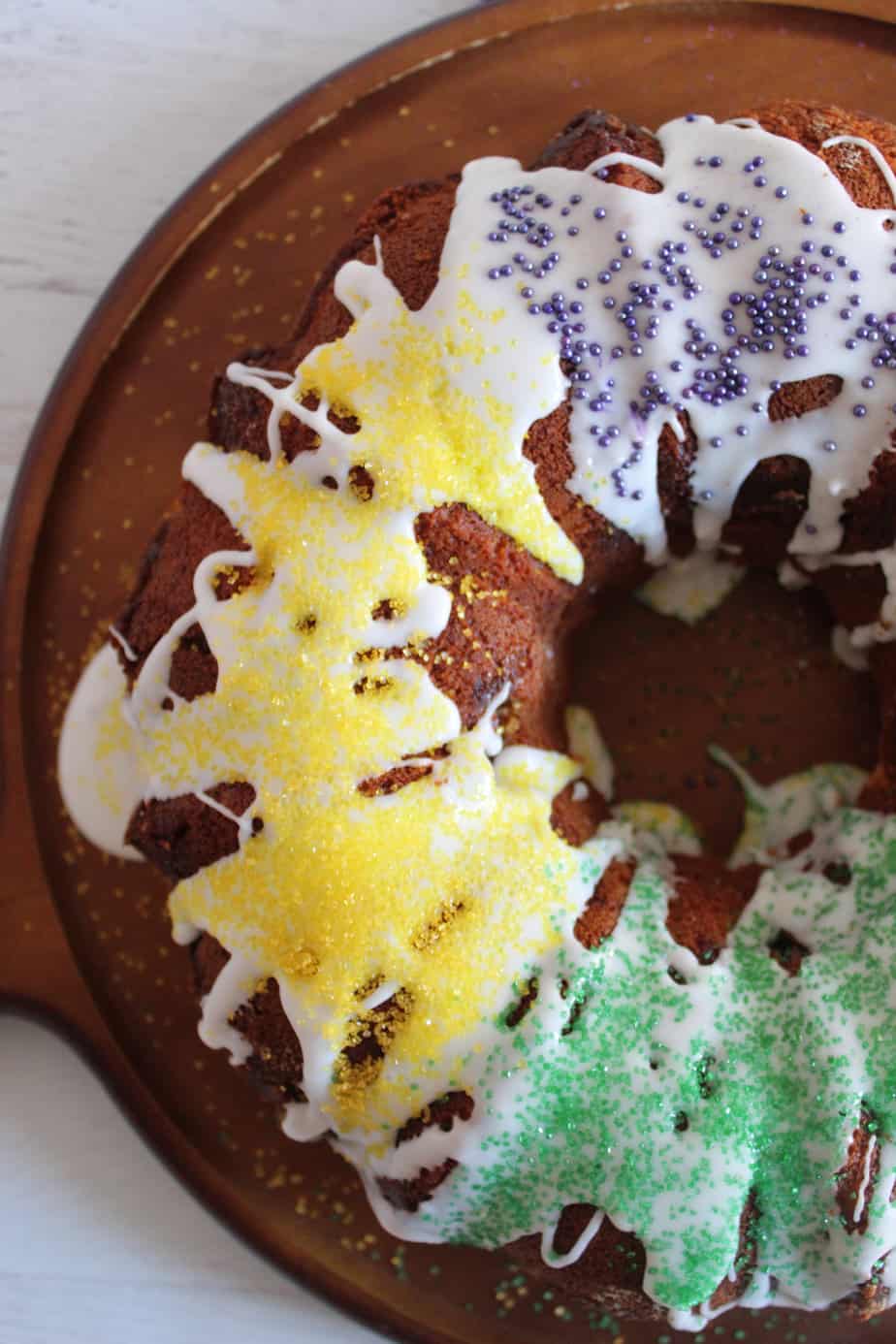
This gluten-free King Cake is made with a tender yeast dough and a cinnamon-and-brown-sugar filling. Instead of shaping the dough into a complicated braided ring, you’ll bake it in a Bundt pan, making the recipe simpler to assemble at home.
Table of Contents
So whether you’re sharing it with people who already love King Cake or making it for your family for the first time, this recipe gives you an easy way to enjoy a gluten-free version of the Mardi Gras classic.
Why You’ll Love This Recipe
This gluten-free King Cake has the familiar flavors of a traditional Mardi Gras cake, with a soft texture and easier assembly.
- Soft and chewy – The gluten-free flour blend provides structure while helping keep the cake from becoming crumbly.
- Warm, familiar flavors – Cinnamon, brown sugar, nutmeg, and vanilla create a classic, sweet, spiced filling.
- Makes enough to share – The recipe yields at least 12 servings, making it a good choice for a gathering.
- Easy to assemble – Instead of shaping the dough into a ring, you layer it directly in a Bundt pan.
- Reasonable prep time – The recipe takes about 30 minutes of active preparation and less than 2 hours from start to finish.
- Classic Mardi Gras finish – A simple glaze and purple, green, and gold sugar give the cake its traditional festive look.
If you enjoy cinnamon-flavored desserts, try our Gluten-Free Cinnamon Rolls Without Yeast for another easy gluten-free treat.
Ingredients and Substitutions Notes
Baking the best gluten-free king cake becomes easier when you fully understand the role of each ingredient. With that in mind, here’s what each one brings to this recipe:

Dough:
- Warm water – Activates and rehydrates the yeast, allowing it to feed on the sugars.
- Granulated sugar – Feeds the yeast, adds sweetness to the cake, and helps with browning. Granulated sweetener, date sugar, or coconut sugar are great swaps.
- Active dry yeast – Allows the dough to rise, creates flavor, and gives a classic sweet-roll-like aroma.
- Gluten-free flour mix – Provides the cake’s structure in place of wheat flour. I wouldn’t recommend swapping this.
- Almond flour – Adds moisture and richness while helping prevent the cake from becoming dry.
- Whey protein – Helps improve the cake’s structure, moisture, and crumb texture.
- Xanthan gum – Helps bind the ingredients together and gives the dough enough elasticity to hold its shape.
- Salt – Balances the cake’s sweetness and boosts structural strength.
- Eggs – Improve protein structure, emulsify fats, and bring moisture and lift to the cake. If you want alternatives, try these egg substitutes.
- Vegan butter – Creates a rich flavor in this cake while contributing to moisture and softness. Regular butter or coconut oil also works really well in this recipe.
Filling:
- Brown sugar – Adds sweetness and the moisture needed through molasses to create a gooey mixture. You can use coconut sugar instead.
- Cinnamon – Supplies the spice that characterizes the filling, while infusing warmth and fragrance.
- Nutmeg – Adds warmth, sweetness, and a hint of nutty flavor while balancing the sugar’s sweetness.
- Vanilla extract – Enhances the sweetness of the sugar, cinnamon, and nutmeg while adding a warm, bakery-style scent that complements these spices.
Icing:
- Powdered sugar – Provides a sweet base for the glaze and dissolves easily to create a smooth texture.
- Almond milk – Thins the glaze to a drizzle consistency while adding richness and a light, nutty taste. You can swap this with a different plant milk or dairy milk.
- Green, yellow, and purple colored sugars – Give the cake a festive finish and a slight crunch. You can also use sprinkles in these colors or edible glitter for sparkle.
If you have some of these ingredients on hand, try our Gluten-Free Cinnamon Rolls Recipe for another gluten-free baking option.
Baking for Someone With Celiac Disease?
If you’re making this King Cake for someone with celiac disease, double-check that all packaged ingredients are labeled gluten-free, including the flour blend, yeast, extracts, and colored decorating sugar. Also use clean bowls, utensils, measuring tools, and work surfaces to help prevent cross-contact with gluten-containing ingredients.
Pay especially close attention to ingredients that may be shared with wheat products during processing or stored in a kitchen where regular flour is used. When in doubt, check the manufacturer’s label before using an ingredient.
RECIPE CARD: Gluten-Free King Cake (PRINTABLE)
Ingredients
Cake:
- 1 cup water, warmed to 110F
- 55 grams granulated sugar, about ¼ cup
- 2¼ teaspoons active dry yeast
- 293 grams gluten-free flour mix, about 2 ¼ cups
- 107 grams almond flour, about 1 cup
- 21 grams whey protein, about 1/4 cup
- ½ teaspoon xanthan gum
- ¼ teaspoon salt
- 2 eggs
- 4 Tablespoons vegan butter, melted
Filling:
- 150 grams brown sugar, about ¾ cup
- 1 teaspoon cinnamon
- ¼ teaspoon nutmeg
- ½ teaspoon pure vanilla extract
Icing:
- 110 grams powdered sugar, about 1 cup
- 1 Tablespoon almond milk, may need 1 more Tablespoon
- green, yellow, and purple colored sugars
Instructions
- In a measuring cup, mix the water and sugar. Add in the yeast and stir to combine. Set aside to proof for 5 minutes.
- In a medium bowl, whisk together the flour mix, almond flour, whey protein, xanthan gum, and salt.
- In the bowl of a stand mixer, add the proofed yeast, eggs, and melted butter. Add half of the flour mixture and mix on low speed for 30 seconds. Stop the machine and scrape down the sides.
- Add the remaining flour mixture and mix again on low speed for 15 seconds. Scrape down the sides of the bowl.
- Turn the mixer speed to medium and mix for 4 minutes.
- While the dough mixes, prepare the filling by mixing brown sugar, cinnamon, nutmeg, and vanilla in a small bowl. Set aside.
- Prepare a 9-10" Bundt cake pan by spraying well with cooking spray.
- Pour half of the cake dough into the pan.
- Spread the filling evenly over the cake dough.
- Pour the remaining dough onto the filling, covering the entire surface. Use a spatula to cover it fully if needed.
- Set the cake aside to rise for 35 minutes or until the cake dough rises by half. It will not double.
- Preheat the oven to 375 F.
- Bake cake for 30-35 minutes or until a toothpick inserted into the cake comes out clean.
- Let cool in the Bundt pan on a wire rack for 15 minutes.
- Place a serving plate on top of the pan and, in one motion, turn the cake pan upside down to release the cake onto the plate.
- Let cool for 1 hour or until completely cooled.
- In a small bowl, mix powdered sugar and almond milk, adding an extra Tablespoon of milk if needed.
- Drizzle over the cake. Sprinkle with colored sugars if desired.
Notes
- Use a gluten “bread” or high‑protein all‑purpose blend for better chew and oven spring.
- Use a digital scale to measure the dry ingredients.
- Use active dry yeast. It lets you proof the yeast in warm liquid first to confirm its activity.
- Mix the dough for at least four minutes to combine all the ingredients.
- Scrape the bowl well so no dry pockets remain.
- Let the dough rise for 35 minutes, or until it rises by half.
- Wait for the cake to cool before icing to help it stay fresh longer.
- Apply colored sugars immediately while the glaze is wet so they adhere evenly.
- It is 190–200°F in the center.
- The top and edges are an even golden brown.
- A toothpick inserted into the thickest part comes out clean.
- It springs back slightly when gently pressed.
- It is a set, slightly caramelized ribbon rather than a wet, syrupy layer.
- It is thick enough to coat the back of a spoon.
- Room temperature storage: Store leftovers at room temperature in a sealed container or tightly wrapped for about 1 to 3 days.
- Refrigeration: This can make the cake feel firmer or drier. But if your kitchen is very warm, wrap the cake tightly and refrigerate it in an airtight container for 4 to 5 days.
- Freezing: Cool completely, wrap tightly in plastic wrap and, add a layer of aluminum foil. Then, place it in a freezer-safe container and store for up to 1 month.
- Thawing: To thaw frozen cakes, leave them in the refrigerator overnight, then bring to room temperature before serving. For sliced cakes, thaw them at room temperature for several hours.
Nutrition
Did you make and love this recipe? Give it your review and rating below! And make sure to follow me on Instagram, Pinterest, and Facebook , too!
How to Make Gluten-Free King Cake
The dough will be softer and stickier than traditional wheat-based King Cake dough, so you won’t need to knead or shape it. Instead, you’ll layer the dough and filling directly in a Bundt pan.
Equipment You’ll Need
You’ll need these basic baking tools:
- Bundt pan
- Digital scale
- Mixing bowls
- Stand mixer
- Rubber spatula
- Wire rack
- Instant-read thermometer
1) Activate the yeast
In a measuring cup, mix the warm water and sugar. Add in the yeast and stir to combine. Then set aside to proof for 5 minutes, until foamy.
2) Mix the dry ingredients
In a medium bowl, whisk together the flour mix, almond flour, whey protein, xanthan gum, and salt until well combined. Whisking breaks up any lumps and distributes the flours and starches evenly.
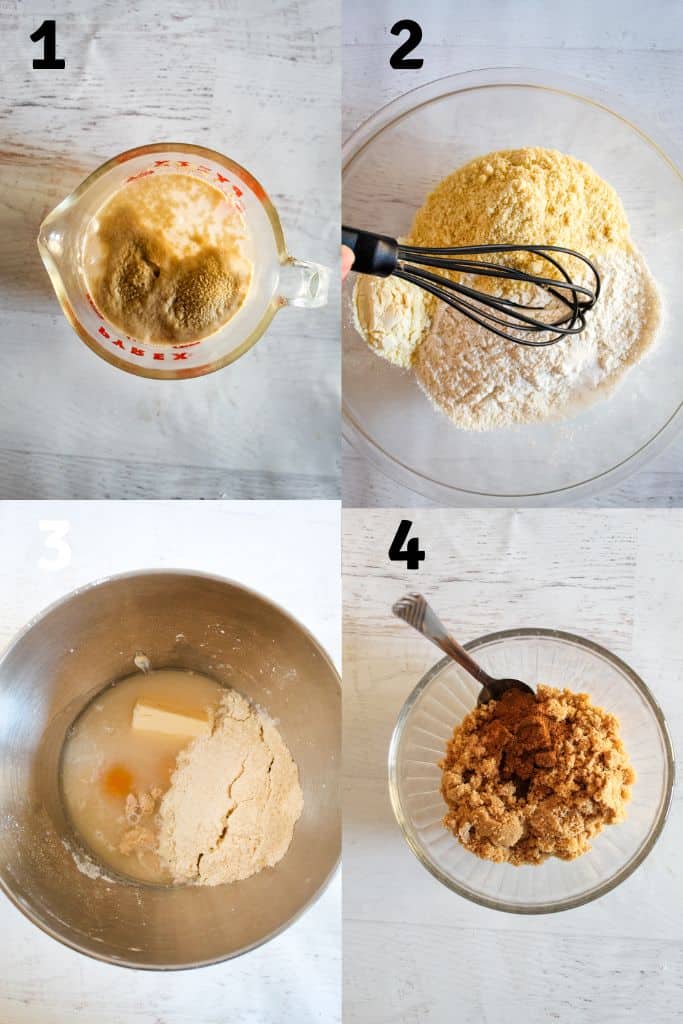
3) Mix the wet ingredients
In the bowl of a stand mixer, add the proofed yeast mixture, eggs, and melted butter. Then add half of the flour mixture and mix on low speed for 30 seconds. Stop the machine and scrape down the sides.
4) Mix the dough
Add the remaining flour mixture and mix again on low speed for 15 seconds. Scrape down the sides of the bowl. Then turn the mixer speed to medium and mix for 4 minutes. This gluten-free King Cake dough is much softer and stickier than traditional wheat-based sweet-roll dough, so don’t expect a kneadable dough.
5) Make the filling
While the dough is mixing, prepare the filling. Combine the brown sugar, cinnamon, nutmeg, and vanilla in a small bowl until it is a spreadable paste. Then set aside.
6) Prep the pan
Spray the 9-10″ Bundt cake pan generously with cooking spray and dust with a little gluten‑free flour.
7) Fill the pan
Pour half the dough into the pan and spread the filling evenly on top. Then pour the rest of the dough on top and use a spatula to smooth it evenly over the filling.

8) Let the dough rise
Set the cake aside to rise for 35 minutes or until the cake dough rises by half. It will not double.
9) Preheat the oven
Preheat the oven to 375°F and place an oven thermometer inside to verify the temperature.
10) Bake the cake
After the cake has risen and the oven has preheated, bake the cake for 30-35 minutes, until golden brown or a toothpick inserted into the cake comes out clean.
11) Cool the cake
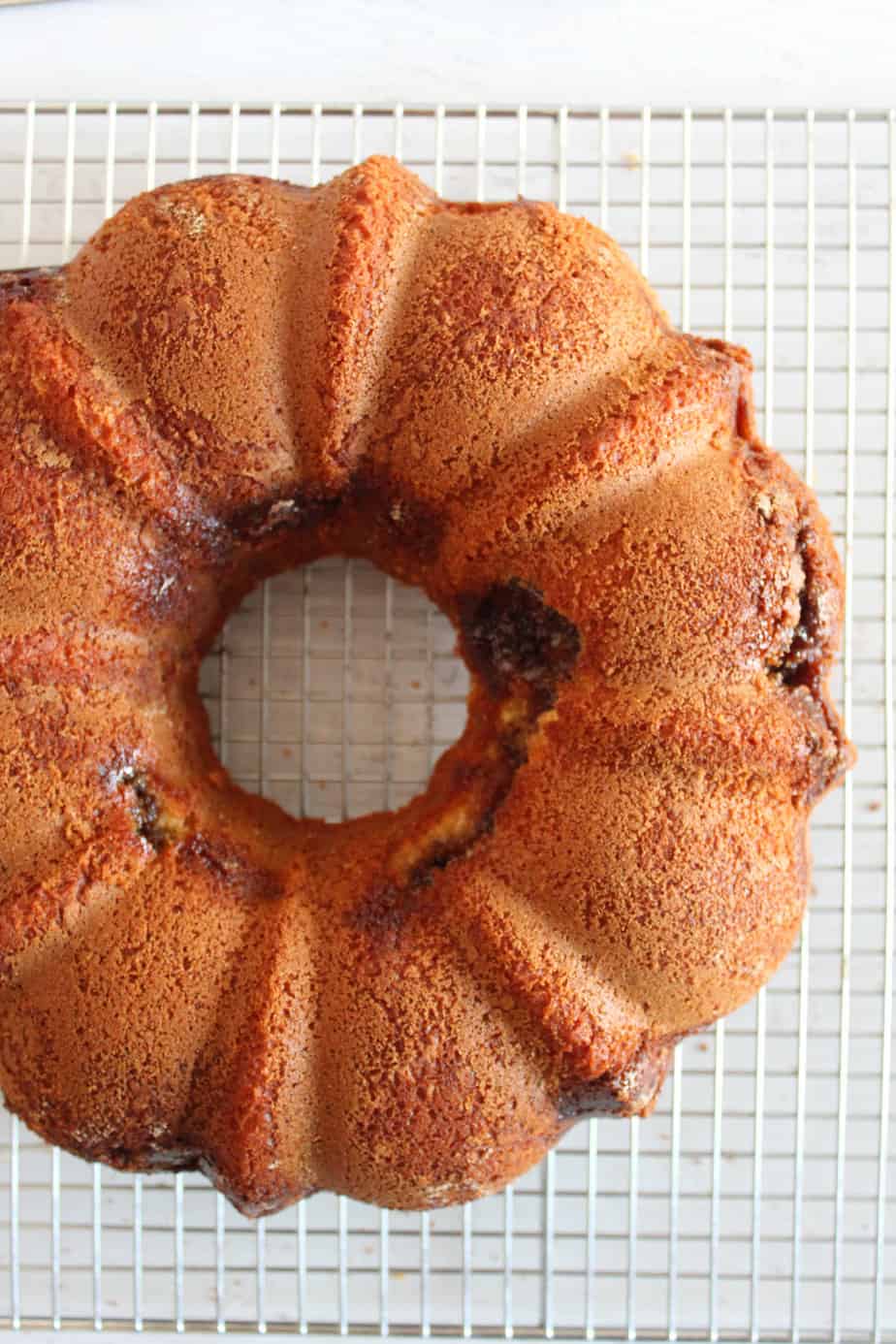
Let the cake cool in the pan for 15 minutes, then place a large serving plate on top of the pan and turn the cake pan upside down to release the cake onto the plate. Let it cool for an hour or until completely cooled.
12) Prepare the icing
Whisk powdered sugar and enough milk in a small bowl to make a thick but pourable glaze.
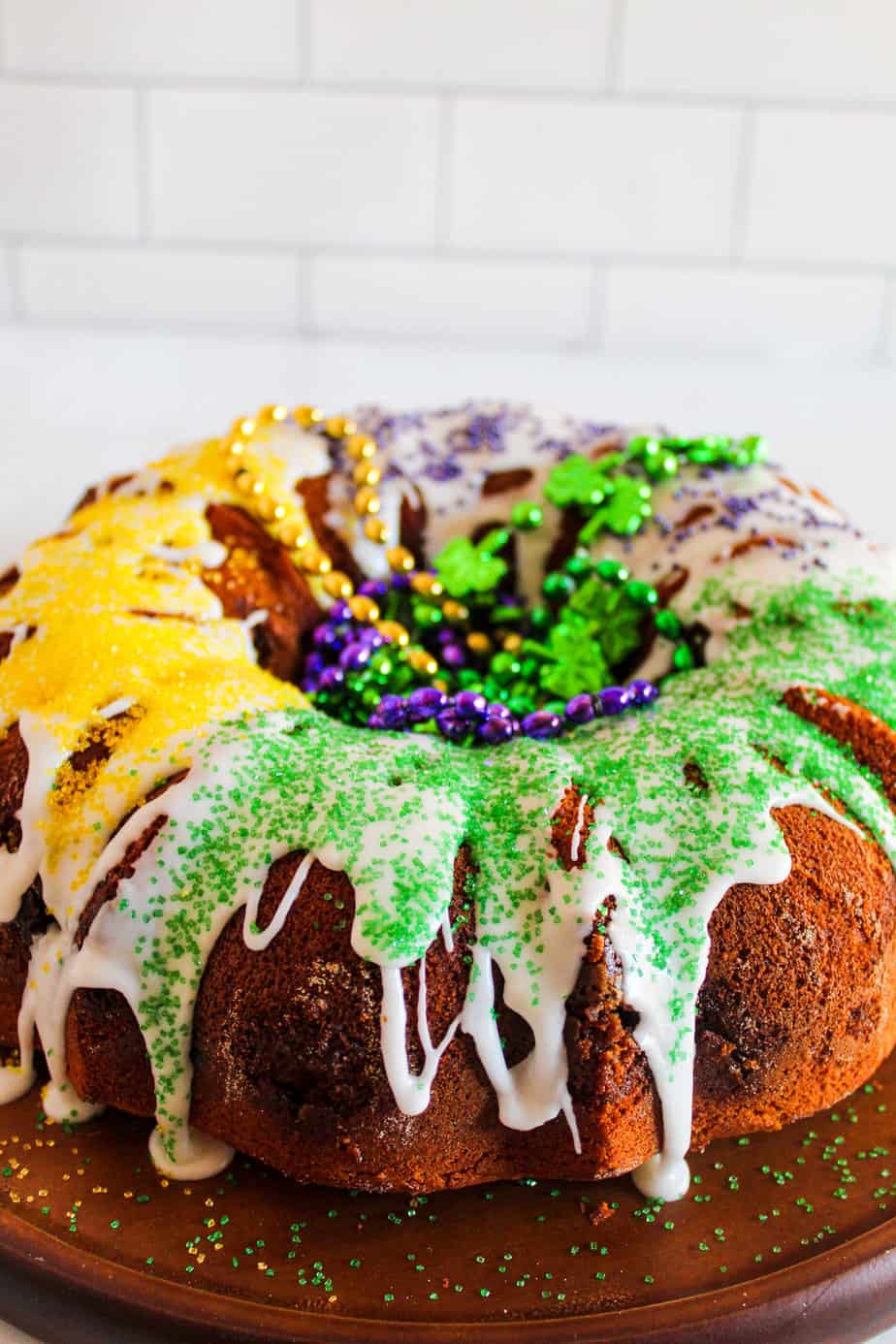
13) Glaze and decorate
Drizzle the icing over the cooled cake, then immediately sprinkle it with the green, yellow, and purple sugars while the glaze is still wet so they stick. Serve and enjoy the cake.
How Do I Know When King Cake Is Done?
Because gluten-free yeast dough can look fully baked before the center is actually done, don’t rely on color alone. Your King Cake is ready when the edges are golden brown, the top springs back slightly when gently pressed, and a toothpick inserted into the thickest part comes out clean or with just a few moist crumbs.
For the most reliable check, use an instant-read thermometer. The center of the cake should register 190°F–200°F (88°C–93°C). If the top is browning too quickly but the center hasn’t reached temperature, loosely cover the cake with foil and continue baking.
Avoid overbaking once it reaches this range. Gluten-free baked goods can dry out quickly, and pulling the cake at the right temperature helps keep the crumb soft and tender.
Tips for Success
Keep these tips in mind for a soft, well-risen gluten-free King Cake:
- Use a high-protein gluten-free flour blend. A gluten-free bread flour or high-protein all-purpose blend can provide better structure and chew.
- Measure the ingredients by weight. Gluten-free baking is sensitive to changes in flour quantity, so use a digital scale for the most consistent results.
- Proof the yeast first. Using active dry yeast and letting it become foamy before adding it to the dough helps confirm it’s active.
- Mix the dough for the full four minutes. Since gluten-free dough doesn’t require kneading, thorough mixing helps distribute the ingredients and hydrate the flour properly.
- Scrape the bowl well. Make sure no dry ingredients remain stuck to the sides or bottom of the bowl, as uneven hydration can affect the texture.
- Let the cake cool completely before icing. Adding the glaze while the cake is still warm can cause it to melt and run off.
Using these tips, along with others in this guide, can help you bake a gluten-free king cake that comes out buttery and shines at any Mardi Gras occasion.
Troubleshooting Tips
If your gluten-free King Cake doesn’t turn out as expected, these common problems can help you identify what went wrong and how to fix it.
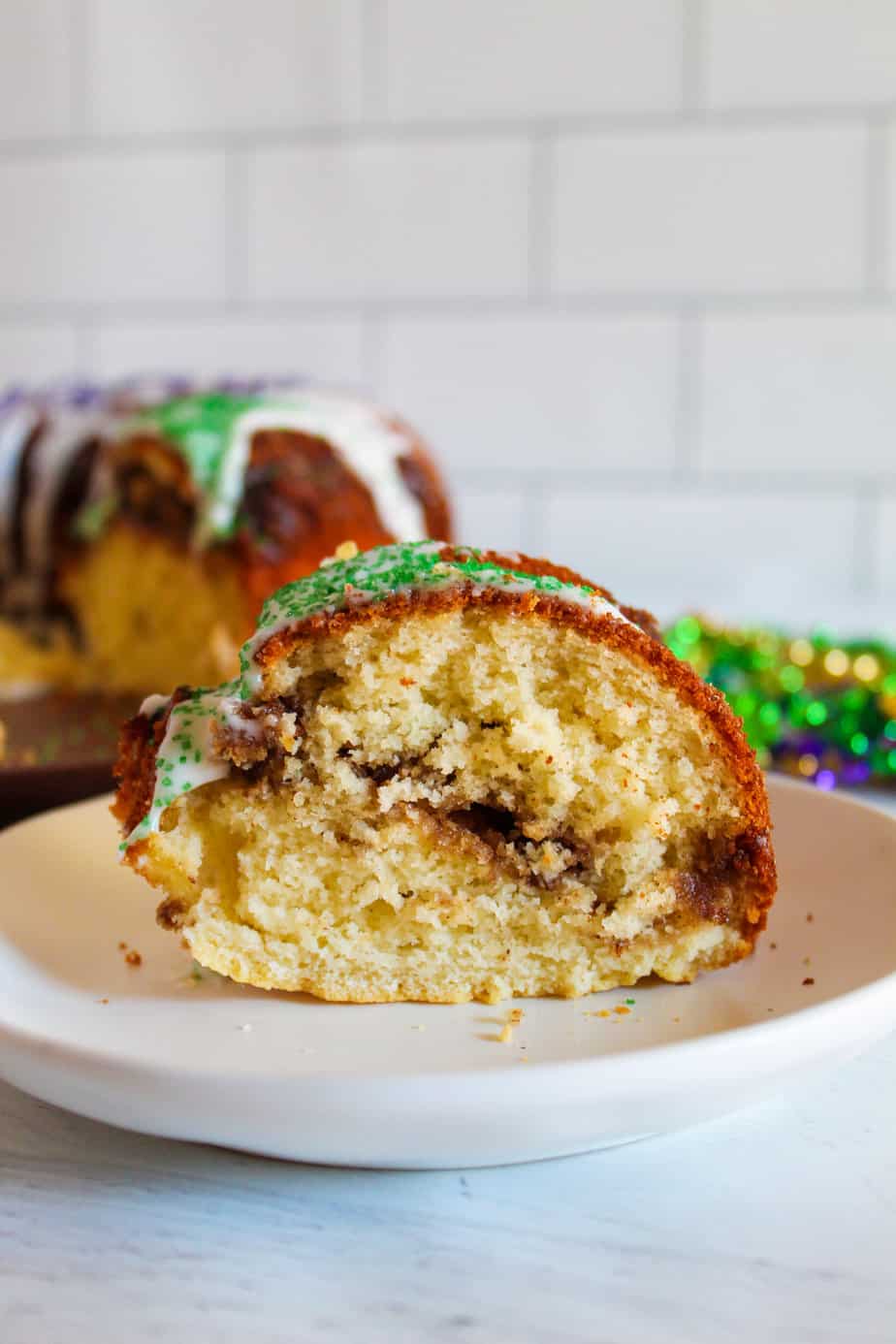
- Dense or heavy crumb: This can happen if the dough doesn’t have enough liquid, the yeast isn’t active, or the dough hasn’t had enough time to rise. Check that the yeast becomes foamy during proofing, measure the ingredients carefully, and allow the dough to rise as directed.
- Gummy or under-set center: An underbaked cake or excess liquid can leave the center gummy. Bake for the full 30–35 minutes, or until the cake is golden brown and a toothpick inserted into the center comes out clean. Allow the cake to cool completely before slicing.
- Dry or crumbly slices: Too little liquid, overbaking, or an unsuitable gluten-free flour blend can result in a dry or crumbly cake. Measure the flour by weight and avoid overbaking.
Most problems with this cake can be traced to hydration, yeast activity, proofing, or baking time. Paying attention to the dough’s consistency and following the recommended measurements and timings can help you get a better result.
4 Filling Ideas for Gluten-Free King Cake
The classic cinnamon filling is easy to customize. Try one of these filling ideas for a different flavor:
- Cream cheese: Combine softened cream cheese with powdered sugar and vanilla until smooth. Spread or pipe the mixture over the dough before adding the remaining dough.
- Pecan praline: Combine butter, brown sugar, and chopped pecans to make a rich praline-style filling. Spread it evenly over the dough, keeping the layer relatively thin to prevent excess moisture.
- Cinnamon cream cheese: Combine softened cream cheese with powdered sugar, cinnamon, and vanilla for a filling that adds extra creaminess and warm spice.
- Fruit-swirl cream cheese: Prepare the cream cheese filling, then add small spoonfuls of berry jam and gently swirl them together before adding the remaining dough.
Storage and Freezing Tips
Proper storage helps maintain the cake’s texture and flavor after baking.
- Room-temperature storage: Store leftover cake in a sealed container or wrap it tightly and keep it at room temperature for 1 to 3 days.
- Refrigeration: Refrigeration can make the cake firmer or drier. If your kitchen is very warm, wrap the cake tightly and refrigerate it in an airtight container for 4 to 5 days.
- Freezing: Let the cake cool completely, then wrap it tightly in plastic wrap, followed by aluminum foil. Place it in a freezer-safe container or zip-top bag and freeze for up to 1 month.
- Thawing: Thaw a whole cake in the refrigerator overnight, then bring it to room temperature before serving. For individual slices, thaw them at room temperature for several hours.
Frequently Asked Questions (FAQs)
Here are the questions regarding baking this gluten-free king cake. If you can’t find yours, drop it in the comments.
What is a king cake?
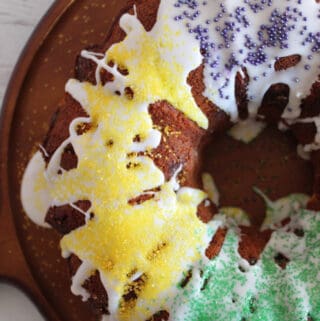
A King Cake is a New Orleans staple. This gluten-free version is a pastry-like cake baked in a Bundt pan, glazed with sweet icing, and topped with yellow, green, and purple sprinkles. It’s a traditional Mardi Gras dessert that’s eaten annually between January and Ash Wednesday. The cake gets its name from the story of the 3 kings bringing gifts to the birth of Jesus.
Why is there a plastic baby inside?
A small figurine, often a plastic baby, is traditionally hidden in the cake after baking to represent baby Jesus. The person who finds it is often expected to host the next gathering or bring the next King Cake.
Can I make a King Cake ahead of time?
Absolutely. To save some time, you can bake the cake and freeze it for up to 1 month, then thaw, glaze, and decorate it when you want to serve it.
Why did my cake sink after baking?
The cake may have been overproofed or underbaked in the center. Try reducing the proofing time slightly and making sure the cake is fully baked before removing it from the oven. If the dough was unusually soft, check your measurements and liquid quantity the next time you make it.
What do the colors on a King Cake mean?
The traditional King Cake colors have specific meanings: purple represents justice, green represents faith, and gold represents power.
More Gluten-Free Recipes You Can Try
If you’re looking for more gluten-free recipes for different occasions, try these:
- Traditional Gluten-Free Easter Bread for a soft, tender, lightly sweet Easter bread that braids beautifully and holds those colorful eggs just like the traditional version.
- The Best Gluten-Free Birthday Cake Recipe for a soft, moist cake topped with a rich dairy-free chocolate buttercream frosting perfect for birthdays and parties.
- Gluten-Free Yule Log Recipe for a tender chocolate cake filled with the creamiest cream cheese frosting.
- Gluten-Free Mexican Wedding Cookies for cookies that are rich, buttery, delicately sweet, and finished with a soft coating of powdered sugar.
- 15 Gluten-Free Dairy-Free Christmas Cookies for the ultimate Christmas cookie collection.
Whether you’re looking for an indulgent cake to celebrate your special day or a treat bursting with the holiday spirit, these recipes bring several occasions to life in sweet and delicious ways.
Share Your Experience With Us
If you tried this recipe, I’d love to hear about your baking experience. Did you try a different filling? Leave a comment below and tell me which one you used: cinnamon, cream cheese, pecan praline, or fruit.
Your feedback can help other readers choose their favorite version.