Have you ever started mixing a batch of cookies, muffins, or pancakes only to discover you’re completely out of baking soda? It’s one of the most common baking emergencies, and if you’ve found yourself searching for a baking soda substitute at the last minute, you’re definitely not alone.
The good news is that running out of baking soda doesn’t necessarily mean your recipe is ruined or that you need to make yet another run to the grocery store. In many cases, there are several effective substitutes that can help your baked goods rise properly and maintain the texture you’re expecting. Depending on what you’re making, you may already have a suitable replacement sitting in your pantry or refrigerator.
Table of Contents
Before choosing a substitute, however, it’s helpful to understand why baking soda is used in baking recipes in the first place. Because baking soda plays such an important role in texture, rise, and even flavor, replacing it isn’t always as simple as swapping in another ingredient at a one-to-one ratio. That’s why knowing the strengths and limitations of each baking soda replacement can make the difference between a successful bake and a disappointing one.
Whether you’re baking cookies, cakes, muffins, or pancakes, let’s start by taking a closer look at what baking soda actually does and why it’s such an important ingredient in baking.
What is Baking Soda?
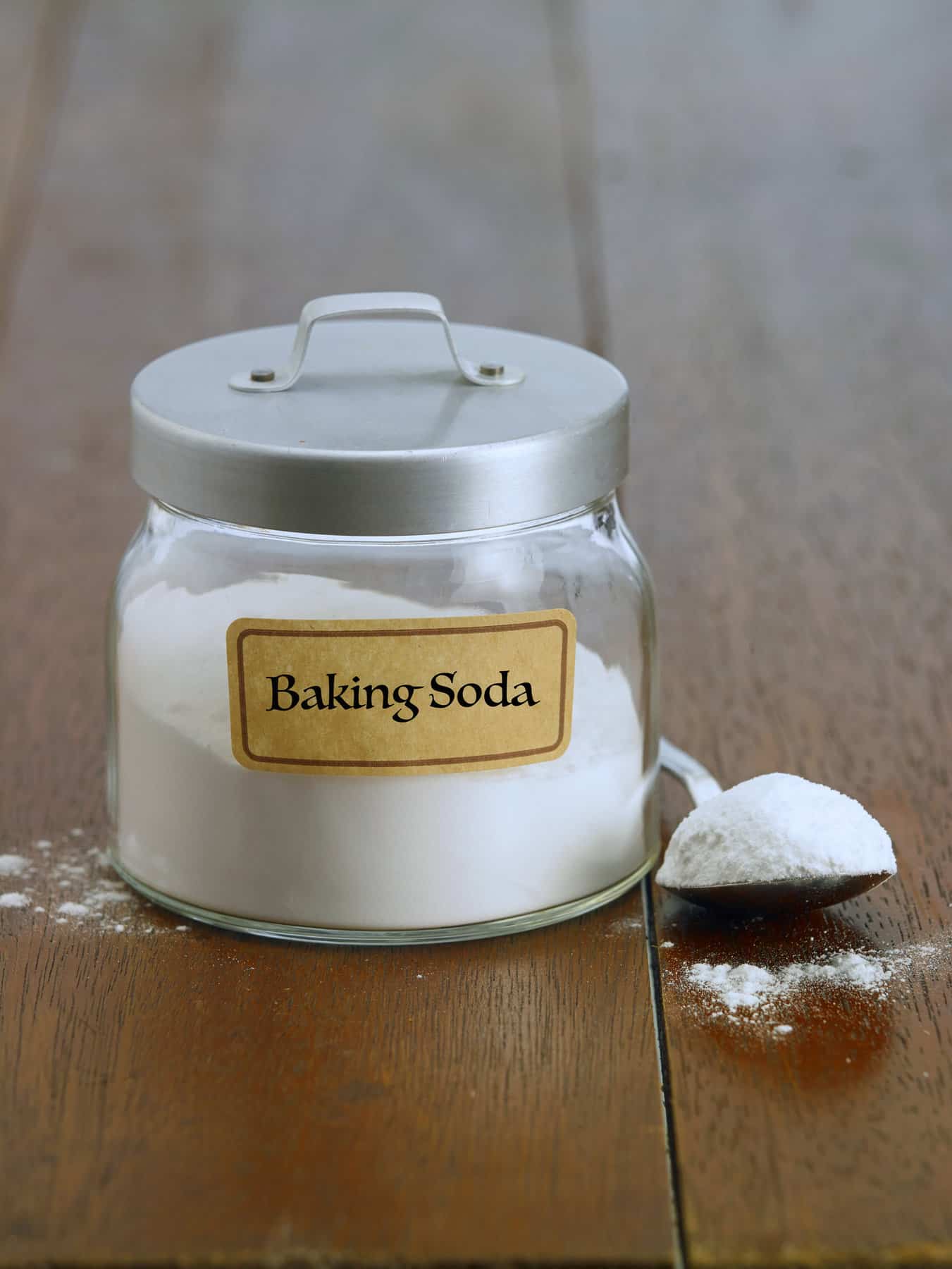
Baking soda, also known as sodium bicarbonate, is a naturally occurring chemical compound that has been used in cooking and baking for generations. It appears as a fine white powder and is one of the most common leavening agents in home kitchens, used to make your favorite treats like chocolate chip cookies, peanut butter cookies, Irish soda bread, and pumpkin muffins! While it may seem like a simple ingredient, baking soda plays a critical role in helping many baked goods achieve the proper texture, rise, and appearance.
Unlike baking powder, baking soda is a pure alkaline substance. This means it requires an acidic ingredient to activate its leavening properties. When baking soda comes into contact with acids such as buttermilk, yogurt, sour cream, lemon juice, vinegar, molasses, or brown sugar, a chemical reaction occurs. This reaction produces carbon dioxide gas, which creates tiny bubbles throughout the batter or dough.
As these bubbles expand during baking, they help cakes, muffins, quick breads, and cookies become lighter and more tender. Without a leavening agent like baking soda, many baked goods would turn out dense, flat, and heavy.
Outside of baking, baking soda is also known for its versatility. Many people use it as a household cleaner, deodorizer, or even as a gentle abrasive for removing stains. However, in baking, its primary purpose is to help recipes rise and develop the texture bakers expect.
Understanding what baking soda is and how it works is the first step toward choosing an effective substitute. Since it relies on acid to activate, the best replacement often depends on the other ingredients already present in your recipe.
What Does Baking Soda Do in A Recipe?
Baking soda may be used in small amounts, but it has a significant impact on the success of many recipes. Its primary job is to act as a leavening agent, helping baked goods rise by producing carbon dioxide gas when combined with acidic ingredients and moisture.
As soon as baking soda reacts with an acid, tiny bubbles begin forming throughout the batter or dough. These bubbles become trapped in the mixture and expand as the mixture heats in the oven. The result is a lighter, softer texture that would be difficult to achieve without a leavening agent.
For example, imagine making a batch of muffins without baking soda. Instead of rising into soft, fluffy domes, they would likely remain dense and compact. The same principle applies to pancakes, quick breads, cakes, and certain cookie recipes.
Baking soda can also affect texture. When used for cookies, it helps create a chewier texture by allowing the dough to spread more during baking. In cakes and muffins, it contributes to a tender crumb. And in pancakes and waffles, it helps produce a lighter, airier consistency.
Flavor is another area where baking soda plays an important role. When used in the correct amount, it neutralizes some of the acidity in a recipe, helping create a balanced taste. However, too much baking soda can leave behind a metallic or soapy flavor, which is why accurate measurements are important.
Whether you’re making cookies, cakes, muffins, or quick breads, baking soda works behind the scenes to improve rise, texture, color, and flavor. That’s why finding the right substitute is so important when you’re out of this essential ingredient.
What Is the Difference Between Baking Soda and Baking Powder?
Although baking soda and baking powder are both leavening agents that help baked goods rise, they are not entirely interchangeable. Understanding the differences between them can help you make better substitutions and achieve more consistent baking results.
The main difference is that baking soda is an ingredient in baking powder. While baking soda is a single ingredient, baking powder is a complete leavening system made from baking soda, cream of tartar, and salt. Since baking powder already contains an acid (cream of tartar), it can create lift even in recipes that do not contain acidic ingredients. Recipes without sufficient acidic ingredients typically rely more on baking powder.
You may also notice that some recipes call for both baking soda and baking powder. This isn’t a mistake, so let’s get into that next.
Quick Reference Substitution Ratios
Here are some helpful references when you’re in a pinch. Along with the conversion chart below, you’ll be on your way to finding the perfect substitute for your recipe.
- Baking Powder: Use 3 teaspoons for every 1 teaspoon of baking soda.
- Baker’s Ammonia: Replace baking soda using a 1:1 ratio.
- Potassium Bicarbonate: Replace baking soda using a 1:1 ratio.
- Egg Whites: Use 2–3 whipped egg whites to provide lift and structure.
- Club Soda: Substitute some or all of the liquid called for in the recipe.
- Self-Rising Flour: Replace the all-purpose flour and baking soda in the recipe with self-rising flour.
Why Do Some Recipes Call for Both Baking Powder and Baking Soda?
On its own, baking soda requires an acid in the recipe to activate its leavening power. This could be sour cream, buttermilk, or even chocolate or brown sugar! However, it will only react with that one ingredient type. This may not be enough lift to give you the rise you’re looking for in the final product.
In many cases, baking soda is included to neutralize acidity and contribute flavor and browning, while baking powder provides additional leavening power to ensure the baked good rises properly.
Plus, if you add too much baking soda without enough acid, your fluffy cakes will taste bitter. That’s why many recipes call for additional baking powder. Since baking powder is an all-in-one leavening agent, it will trigger a chemical reaction even if your recipe contains no acids. When paired together, baking powder and baking soda will give you the fluffiest cakes and muffins possible. It’s a very important ingredient!
6 Best Baking Soda Substitutes
The good news is that even if you’re out of this key ingredient, you don’t have to stop baking! There are some great baking soda alternatives that can help you in a pinch.
1. Baking Powder
Since baking powder already contains baking soda, and you likely already have some on hand, it is the most convenient and effective substitute.
To use baking powder instead of soda, you’ll need 3 times as much powder. For example, if you need 1/2 tsp of baking soda, you will need 1 1/2 tsp of baking powder. You can use this swap in any recipe, including cakes, muffins, and quick bread recipes.
Note: If you are a gluten-free baker, be sure to double-check that the baking powder is gluten-free, as not all brands are!
2. Eggs
Another way to get that light, fluffy texture is by using a classic leavener: whipped egg whites. This is how many sponge cakes are raised. It will help, but there’s a little math to use this baking soda substitute.
First, you’ll need to use 2-3 egg whites per 1 teaspoon of baking soda in your recipe. You will also need to remove the same volume of eggs from the wet ingredients. So, measure the egg whites and remove that extra liquid from the milk or other liquid in the original recipe. Then, whip the egg whites to stiff peaks and carefully fold them into your batter or dough right at the end.
This method is best for cakes and pancakes or for recipes that call for both baking soda and baking powder.
Here’s a great short video to show the technique for folding whipped egg whites into a batter.
3. Baker’s Ammonia
Ammonium bicarbonate, or baker’s ammonia, is a great baking soda substitute, but it has some limitations. If you’ve ever smelled ammonia before, it has a really strong odor. When you dilute baker’s ammonia in recipes, that smell is released. It bakes off in small batches like cookie recipes, but it’s not recommended for larger bakes like cakes.
It is a 1:1 substitute, though, so you’ll need precisely the same amount of baking soda as your recipe calls for.
4. Potassium Bicarbonate
Although potassium bicarbonate is not exactly a common ingredient, you may have it on hand to use as an antacid or potassium supplement. This is very similar to baking soda and can be used interchangeably with it in baked goods. However, you will need to add a bit of salt to support the leavening process. A good rule of thumb is to add 1/4 to 1/3 tsp of salt for every teaspoon of potassium bicarbonate you use.
5. Club Soda
If you don’t have eggs or any chemical leaveners on hand, try club soda. It is already full of carbon dioxide bubbles, which can lend an airy texture to your recipe. This only works for recipes with liquid ingredients, because you need to replace 1/4 cup of that liquid with club soda. Keep in mind, it will not produce a reaction in the oven, unlike baking soda or powder, so it’s important to get your dish in the oven before the bubbles pop!
6. Self-Rising Flour
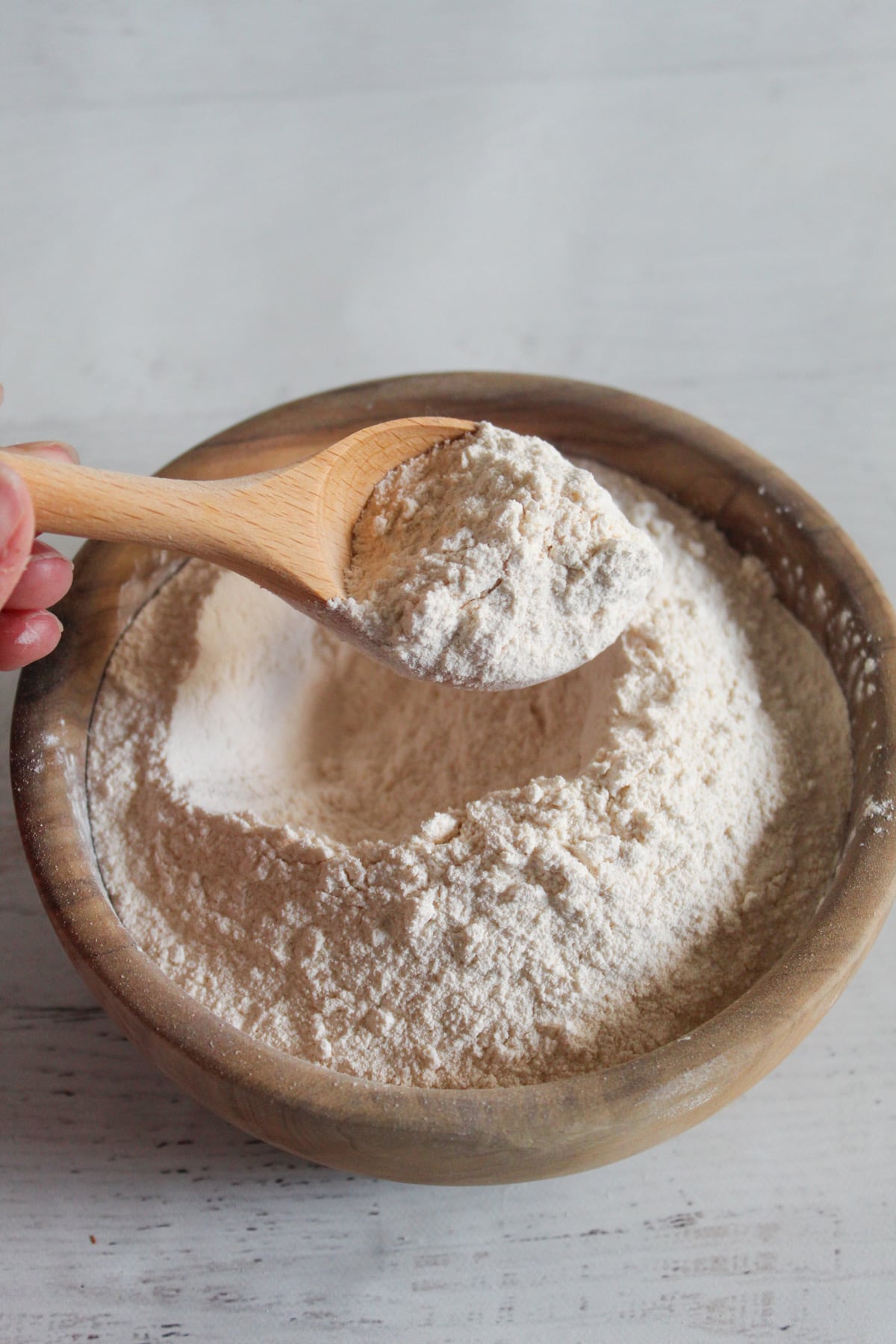
While this flour is not as commonly used in the US as in other countries, if you have self-rising flour on hand, use that! Self-rising flour already contains baking soda, so it’s a perfect substitute. You typically just replace the number of cups of flour in your recipe with the same amount of self-rising flour. It’s that simple!
Baking Soda Substitute Conversion Chart
If you’re out of baking soda, use this conversion chart to find the best replacement for your recipe. Be aware that some substitutes work better in certain baked goods than others, and a few may slightly affect texture or flavor.
| Baking Soda Needed | Substitute | Amount to Use | Best For |
|---|---|---|---|
| 1 teaspoon | Baking Powder | 3 teaspoons | Cakes, muffins, cookies, quick breads |
| 1 teaspoon | Egg Whites | 2-3 whipped egg whites | Cakes, pancakes, waffles |
| 1 teaspoon | Baker’s Ammonia | 1 teaspoon | Thin, crisp cookies and crackers |
| 1 teaspoon | Potassium Bicarbonate | 1 teaspoon | Most baked goods, low-sodium baking |
| 1 teaspoon | Club Soda | Replace part or all liquid in recipe | Pancakes, waffles, muffins |
| 1 teaspoon | Self-Rising Flour | Replace flour and omit baking soda | Biscuits, quick breads, muffins |
Baking Soda Substitutes FAQs
For more questions or comments regarding baking soda substitutes, write to us in the comments below!
Can You Leave Out Baking Soda Entirely?
In some recipes, you can leave out baking soda, but the results may differ. Since baking soda helps baked goods rise and contributes to texture and browning, leaving it out can lead to denser cakes, flatter cookies, and flatter muffins. If possible, it’s usually best to use a suitable substitute rather than leaving it out altogether.
Which Baking Soda Substitute Works Best?
If you have baking powder available, it is usually the best and most reliable substitute for baking soda. Because baking powder already contains both an acid and a base, it can provide the leavening power needed for most recipes without requiring additional adjustments.
For cookies, baking powder and baker’s ammonia generally produce the best results. In cakes and muffins, baking powder is usually the preferred choice because it creates a light, tender crumb. With recipes for pancakes and waffles, whipped egg whites or club soda can provide excellent lift while maintaining a fluffy texture.
Can Cornstarch Replace Baking Soda?
Although you may sometimes see people replace baking soda with cornstarch in cleaning recipes, it will not produce any chemical reaction in your baked goods and will not give you the rise you are looking for. So, when looking for a substitute for your baked goods, I would not recommend using cornstarch.
Wrapping Up
Running out of baking soda can feel like a baking disaster, but as you’ve seen, there are several effective alternatives that can help you finish your recipe successfully. The best substitute depends largely on the type of baked good you’re making, the ingredients already included in the recipe, and the results you’re hoping to achieve.
For most home bakers, baking powder is usually the easiest and most reliable replacement because it’s widely available and provides similar leavening power. But it’s important to remember that no baking soda substitute is perfect for every situation. Some alternatives may slightly alter the flavor, texture, or appearance of your finished baked goods. That’s why understanding how each substitute works can help you choose the best option for the specific recipe you’re making.
So the next time you discover an empty box of baking soda halfway through preparing a recipe, don’t panic. With the right substitute and proper conversion ratio, you can often achieve results that are surprisingly close to the original recipe.
Baking is often about problem-solving and adapting to what’s available in your kitchen. Knowing how to make smart ingredient substitutions not only helps save recipes in a pinch but also makes you a more confident and knowledgeable baker.
If you’re interested in learning more about ingredient swaps for baking, be sure to explore our other substitution guides, like what to use in place of eggs. Having these resources handy can help ensure you’re always prepared, even when your pantry isn’t.
Recipes That Don’t Need Baking Soda
Don’t stress, we have plenty of recipes on the site that don’t require baking soda! Check them out and let us know which one you want to try next.
Connect With Us!
Did you find this article helpful in your baking adventures? Let us know which substitute you used and how it worked in your recipe.