Gluten-free chocolate cakes often struggle with two things: moisture and structure. This gluten-free Texas sheet cake solves both.
It delivers rich chocolate flavor, ultra-moist texture, and dependable results every time, all in a single pan with minimal fuss.
Table of Contents
Unlike many gluten-free cakes that sacrifice tenderness, this version balances moisture and structure. So you get the fudgy texture you expect from a classic sheet cake without gluten or dairy.
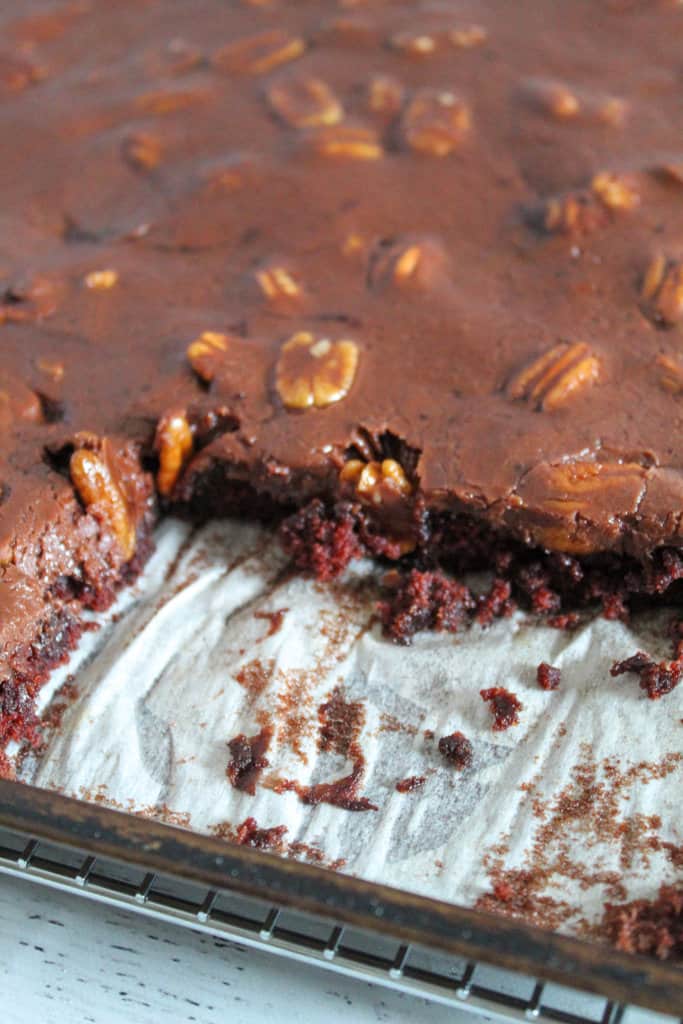
This gluten-free sheet cake recipe gives you clear steps, pro tips, and troubleshooting guidance from start to finish. And if you enjoy easy, well-tested sheet cakes with tender crumb and big flavor, you may also love our Moist Almond Flour Coffee Cake, another reader favorite.
What to Expect from This Gluten-Free Texas Sheet Cake
Let’s start with the big picture. Here’s what you can expect from this gluten-free Texas sheet cake once it’s baked and frosted.
- Texture: Fudgy, ultra-moist crumb with clean slices
- Flavor: Deep chocolate flavor without bitterness
- Difficulty: Beginner-friendly, no special equipment
- Pan Size: Standard 12×18 sheet pan (feeds a crowd)
- Dietary Notes: Gluten-free and dairy-free adaptable
- Make-Ahead Friendly: Stays moist for days; freezes well
Equipment You’ll Need
You don’t need any fancy cooking gear for this gluten-free Texas sheet cake. Everything comes together easily with basic kitchen equipment.
Want our human-written content to rank above AI-generated garbage? Help us out by clicking this button!
- 12×18-inch sheet pan (or similar shallow pan)
- Parchment paper
- Large mixing bowl
- Medium saucepan (for blooming cocoa and making frosting)
- Whisk or sturdy spatula
- Offset spatula (helpful for smoothing frosting, optional)
No stand mixer or special tools required, this cake comes together easily by hand.
Ingredients at a Glance
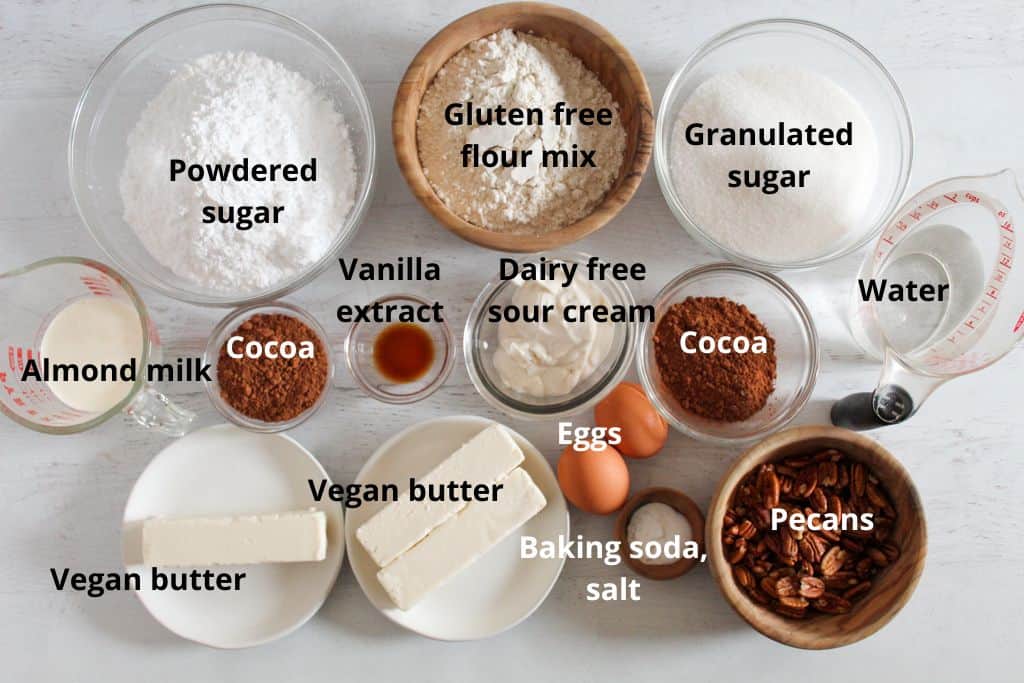
Before you go into the full recipe details, here’s a clear snapshot of the core ingredients you’ll need for this gluten-free Texas sheet cake.
- Gluten-free all-purpose flour: provides cake structure
- Cocoa powder: adds rich chocolate flavor
- Granulated sugar: adds sweetness and moisture
- Salt: balances sweetness
- Baking powder & baking soda: create lift and texture
- Eggs: bind the ingredients and help the cake rise
- Butter (or vegan butter): adds richness and tenderness
- Almond milk (or other milk alternative): adds moisture and consistency
- Dairy-free sour cream (optional): adds extra moisture and tang
- Vanilla extract: enhances flavor depth
- Pecans (optional): adds classic Texas sheet cake crunch
- Powdered sugar & extra cocoa (for frosting): adds finishing sweetness
Once you’ve confirmed you have the essentials, scroll down for the expanded ingredient breakdown with substitution guidance.
Gluten-Free Texas Sheet Cake Ingredients & Substitutions
Understanding exactly what each ingredient does and how substitutions affect texture is key to a successful gluten-free Texas sheet cake. Below is the breakdown of core components, why they matter, and how to swap them without surprises.
Xanthan Gum Notes (When Required vs Not)
Xanthan gum helps mimic gluten’s binding properties.
- If your gluten-free flour already includes it, do not add extra. Too much will make the crumb gummy.
- If it isn’t included, add about ½ teaspoon per cup of flour to improve structure.
Gluten-Free Flour Blends (What Works Best)
Use a quality gluten-free all-purpose blend that includes a mix of rice flour, tapioca starch, and potato starch. These blends provide structure and moisture retention.
- Best Choice: store-bought blend labeled for cakes and cookies.
- Substitution Notes:
- If your blend doesn’t contain xanthan or guar gum, you’ll need to add about ½ teaspoon per cup of flour; otherwise, the texture can be crumbly.
- No Substitute: Straight single-flour swaps (e.g., almond flour only) will drastically change texture unless you rebalance starches.
Recipes made with nut-based flours handle structure and moisture differently than starch-based gluten-free blends.
Cocoa Powder Choice for Rich Gluten-Free Chocolate Cake
Cocoa builds chocolate intensity and affects moisture.
- Natural unsweetened cocoa gives a bright chocolate flavor.
- Dutch-processed cocoa yields a deeper flavor and a darker color.
- Substitution Impact: Dutch cocoa may require a slight lift adjustment, but it works fine; flavor and crumb will be richer.
Fat Choice (Butter vs Oil)
Fat keeps the cake tender and moist.
- Butter: Classic flavor and richness.
- Vegan Butter or Neutral Oil: Great dairy-free options.
- Swap Note: Using all oil will make the cake slightly denser. Using all vegan butter mimics the flavor of butter but may alter browning.
Sugar’s Role in Moisture
Granulated sugar sweetens and locks in moisture. Powdered sugar in the frosting ensures a smooth texture.
- Substitution Notes: Coconut sugar can be used in the cake, but expect a deeper caramel note and slight color change.
Additional Essentials
- Salt: It enhances chocolate flavor; so, do not omit.
- Vanilla Extract: It adds depth; no direct substitute gives the same rounded sweetness.
- Almond Milk (or Other Milk): It hydrates the batter; dairy or plant milks both work.
- Dairy-Free Sour Cream: It is optional, but it keeps the crumb tender and moist. Omitting it will slightly reduce richness.
- Pecans: Provide crunch and flavor contrast.
Printable Gluten-Free Texas Sheet Cake Recipe Card
Ingredients
Cake:
- 240 grams Gluten free flour mix about 1 3/4 cups
- 400 grams granulated sugar about 2 cups
- 1 teaspoon baking soda
- 1/2 teaspoon salt
- 1/2 cup dairy free sour cream
- 2 eggs
- 1 teaspoon pure vanilla extract
- 1 cup vegan butter
- 1 cup water
- 30 grams unsweetened cocoa powder
- 105 grams pecans toasted
Frosting:
- 1/2 cup vegan butter
- 1/3 cup almond milk
- 30 grams unsweetened cocoa powder
- 370 grams powdered sugar about 3 1/2 cups
- 1 teaspoon vanilla extract
Instructions
Make the cake:
- Preheat the oven to 350 °F, line a 12" × 18" sheet pan with parchment paper, and lightly spray it.
- Whisk together the gluten-free flour, sugar, baking soda, and salt in a large bowl.
- In another bowl, combine dairy-free sour cream, eggs, and vanilla; set aside.
- In a small saucepan, heat vegan butter, water, and cocoa over medium until melted (do not boil); remove from heat.
- Add sour cream mixture to dry ingredients; stir until thick.
- Add hot chocolate mixture gradually, stirring until smooth.
- Spread evenly in the pan and bake for 18–20 min. Remove and cool on a wire rack.
Make the frosting:
- Melt vegan butter with almond milk and cocoa in a saucepan over medium heat, stirring (do not boil).
- Remove from heat; sift in powdered sugar and whisk until combined.
- Add vanilla and pecans; whisk smooth.
- Pour warm frosting over warm cake and smooth to the edges. Cool for at least 30 min before serving.
Notes
- Toasting pecans enhances their flavor.
- If your gluten-free flour already contains xanthan gum, do not add more.
- Using regular butter or dairy sour cream instead of dairy-free alternatives will slightly change flavor and fat content.
- For room-temperature storage, cover the cake and keep for up to 3 days; refrigerate up to 5 days.
- Calories: ~283 kcal
- Total Fat: ~12 g
- Saturated Fat: ~7 g
- Carbohydrates: ~45 g
- Dietary Fiber: ~2 g
- Total Sugars: ~36 g
- Protein: ~2 g
- Sodium: ~206 mg
- Cholesterol: ~44 mg
- Potassium: ~57 mg
Nutrition
Why This Gluten-Free Texas Sheet Cake Is Ultra-Moist & Chocolatey
Knowing why this gluten-free Texas sheet cake turns out tender, rich, and reliably moist helps you bake with confidence, not guesswork. Gluten-free baking can easily go wrong if structure and moisture aren’t balanced, so this recipe is formulated to maximize success.
This cake stays moist and richly chocolatey because it balances fat, hydration, and structure instead of relying on gluten.
At a glance, here’s what makes it reliable:
- Fat-rich ingredients slow moisture loss and tenderize the crumb
- Bloomed cocoa enhances chocolate flavor while improving dispersion
- Shallow sheet-pan baking promotes even heat and consistent structure
- Balanced leavening provides lift without collapse
Moisture Without Gluten
Gluten-free flour lacks the elastic network that wheat flour provides, which means cakes can easily be crumbly or dry. This recipe avoids that by incorporating fat-rich ingredients like vegan butter (or regular butter) and dairy-free sour cream.
The fat coats starch particles and slows moisture evaporation, while the sour cream’s acidity helps tenderize the crumb. Together, they replace gluten’s moisture-holding role with a consistent, tender texture.
Cocoa + Fat: Flavor and Liquid Harmony
Chocolate plays a structural role here, not just a flavor one. When hot liquid is combined with cocoa powder and fat, the cocoa blooms, releasing a deeper chocolate flavor and dispersing fat evenly through the batter.
This same technique is used in other rich chocolate bakes, like our gluten-free chocolate fudge cake, where moisture retention is key to avoiding dryness.
The Advantage of Shallow Sheet Cake Geometry
Unlike tall layer cakes, sheet cakes are baked in a wide, shallow pan. This geometry helps heat spread evenly and prevents dense centers or underbaked spots, common problems in gluten-free baking.
The broad surface also encourages even rise and structure, meaning the cake doesn’t need gluten’s strength to hold shape. It simply sets into a tender, cohesive crumb.
Structural Lift Without Gluten
Instead of relying on gluten for strength, this recipe uses a balanced leavening system. The combination of baking soda and baking powder provides lift without over-expanding fragile air pockets.
The fats in the batter help support this lift, creating a cake that’s light enough to be tender but strong enough to hold its shape.
Step-by-Step Instructions
Follow these guided sections to bake and frost your gluten-free Texas sheet cake with confidence. Each subheading links related actions together, so you always know what to do next.
Step 1: Prep Your Oven & Pan
Preheat the oven to 350 °F (175 °C). Position the rack in the center to ensure even baking throughout the shallow pan.
Line your sheet pan with parchment and lightly spray or butter the edges so the cake releases cleanly after baking.
Step 2: Mix the Dry Ingredients
In a large bowl, whisk together gluten-free all-purpose flour, sugar, baking soda, and salt until smooth and evenly blended.
The surface should look light and free of clumps to ensure even hydration later.
Step 3: Prepare the Wet Ingredients
In a separate bowl, beat dairy-free sour cream, eggs, and vanilla extract until glossy and integrated.
In a small saucepan over low heat, melt vegan butter with water and cocoa powder, stirring until fully dissolved and shiny. Keep the heat gentle to avoid boiling.
Step 4: Mix Your Gluten-Free Texas Sheet Cake Batter
Integrate the wet base into the dry mix. Pour the sour cream mixture into the dry ingredients and stir until a sticky, cohesive paste forms.
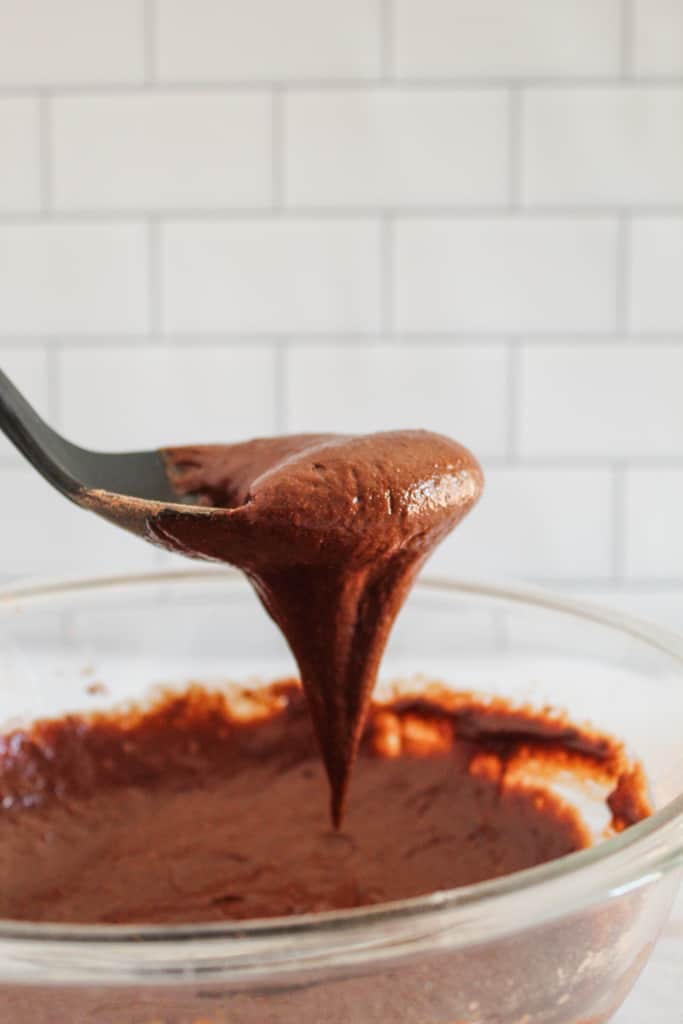
Add the hot cocoa liquid gradually. Pour a small amount at a time into the batter while mixing gently until the batter loosens into a smooth consistency.
Assess batter texture. The batter should drip slowly from a spatula; thick but pourable, not chalky or stiff.
Step 5: Bake to Doneness
Spread the batter evenly in the lined sheet pan, smoothing the top with an offset spatula.
Bake for 18–20 minutes. Start checking at 15 minutes; gluten-free cakes set visibly rather than rising tall.
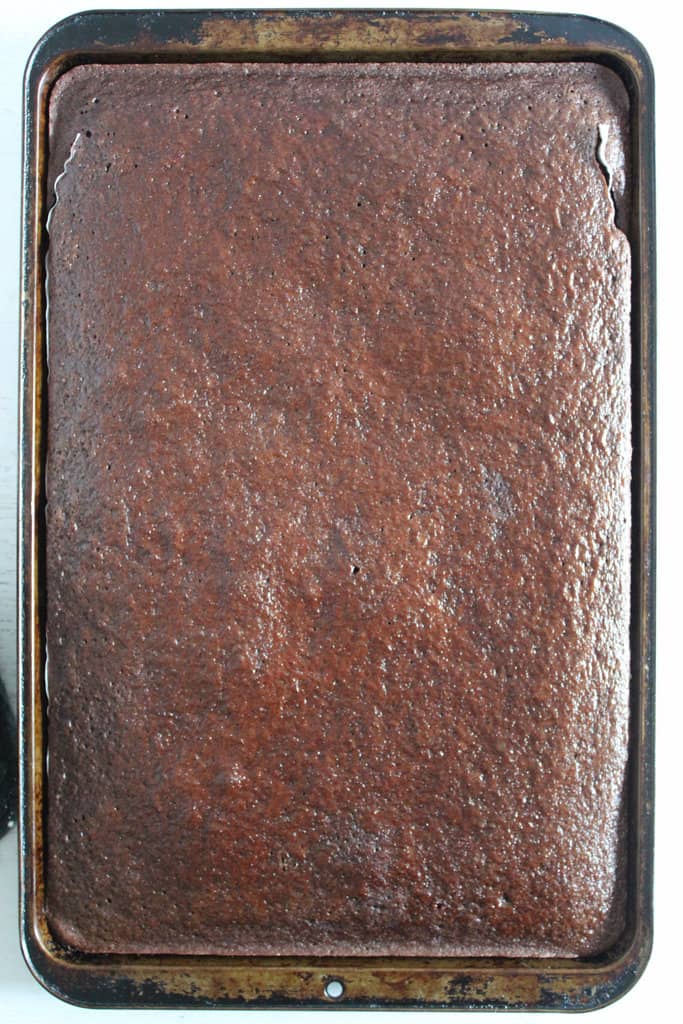
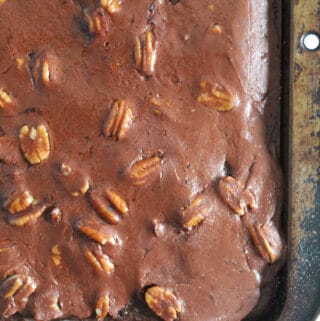
Doneness Cues: Edges should look set, the center should spring back, and a toothpick inserted near the middle should come out with moist crumbs (not wet batter).
Step 6: Cool & Prepare Frosting
Remove the cake from the oven and set it on a cooling rack while you make the frosting. Slight cooling helps the frosting set evenly.
The next step is to make the frosting base. In a clean saucepan, melt vegan butter with almond milk and cocoa over medium-low heat.
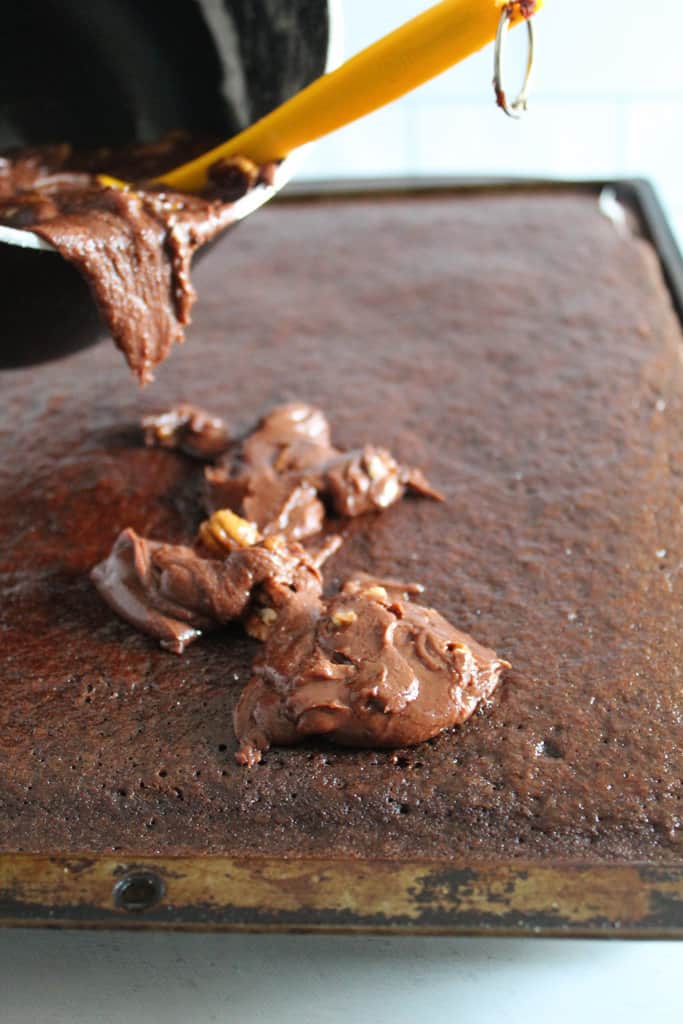
Once the cocoa and butter mixture has cooled slightly, take the pan off the heat. Then, start adding the powdered sugar little by little, whisking as you go. Keep whisking until the frosting becomes thick enough that it clings to the back of a spoon without running off immediately.
Next, stir in the vanilla extract and the toasted pecans. At this point, the frosting should look smooth, glossy, and easy to spread over the warm cake.
Step 7: Frost & Final Cool
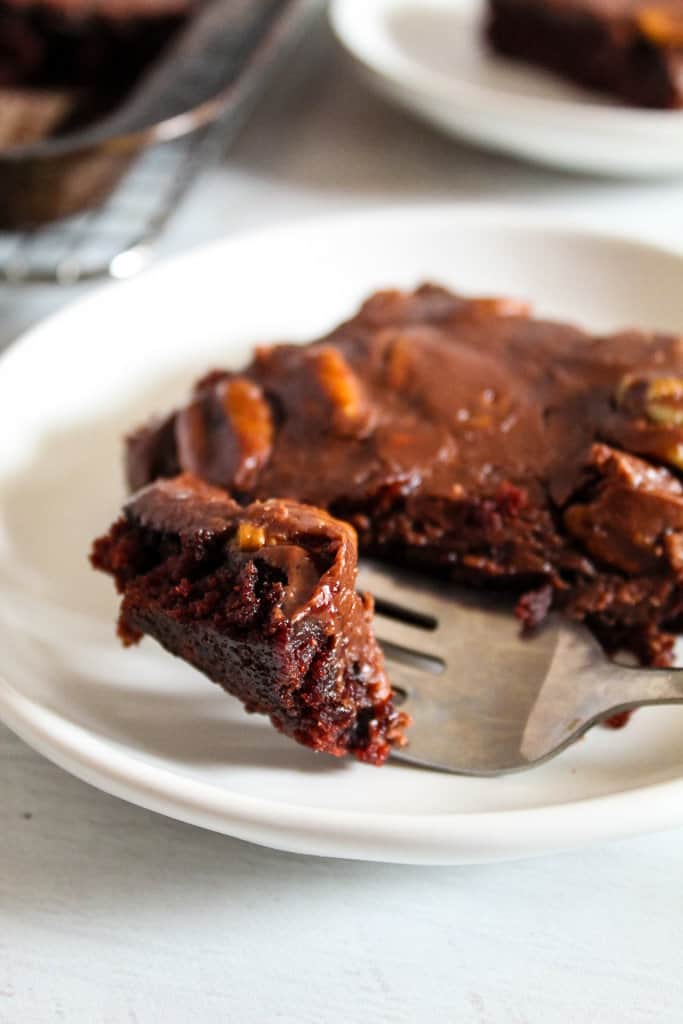
Pour the frosting over the warm cake and smooth it to the edges. Warmth helps the frosting settle with a slight sheen.
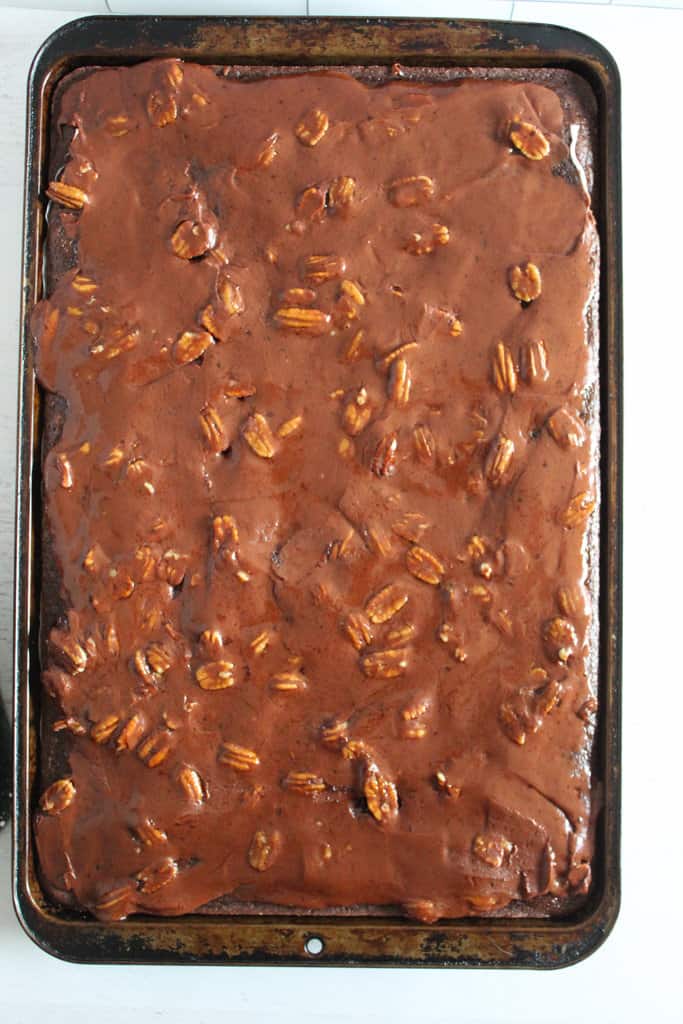
Let it cool for at least 30 minutes. This ensures the frosting firms up and the cake slices cleanly into squares.
Pro Tips for Perfect Gluten-Free Texas Sheet Cake & Troubleshooting
Below are the most common issues with this gluten-free sheet cake. You will see what goes wrong, why, and how to fix it next time.
Cake Too Crumbly
- Cause: Gluten-free flours lack binding; too little binder or overbaking dries the cake.
- Fix: Ensure your flour blend has xanthan gum or add about ½ tsp per cup; remove from the oven as soon as edges look set.
- Prevention: Use accurate measurements and pull the cake at the earliest doneness cue. If crumb texture is a recurring issue, this guide on how to make gluten-free cakes moist explains how moisture, binders, and mixing work together.
Cake Sinks Slightly
- Cause: Underbaking or opening the oven too soon weakens the structure.
- Fix: Bake until the center springs back to a gentle touch and a toothpick shows moist crumbs.
- Prevention: Preheat fully and avoid checking too early.
Dry Edges vs Moist Center
- Cause: Oven hot spots or overbaking the edges.
- Fix: Tent foil loosely in the final minutes to slow edge browning.
- Prevention: Rotate the pan halfway and monitor doneness visually.
Gummy Texture
- Cause: Too much liquid, excess xanthan gum, or underbaking.
- Fix: Let the cake cool completely so the structure sets. The center should look matte (not shiny), which means it’s properly baked and set.
- Prevention: Mix just until combined and follow liquid ratios.
Frosting Too Thin
- Cause: Excess liquid relative to powdered sugar.
- Fix: Whisk in extra powdered sugar until thick and spreadable.
- Prevention: Add liquids slowly and measure carefully.
Frosting Too Thick
- Cause: Too much powdered sugar or not enough liquid.
- Fix: Stir in a teaspoon of almond milk or warm water at a time until spreadable.
- Prevention: Gradually adjust sugar and liquid.
Grainy Frosting
- Cause: Powdered sugar not fully dissolved.
- Fix: Sift sugar first and whisk thoroughly; warm liquids help dissolve it.
- Prevention: Always sift dry ingredients for smooth frosting.
Add-Ins & Variations
Once you’ve mastered the basics, you can explore optional twists to suit different tastes. These tweaks don’t change the cake’s reliable texture or structure.
Dairy-Free Frosting Swap
Use coconut cream or a simple chocolate glaze instead of the standard frosting for a lighter, dairy-free finish.
Espresso Chocolate Version
Stir 1–2 tsp of instant espresso powder into the batter to deepen the chocolate flavor without making it taste like coffee.
Nut-Free / School-Safe
Omit pecans completely or replace with toasted seeds (like sunflower) for a nut-free version that’s friendly for school lunches.
Alternative Flour Inspiration
If you enjoy experimenting with different gluten-free flours, check out our gluten-free oat flour cake recipe. It shows how oat flour behaves in a tender, cake-style bake while staying firmly in dessert territory.
Holiday Topping Ideas
Add festive flair with peppermint bits, orange zest, or red and green sprinkles for seasonal gatherings.
Storage Tips for Gluten-Free Texas Sheet Cake
Once your gluten-free Texas sheet cake is baked and frosted, proper storage will keep every slice tender and flavorful. Here’s how to handle it at each stage:
Room Temperature Storage
For short-term keeping, cover the cake lightly with plastic wrap or a cake dome and store in a cool, dry place. At room temperature, the cake stays moist, and the frosting stays soft for 2–3 days.
Refrigeration: Pros & Cons
If you want it to last a bit longer, wrap the cake well to protect it from fridge odors and place it in the refrigerator. Refrigeration can extend freshness to 4–5 days, but the crumb may become slightly firmer.
Before serving, bring slices to room temperature so the texture softens.
Freezing Slices vs Whole Cake
For long-term storage, you can freeze either individual slices (wrapped tightly in plastic and placed in a freezer bag) or the whole cake in an airtight container. Frozen cake keeps well for 2–3 months.
Texture After Thawing
Gluten-free cakes can dry out faster than wheat versions, so thaw slowly; first in the fridge overnight, then to room temp before serving. This gentle thaw helps the crumb stay moist and soft rather than crumbly or dry.
Baking Questions Answered (FAQs)
Here are questions we frequently get from readers about gluten-free Texas sheet cake, with clear, practical answers to common concerns. If you don’t see yours, feel free to drop it in the comments section below.
Can I Make This Dairy-Free?
Yes, this finished cake can be made dairy-free. Use vegan butter, plant-based milk, and dairy-free sour cream without changing the method.
Can I Use A Different Gluten-Free Flour Blend?
Yes, you can use a different gluten-free flour blend. Choose an all-purpose blend with starches and add xanthan gum if it’s not already included.
Can I Make This Ahead of Time?
Yes. You can bake the cake a day ahead and cover it tightly at room temperature or in the refrigerator.
Why is My Frosting Grainy?
Grainy frosting is caused by undissolved powdered sugar. Sift the sugar before adding it and whisk thoroughly while the frosting is warm so it dissolves smoothly.
Can I Make This Without Xanthan Gum?
You can make this cake without xanthan gum, but the texture will be more delicate. If your flour blend doesn’t include it, adding a small amount improves structure.
If You Loved This Cake, Bake This Next!
Are you done trying this gluten-free Texas sheet cake? You might enjoy exploring other gluten-free desserts and baking guides that help you build confidence in the kitchen and stay inspired.
- Gluten-Free Oat Flour Cake — A simple, tender sheet cake made with wholesome oat flour.
- Moist Almond Flour Coffee Cake (Gluten-Free, Dairy-Free) — A cozy, tender cake that’s great for brunch or dessert and teaches flavor and texture balance.
- Delicious Gluten-Free Chocolate Fudge Cake (Dairy-Free) — Rich, deeply chocolatey, and a great follow-up for anyone who loves chocolate desserts.
- How to Make a Gluten-Free Cake Light and Fluffy — A practical baking guide with tips on texture and structure that complement this recipe’s lessons.
- Delightful Oat Flour Chocolate Chip Cookies (Gluten-Free & Dairy-Free) — Soft, chewy cookies that satisfy chocolate cravings between cakes.
Let’s Talk About Your Bake
Every bake tells a slightly different story. We’d love to hear how your gluten-free Texas sheet cake turned out. Did your frosting set glossy or matte? Did you serve your cake warm or fully cooled? Leave a comment below and let us know your experience!
Did you make and love this recipe? Give it your review and rating below! And make sure to follow me on Instagram, Pinterest, and Facebook , too!