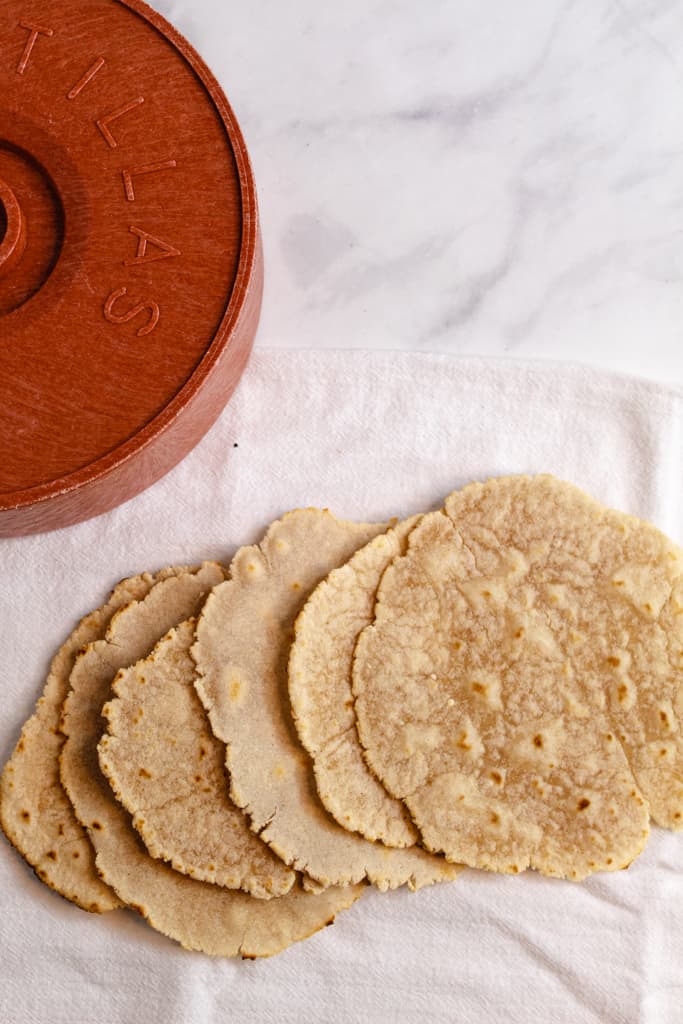
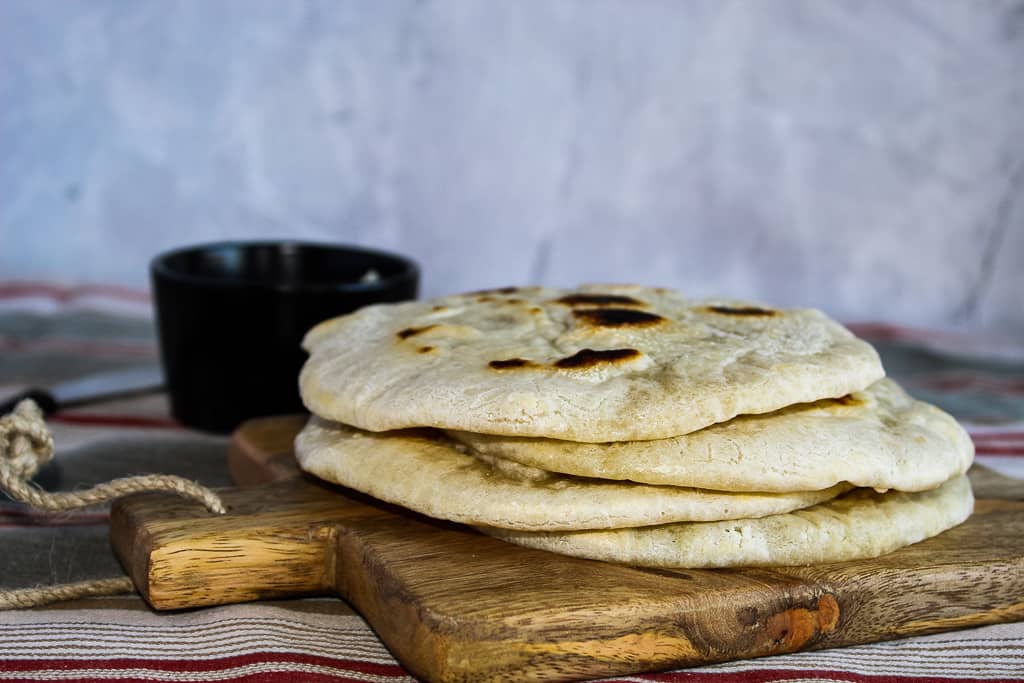
Making an almond flour tortilla recipe sounds simple, until the dough tears, cracks, or turns gummy. Unlike wheat flour, almond flour lacks gluten and has a very different structure. As a result, achieving soft, flexible tortillas takes more than just following a recipe.
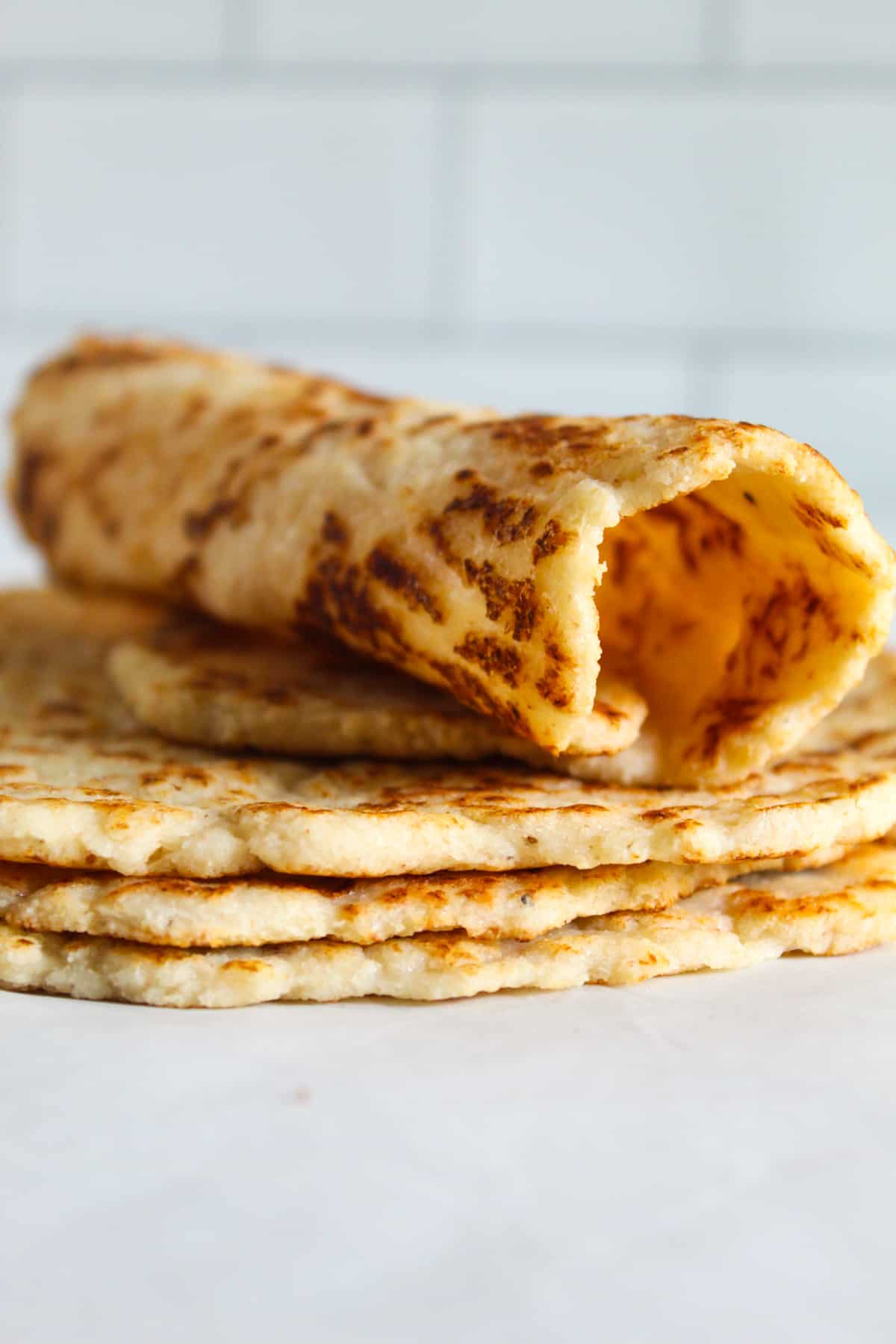
Do you enjoy how almond flour behaves in other baked goods, like the tender layers in the Moist Almond Flour Coffee Cake Recipe? If so, you’re already on the right track. It’s just a matter of understanding how to balance structure, moisture, and technique in a dough that bends instead of breaks.
Table of Contents
How This Almond Flour Tortilla Recipe Creates Flexible Wraps
This almond flour tortilla recipe works because it balances hydration, binding, and heat control to create tortillas that bend without breaking.
The high oil content and low starch level also change how moisture and heat interact during mixing and cooking. These factors make it easy for tortillas to crack, tear, or turn gummy unless the dough is handled with specific care and the recipe balances structure and hydration just right.
Quick Ingredient Snapshot
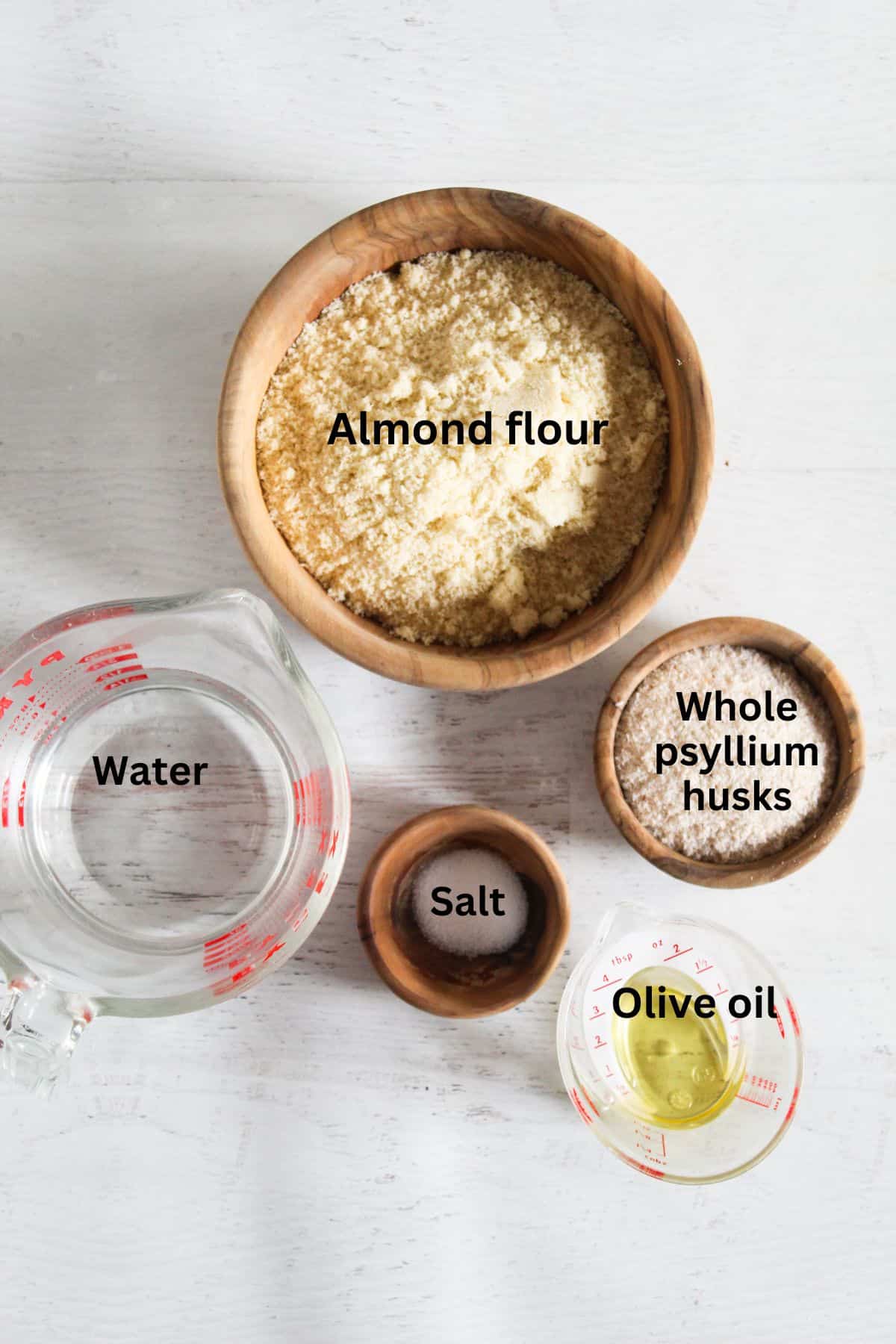
Let the list below serve as your pre-heat checklist. Once these basics are measured and ready, you’re set to build dough with great stretch and minimal cracking. And if you enjoy simple almond flour ingredient line-ups like this one, you might also like our easy, low-carb Almond Flour Brownies.
- Almond flour
- Whole psyllium husks
- Salt
- Olive oil
- Warm water
Ingredients & Substitutes
This almond flour tortilla recipe keeps things simple and pantry-friendly, but choosing the right form of almond flour and binders makes all the difference in texture and flexibility.
Main Ingredients
- Almond Flour: It’s finely ground for a tender, soft base that shapes into pliable tortillas.
- Whole Psyllium Husks: It hydrates and acts as the primary binder, so the dough doesn’t crack.
- Sea Salt: It boosts flavor so the tortillas aren’t flat or bland.
- Olive Oil: It adds moisture and improves dough elasticity.
- Warm Water: It hydrates the psyllium and brings the dough together.
Substitutes & Variations
Oil Options
Swap olive oil for another neutral-flavored oil like avocado oil or sunflower oil without changing the dough’s behavior.
Binder Alternatives
If you only have psyllium husk powder, that works too, but reduce the amount slightly. Another effective binder is xanthan gum (about ½ teaspoon), which helps give structure similar to psyllium.
Flour Clarity
Be careful with almond flour alternatives, and note that almond meal isn’t the same. If you want to understand how almond meal differs from almond flour and why it matters here, see Almond Meal vs. Almond Flour: Similarities and Differences. Using the wrong grind can change the texture and flexibility of your tortillas.
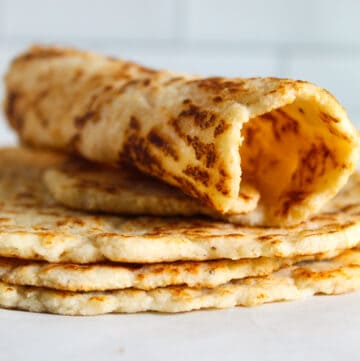
Printable Almond Flour Tortilla Recipe Card
Ingredients
- 100 grams almond flour about 1 cup
- 15 grams whole psyllium husks about 3 Tablespoons
- ½ teaspoon sea salt
- 1½ teaspoons olive oil
- ½ cup warm water about 120ml
Instructions
- Heat the Pan: Warm a medium skillet over medium heat so it’s ready when your dough is rolled.
- Mix Dry Ingredients: In a medium bowl, combine almond flour, whole psyllium husks, and salt. Stir until evenly distributed.
- Add Wet Ingredients: Pour in the olive oil and warm water, then stir with a sturdy spoon.
- Form the Dough: Stir for about a minute until everything comes together into a cohesive dough ball that holds its shape.
- Shape the Dough: Place the dough on a sheet of parchment paper. Top with another piece of parchment and roll out into a 6–7 inch circle. Turn the paper as you roll to keep a circular shape.
- Repeat: Divide the dough into four equal pieces and roll each into a round.
- Cook: Lightly spray the skillet with cooking spray. Place a rolled tortilla in the pan and cook for 1–2 minutes per side, until lightly golden. Repeat until all tortillas are cooked.
- Serve: Stack cooked tortillas, keep them covered so steam softens them, and enjoy warm or at room temperature.
Notes
- Rest/ Hydration: While this version doesn’t call for a long rest, letting the dough sit 5-10 minutes before shaping gives the psyllium husks more time to fully absorb water for extra flexibility.
- Rolling: Use parchment paper to prevent sticking and help maintain even thickness.
- Freezing: Freeze in an airtight container with parchment between tortillas for up to a month.
- Serving Ideas: Use these for tacos, wraps, quesadillas, or as a grain-free bread alternative.
Estimated Nutrition & Calories for Homemade Almond Flour Tortillas
These nutrition estimates are based on the nutrition facts of similar almond flour tortillas and standard ingredient data from reputable nutrition databases such as Verywell Fit, which compiles information from the USDA and peer-reviewed sources. The values shown are for one tortilla, assuming the batch makes four tortillas in total:- Calories: ~95–100 kcal
- Total Fat: ~6–8 g
- Saturated Fat: ~1 g
- Cholesterol: 0 mg
- Sodium: ~110–190 mg
- Total Carbohydrates: ~8–12 g
- Dietary Fiber: ~1.5–3 g
- Net Carbs: ~6–9 g
- Sugar: ~0–1 g
- Protein: ~2–6 g
Nutrition
Did you make and love this recipe? Give it your review and rating below! And make sure to follow me on Instagram, Pinterest, and Facebook , too!
What Makes This Almond Flour Tortilla Recipe Work
Great texture doesn’t happen by accident; it’s the result of balancing structure, moisture, technique, and heat. Below are the key factors that take these almond flour tortillas from fragile to foldable.
1. Proper Binding
Because almond flour contains no gluten, you need a binder that mimics some of the structure gluten would normally provide. In this recipe, psyllium husk is the star player. It absorbs liquid, gels, and creates a flexible matrix that holds the dough together instead of letting it fall apart.
Without the right binder, you’ll often end up with tortillas that crack or break when you try to fold them. If you’re curious about alternatives or what works when psyllium isn’t available, check out 6 Best Substitutes for Psyllium Husk Powder. But know that psyllium’s unique ability to trap moisture and add elasticity is why it’s used here.
2. Moisture Balance
Getting the water ratio just right is a fine art with almond flour. Too much liquid and the dough becomes sticky and hard to handle. Whereas, too little liquid and your tortillas will turn out dry and brittle.
- Too wet = sticky dough that clings to your rolling surface and tears easily.
- Too dry = cracking once rolled or cooked.
This recipe hits the equilibrium where the dough feels slightly tacky but manageable, giving you wrappers that are soft but stable.
3. Rolling Technique
How you roll these tortillas matters as much as the ingredients themselves. Almond flour dough doesn’t have the same elasticity as wheat dough, so using parchment paper makes a world of difference:
- It prevents sticking without excess flour, which could dry the dough further.
- It helps you roll evenly, keeping thickness consistent so every tortilla cooks uniformly.
Without parchment guidance, you may roll too thin and end up with fragile edges or too thick and get undercooked centers.
4. Pan Temperature Control
Heat is the final piece of the puzzle, and it’s a common place where texture goes wrong.
- If the pan is too hot, the outsides brown or burn before the inside has a chance to cook, leaving a gummy center.
- If the pan is too cool, the tortillas dry out and lack flexibility, leading to cracking when you fold them.
A moderately heated skillet ensures the surface sets quickly while the interior cooks through without losing moisture.
Essential Kitchen Tools for Best Results
To make these instructions even easier and more reliable, the right tools can help every stage from dough to skillet:
- Skillet: A medium-sized skillet with an even heat profile is ideal for cooking these tortillas without scorching. (Cast iron or non-stick both work well).
- Rolling Pin: A smooth rolling pin helps you flatten dough evenly without sticking. Choose a basic wooden or small dough rolling pin designed for pastry and flatbreads.
- Parchment Paper: Non-stick parchment sheets prevent the dough from clinging to surfaces and make cleanup a breeze. Get yours on Amazon.
Step-by-Step Instructions (With Texture Cues)
Creating soft, flexible almond flour tortillas is about feel as much as technique. Follow these numbered steps and watch the dough tell you what it needs.
Step 1: Mix the Dough
In a bowl, combine your almond flour, psyllium husk, and salt.
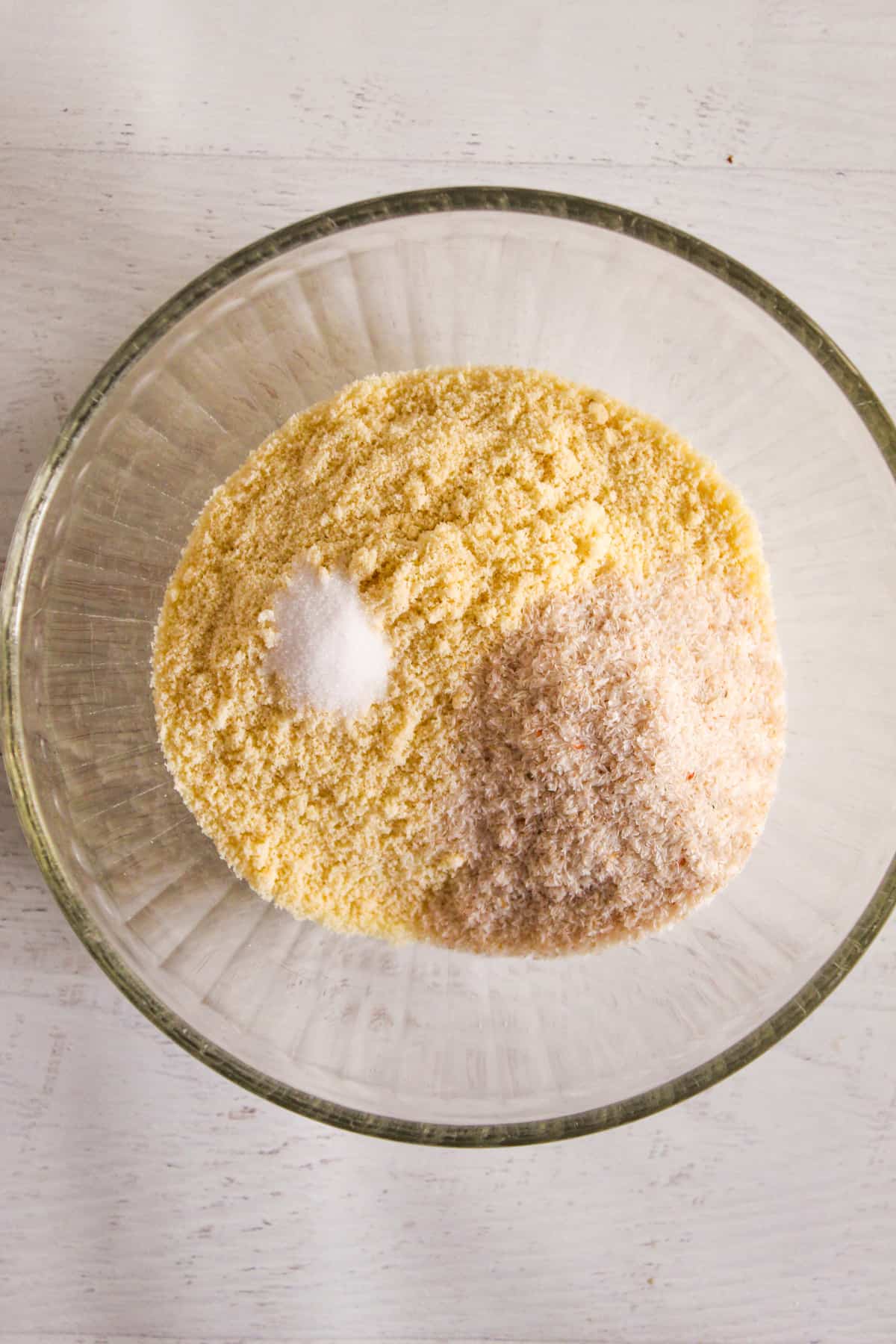
Add warm water and olive oil, stir until the ingredients come together.
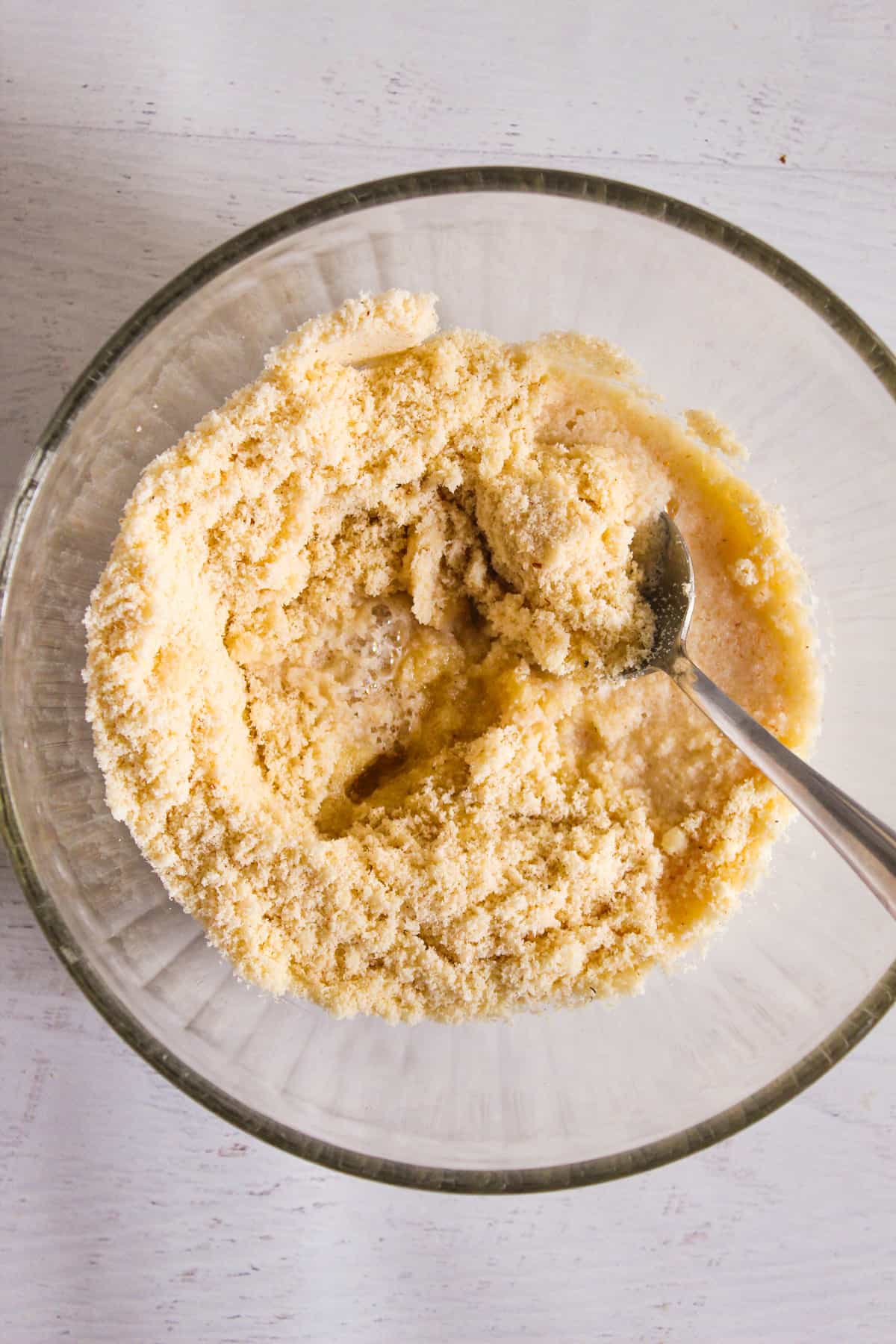
The dough should feel slightly tacky, not dry or crumbly. If it cakes around your fingers, you’re on the right track, as that tacky feel helps the dough hold together when cooked.
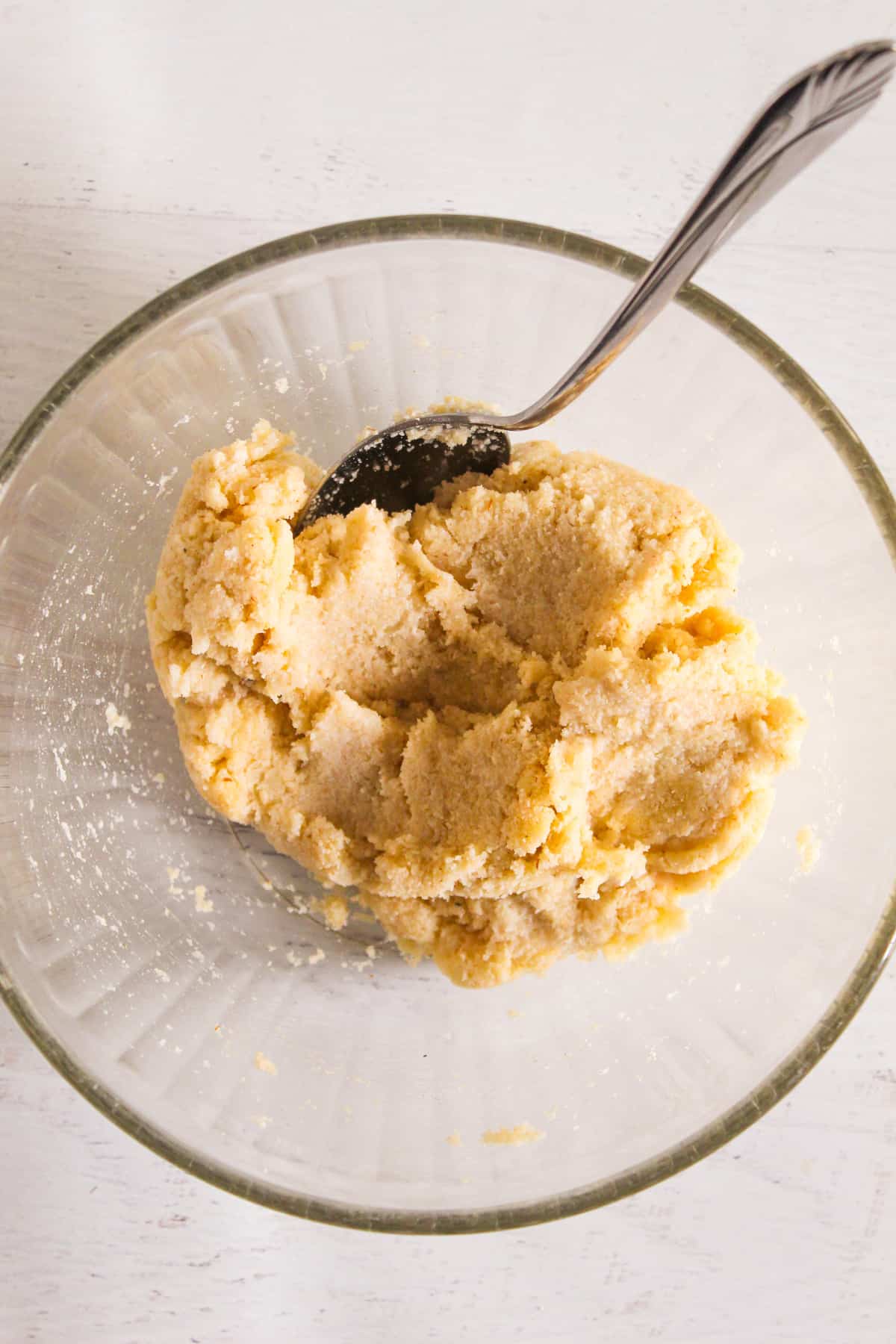
If your dough looks too dry, add a few drops of warm water. But if it’s too sticky, let it rest a minute so the psyllium fully hydrates.
Step 2: Rest the Dough
Let the dough sit for about 5–10 minutes before shaping. Psyllium husks absorb liquid over time, so this brief rest makes the dough more cohesive and flexible. This little pause reduces cracking later.
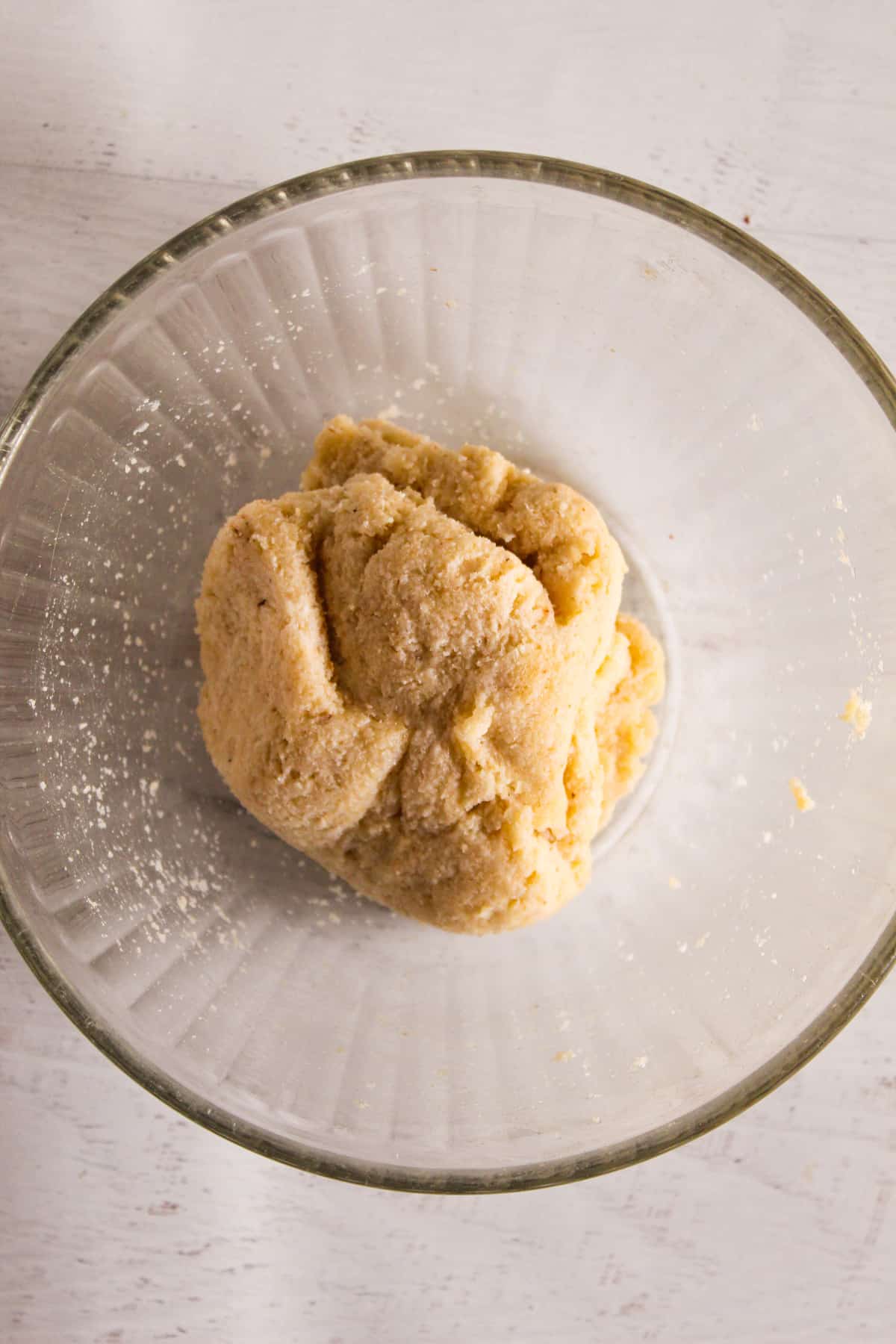
Step 3: Roll Between Parchment
Form the dough into a round shape on a piece of parchment.
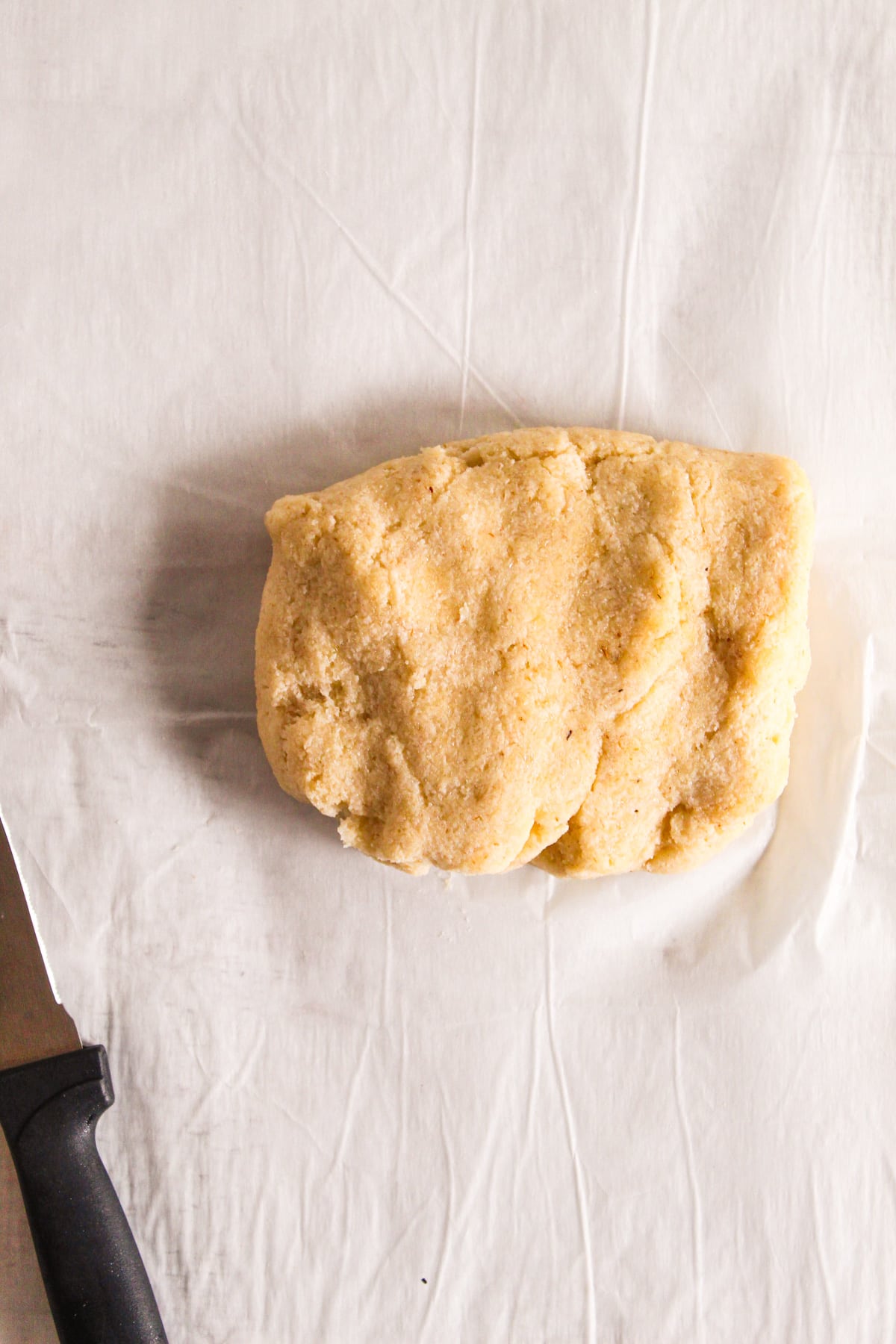
Divide the rested dough into four balls.
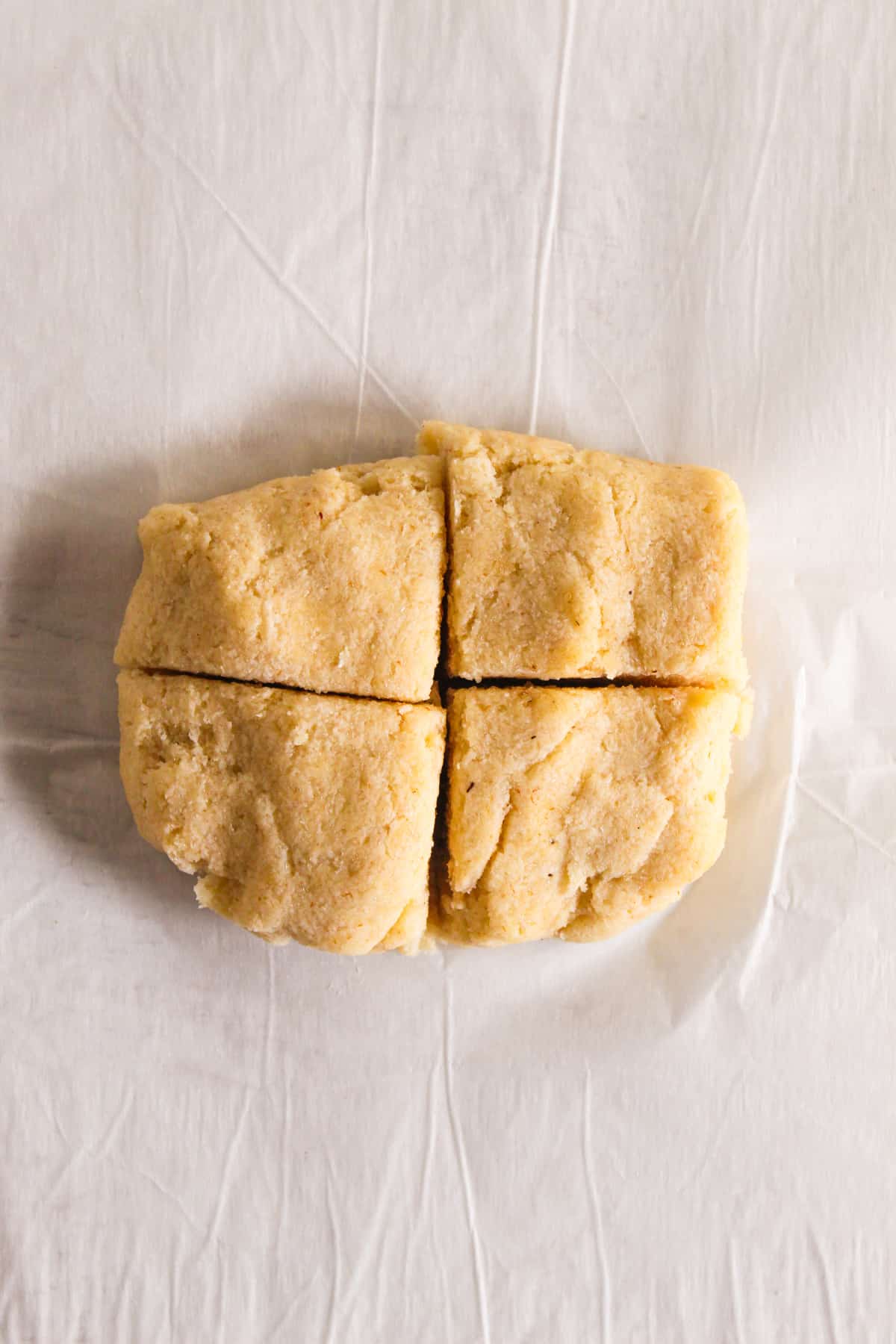
Then, place one between two sheets of parchment paper.
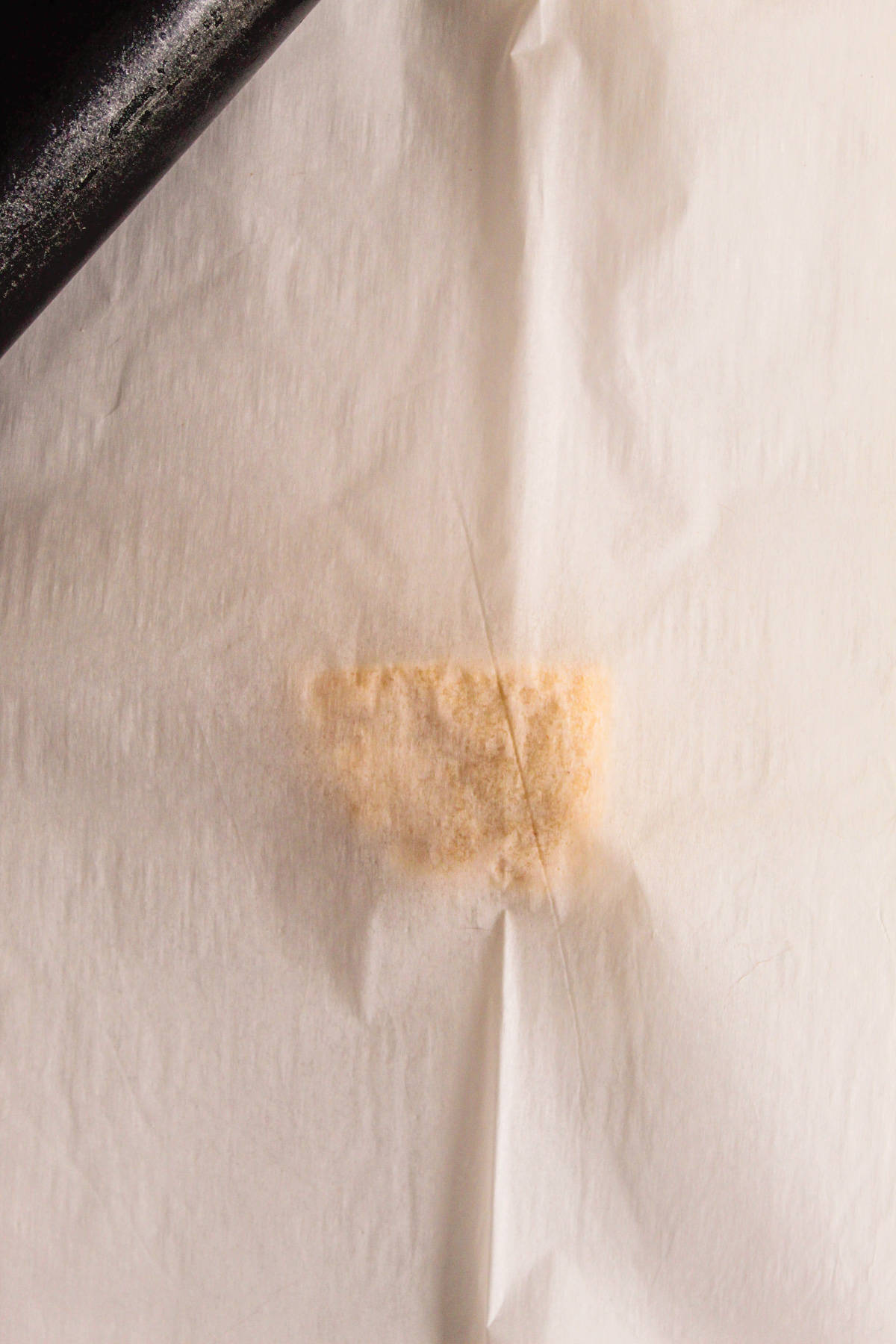
Use a rolling pin or press to flatten into a round about 6–7 inches across.
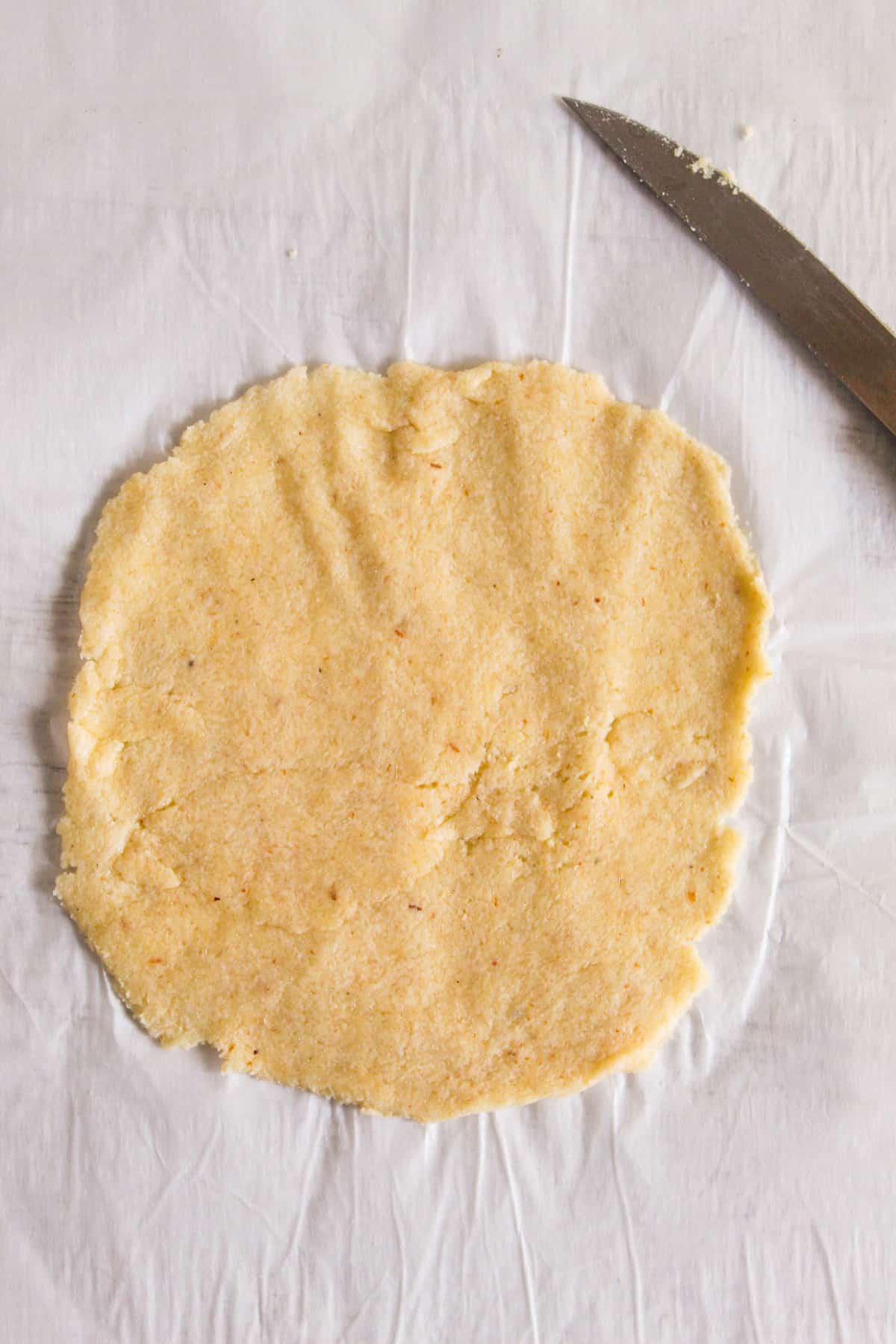
The edges may show tiny cracks, which is normal and won’t affect the final pliability. Keep them slightly thicker at the edges to prevent tearing when folding.
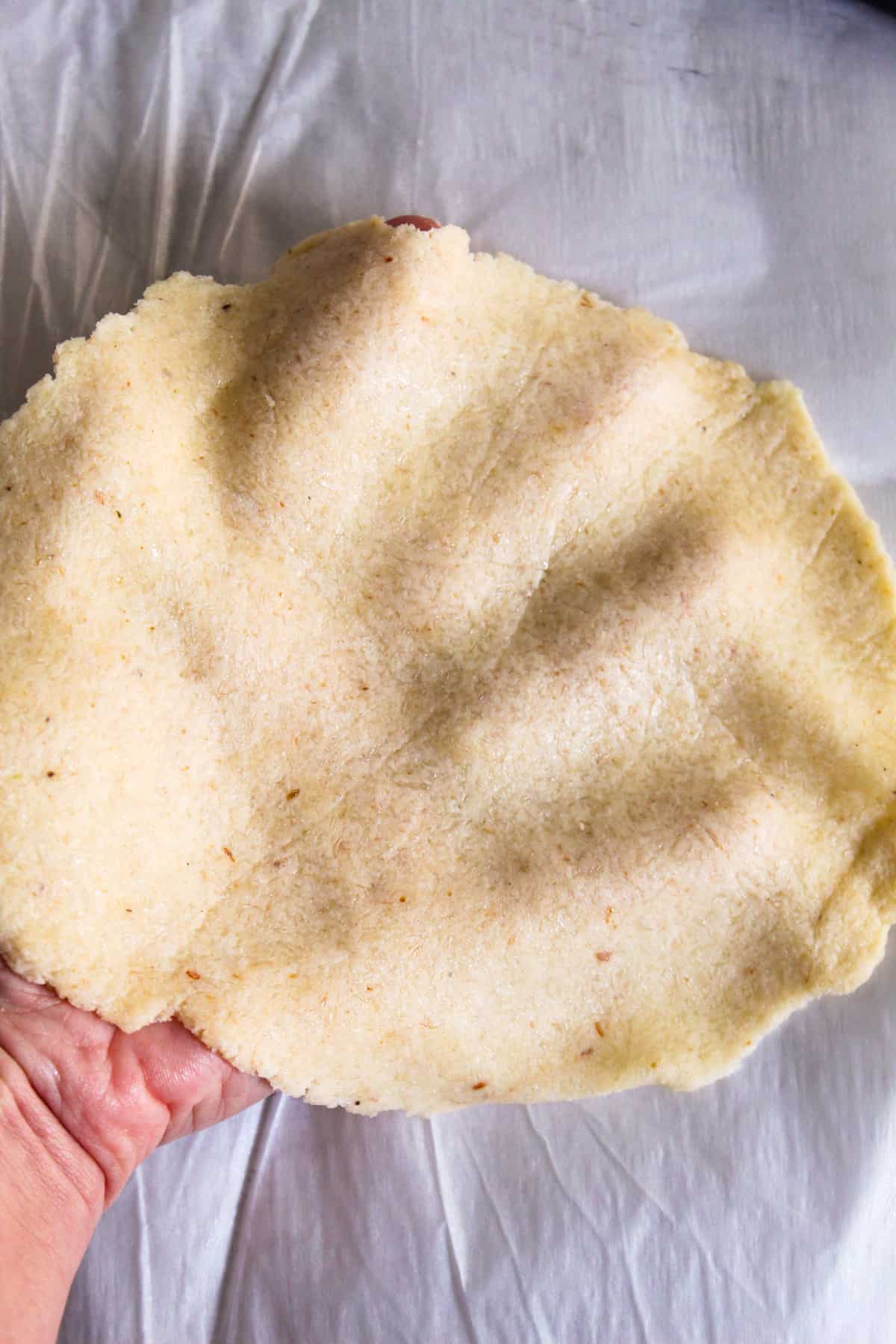
Step 4: Cook on Skillet
Heat a skillet over medium heat. Then, gently slide a rolled tortilla onto the hot surface.
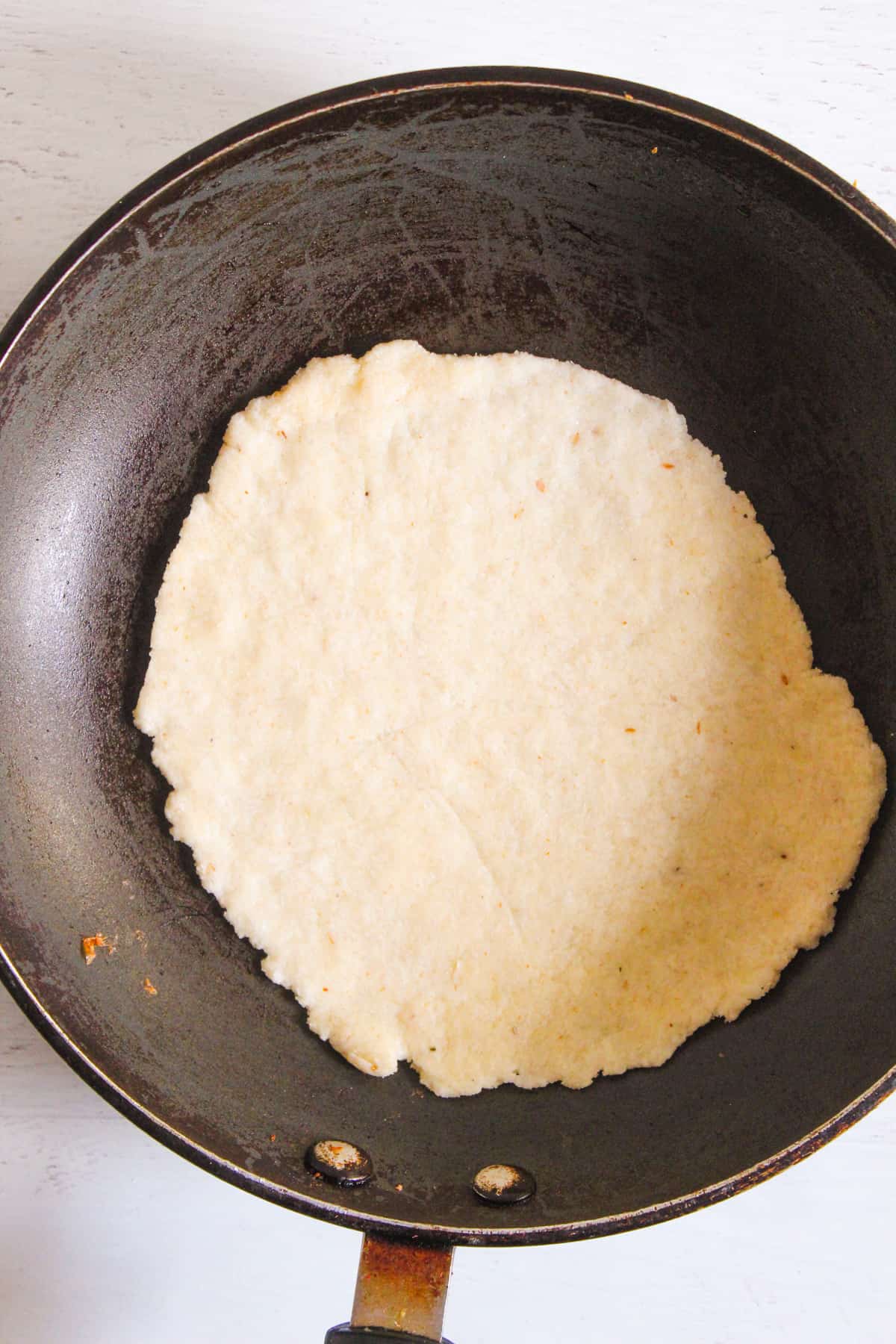
Look for tiny bubbles forming on the surface. This signals that steam is building and the structure is setting.
Flip when the bottom shows light golden spots. Both sides should have that soft, warm coloration.

If your tortillas darken too quickly, reduce the heat slightly, because cooking too hot can dry them out before they’re fully cooked inside.
Step 5: Stack & Cover
As each tortilla finishes, stack them and cover with a clean kitchen towel. The steam trapped in the stack softens the tortillas, making them more flexible and enjoyable for wraps, tacos, or quesadillas.
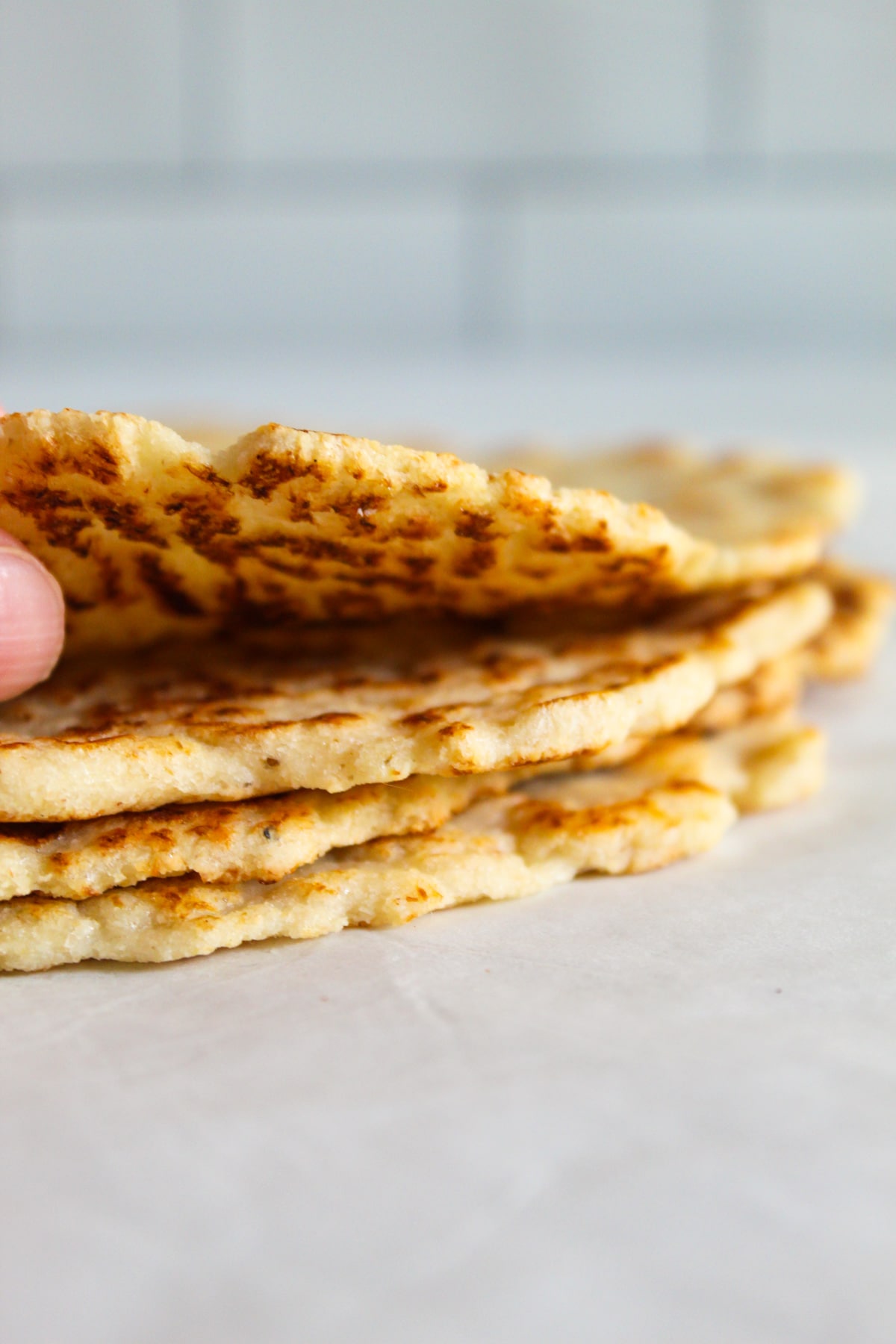
Why Almond Flour Tortillas Crack (And How to Fix Them)
Even when you follow the recipe, almond flour tortillas can behave in unpredictable ways. These are the most common texture issues and exactly why they happen, so you can fix them before you cook.
Cracking or Breaking
If your tortillas split when you fold or roll them, the dough usually needs more flexibility or structure. A few small adjustments can make a big difference.
Why It Happens:
- Too Dry: Not enough moisture makes the dough inflexible.
- Rolled Too Thin: Thin dough has less structure and tears under pressure.
- Insufficient Binder: Almond flour lacks gluten, so without enough psyllium or another binder, the dough doesn’t hold together.
Fixes:
- Add a bit more warm water and let the dough rest so the binders fully hydrate.
- Keep tortillas slightly thicker around the edges.
- Ensure psyllium husks are fresh, properly measured, and fully hydrated.
If you’re experimenting with other binding or flour options, read our Almond Flour Substitutes: Best Alternatives to Use in Baking guide. It explains how different flours behave, but be aware that substitutes can change texture and elasticity.
Gummy or Sticky Centers
When tortillas feel sticky or slightly undercooked inside, the issue usually comes down to moisture balance or cooking temperature.
Why This Happens:
- Too Much Wet Ingredients: Excess water or oil can leave the interior unstructured.
- Undercooked: The center hasn’t set before the outside begins browning.
- Pan Not Hot Enough: Slow heat doesn’t form structure quickly, so the interior stays gooey.
Solutions:
- Preheat the skillet thoroughly before cooking.
- Cook each side until light golden spots appear.
- If the dough feels overly wet, let it rest for 5–10 minutes before shaping.
Oily Surface
A little oil on the surface is normal with almond flour, but too much can make tortillas feel greasy rather than tender.
Why It Occurs:
- Natural Almond Fat: Almond flour is rich in oil, and some surface oil can be normal.
- Pan Overheated: Fat can separate when the pan gets too hot.
Fixes:
- Use a medium-temperature skillet, not high heat.
- Avoid adding excess oil to the dough.
Crumbly Texture
If your tortillas fall apart instead of bending easily, the dough likely needs better hydration or stronger binding.
Why It Happens:
- Not Enough Moisture or Binder: Dry dough lacks cohesion.
- Psyllium Not Hydrated: Psyllium must absorb liquid to work effectively as a binder.
Fixes:
- Increase hydration slightly and ensure a proper rest period.
- Double-check your measurements, especially psyllium husks.
How to Use Almond Flour Tortillas
Once you’ve mastered soft, flexible almond flour tortillas, they become one of the most versatile foundations in your gluten-free, low-carb kitchen. Try them in meals from morning through dinner:
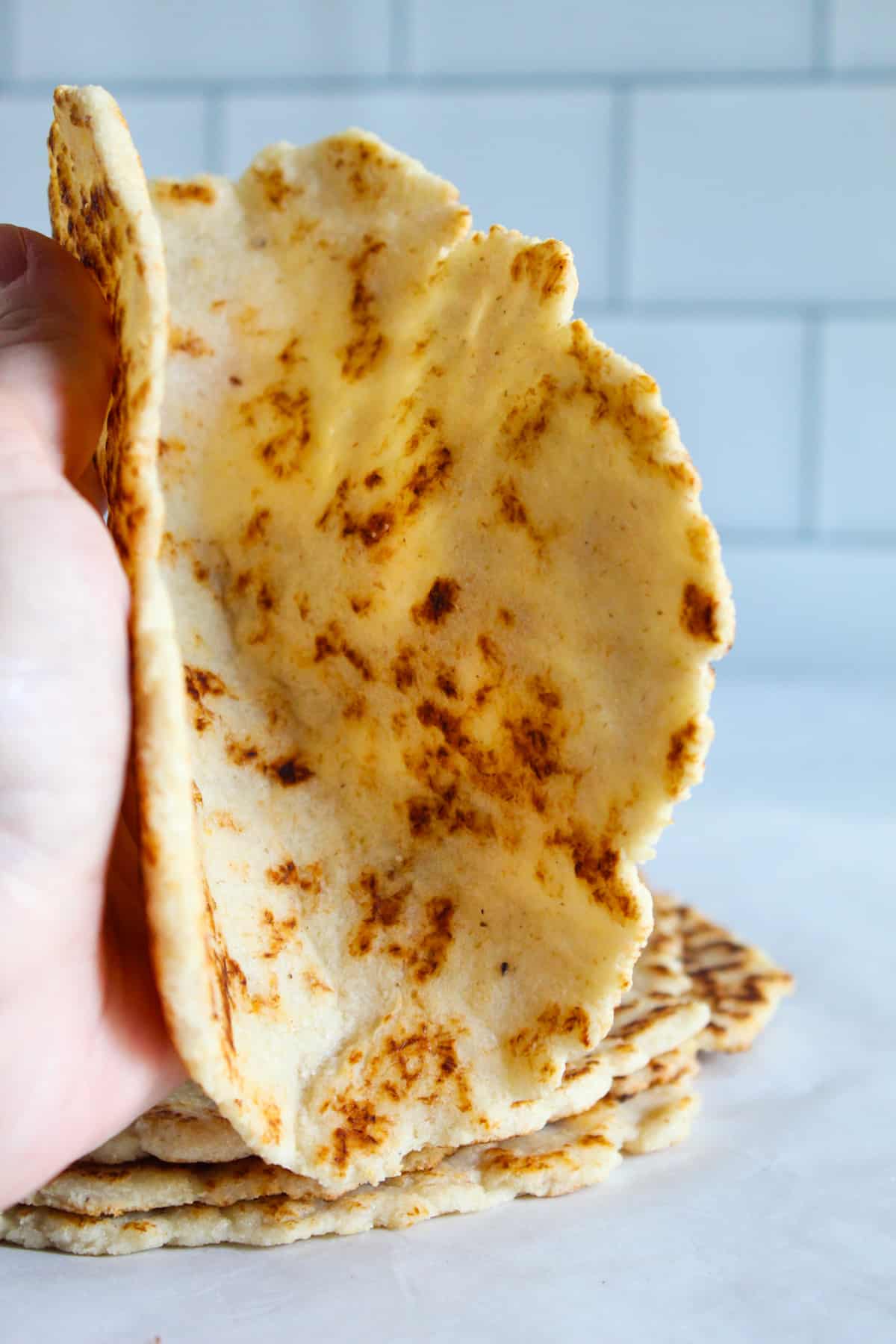
For Tacos
Gently warm the tortilla, then fold it around smoky grilled proteins, crunchy slaw, and zingy lime juice for flavorful street-style tacos.
For Burritos
Stretch your tortilla slightly larger and layer in scrambled eggs, avocado, beans, or seasoned meat for a satisfying handheld meal.
For Wraps
Lay your tortilla flat, spread on hummus or herbed yogurt, add fresh greens and sliced chicken, then roll it up snugly for a portable lunch.
For Quesadillas
Place cheese and fillings between two tortillas and heat until the cheese begins to melt and the edges are lightly crisp. This option is perfect for dipping.
For Keto Sandwiches
Use a warm tortilla as a sandwich base, folding in deli meats, sliced veggies, or egg salad for a low-carb option that still feels like a classic sandwich.
Do you love having hearty low-carb breakfasts? These wraps pair beautifully with the Best Gluten Free Breakfast Sandwich With Egg and Cheese for a satisfying start to your day.
For Enchiladas
Fill tortillas with your favorite savory mixture, roll them seam-side down in a casserole dish, spoon enchilada sauce over the top, and bake until hot and bubbling.
How to Store & Reheat Your Almond Flour Tortillas
Proper storage and reheating preserve the soft, flexible texture you worked so hard to achieve. Below is a clear, consolidated guide to keeping your almond flour tortillas fresh and ready to enjoy.
Refrigerator Storage
Once fully cooked and cooled, stack your tortillas with parchment paper between each layer and place them in an airtight container or resealable bag. In the fridge, they’ll stay fresh for about 4–5 days without drying out.
Freezing for Longer Use
To freeze, let the tortillas cool completely and keep parchment paper between each one so they don’t stick together. Place the layered stack in a freezer-safe bag or container, press out excess air, seal, and freeze. Stored this way, they can keep for up to 2–3 months.
Reheating Without Cracking
When you’re ready to enjoy your stored tortillas, reheat them gently so they stay pliable:
- Skillet: Warm each tortilla, one at a time, in a dry skillet over medium-low heat until soft and flexible.
- Microwave: Wrap a stack in a damp paper towel and microwave for 15–25 seconds. The steam helps reintroduce moisture and prevent brittleness.
Rehydration Trick
If a tortilla feels slightly dry or stiff after reheating, place it on a microwave-safe plate, cover with a slightly damp kitchen towel, and heat for 10–15 seconds. The steam will soften and rehydrate the tortilla, making it perfect for tacos, wraps, quesadillas, or sandwiches.
Would you like to protect other ingredients in your gluten-free pantry, especially alternative flours? Read our storage insights in How Long Does Flour Last? Best Storage Tips. You will get guidance on keeping almond flour and other flours fresh before you even start baking.
Almond Flour vs Coconut Flour Tortillas
When choosing between almond flour tortillas and coconut flour tortillas, both have their place in gluten-free and low-carb kitchens, but they behave very differently. Understanding those differences helps you pick the right wrap for texture, flavor, and how you plan to use it.
| Feature | Almond Flour Tortillas | Coconut Flour Tortillas |
|---|---|---|
| Texture | Soft, flexible, pliable | Drier, more crumbly |
| Carbohydrates | Lower net carbs | Slightly higher net carbs |
| Flavor | Mildly nutty | Subtly sweet, mild |
| Best Uses | Tacos, wraps, quesadillas | Quick wraps, smaller handhelds |
| Binding Needs | Benefits of psyllium for elasticity | Requires more liquid + eggs |
| Moisture Sensitivity | More forgiving | Easily dry without careful balance |
| Heat Tolerance | Can crisp gently | Tends to stiffen faster |
Almond flour tortillas tend to stay softer and more flexible, which is why they’re often the go-to for tacos, quesadillas, and wraps. Coconut flour tortillas, by contrast, can be slightly drier and require a precise moisture balance to avoid cracking, but they have their own appeal in certain gluten-free builds.
If you enjoy coconut flour in other recipes, you’ll find a lot of crossover with grain-free crusts and bases. For example, the Gluten-Free Coconut Flour Pizza Crust (Simple & Crispy) showcases how coconut flour can work beautifully in thin, crispy applications.
Nutrition Benefits of This Almond Flour Tortilla Recipe
One reason this almond flour tortilla recipe is popular in keto and gluten-free kitchens is its favorable macronutrient profile. Knowing the nutritional profile of almond flour tortillas helps you see why they’re a strong choice for keto, gluten-free, and low-carb eating, especially compared with traditional wheat tortillas.
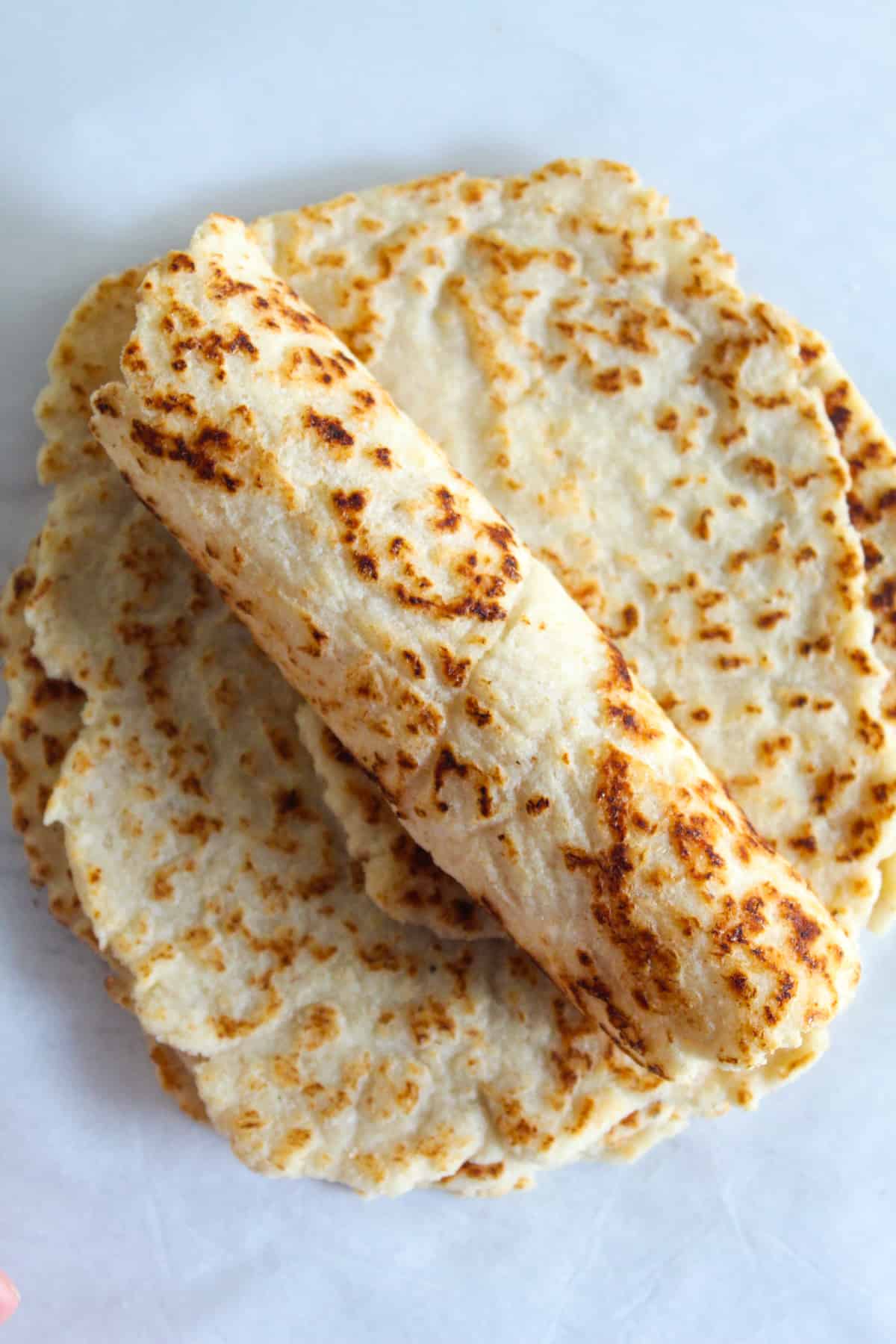
Net Carbs Per Tortilla
Almond flour, made from ground almonds that are naturally low in carbohydrates, contributes to wraps that are significantly lower in carbs than their wheat counterparts. This inherently low-carb profile supports ketogenic macros by keeping net carbs low, which helps the body stay in a fat-burning metabolic state (ketosis) when overall carb intake is limited.
Carb Comparison vs Wheat Tortilla
Traditional wheat flour tortillas contain a high amount of carbohydrates per serving. In contrast, almond flour delivers moderately higher fat and protein but fewer carbs, which aligns with keto and low-carb nutrition goals. Almond flour’s composition, high in fat and fiber, slows carbohydrate absorption and reduces the overall glycemic impact compared with wheat flour.
Gluten-free, ketogenic bakery products using low-carb flours like almond flour typically have fewer carbohydrates than standard gluten-free products. They also deliver more fat and protein, making them a strong choice for low-carb and keto eating patterns.
Fiber Content
Psyllium husks, often included in almond flour tortilla dough, add dietary fiber that benefits digestion. Also, it further reduces net carbohydrate impact (total carbs minus fiber), which is a key consideration for keto meal planning. Almonds themselves are a good fiber source as well, which contributes to satiety and digestive health.
Protein Content
While tortillas aren’t typically high-protein foods, almond flour contributes more plant-based protein than many processed wraps made from refined grains. This helps balance macronutrients and makes almond flour tortillas more satisfying as part of a meal.
Why It Fits Keto Macros
The ketogenic diet emphasizes high fat, moderate protein, and low carbohydrate intake to shift the body into ketosis. Almond flour’s high healthy fats and low-carb content help meet these macros more easily than traditional grain flours like wheat or rice. The properties of almond flour help maintain stable blood sugar levels, which is essential for sustaining ketosis and supporting energy levels on a keto plan.
Baking Questions Answered
This section covers some of the questions we frequently get asked about making and using almond flour tortillas, along with clear, practical answers to help you succeed every time. If you don’t see yours, just drop it in the comments below.
Are Almond Flour Tortillas Keto?
Yes. This almond flour tortilla recipe is keto-friendly because almond flour is naturally low in carbohydrates and high in healthy fats.
Can I Use a Flax Egg?
Flax egg can work as a binder in grain-free tortillas, though psyllium husk tends to give more pliability and better structure in low-carb dough.
Can I Bake Instead of Pan Fry?
Yes, you can bake them, but pan cooking typically gives better flexibility and browning. However, baking may produce a drier texture.
Can I Air Fry?
Air frying is possible if you’re crisping tortillas for chips. However, watch closely as they can dry quickly due to the low moisture in almond flour tortillas.
Can I Use An Almond Meal?
Almond meal is coarser and may give a denser, less flexible tortilla. But almond flour (finely ground) generally yields softer results.
Can I Make Larger Wraps?
Yes, divide the dough into fewer portions for larger tortillas, but roll carefully because bigger wraps can be more delicate.
Why Are Mine Crumbly?
Crumbly tortillas usually lack enough moisture or binder. So, ensure psyllium is fully hydrated, and that the dough isn’t too dry before rolling.
Can I Freeze Them?
Absolutely, you can. Cool them completely and freeze them with parchment paper between each tortilla so they don’t stick, then thaw before reheating.
How Many Net Carbs?
Net carbs vary by recipe and size, but keto almond flour tortillas are generally very low, often in the single-digit grams per tortilla, making them suitable for low-carb plans.
Can I Use Olive Oil?
Yes, olive oil is a common fat used in almond flour tortillas and helps with pliability and taste during cooking.
Can I Double the Batch?
Yes, you can scale this recipe. But make sure you divide and roll the dough carefully so the texture and cooking times stay consistent.
Is This the Best Almond Flour Tortilla Recipe for Beginners?
Yes. This almond flour tortilla recipe uses simple ingredients and minimal steps, making it ideal even if you’re new to low-carb baking.
Related Almond Flour Recipes & Flour Swap Ideas
If you love working with almond flour in gluten-free and low-carb cooking, these posts are the perfect next reads:
- Corn Flour Substitutes (Complete Guide & Best Options) — Handy tips for replacing corn flour in recipes when you want a low-carb or gluten-free twist.
- Almond Flour Cornbread Recipe: Easy & Gluten Free — A cozy side or snack that pairs beautifully with savory meals and showcases almond flour’s versatility.
- One-Bowl Almond Flour Banana Muffins — Quick, moist, and customizable with chocolate chips or nuts.
- Quick Almond Flour Brownies with Just 8 Ingredients — An easy low-carb chocolate fix.
- Scrumptious Almond Flour Peanut Butter Cookies — Chewy, gluten-free cookies ready in under 30 minutes.
Whether you’re baking something sweet or experimenting with flour swaps, these recipes make it easy to keep almond flour in regular rotation.
Ready to Make Soft Almond Flour Tortillas?
We want to hear from you! Tell us how your almond flour tortillas turned out. What fillings did you use? Did you encounter any texture bumps along the way?
Drop your experiences, questions, or troubleshooting tips in the comments below, especially if you tried something unexpected or creative!
Jump to the discussion: Leave a Comment!