Did you run out of arrowroot flour? The first rule of baking is basically, “Don’t panic.”
You may be able to find a handy replacement in your pantry. You may need a different replacement for a sauce than you would for making waffles. So it helps to know which arrowroot powder replacement is best suited for which purpose.
Table of Contents
In this guide, you’ll discover the best arrowroot powder substitutes, when to use each one, and which ones to avoid depending on your recipe.
What is Arrowroot Powder?
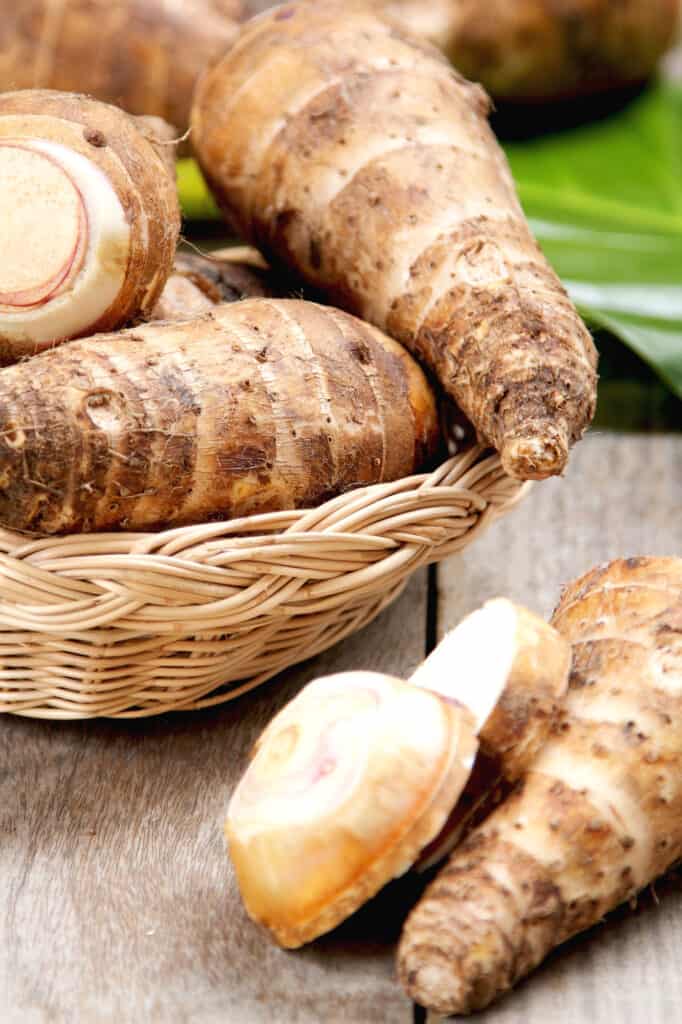
Arrowroot powder, also known as arrowroot starch and arrowroot flour, originates from the root of the arrowroot plant. This tropical plant, called Maranta arundinacea, is native to various areas of Southeast Asia.
Arrowroot is comparable to other tropical tubers such as cassava, yucca, and kudzu. After being harvested, the plant’s roots are dried and ground to produce arrowroot powder. It is a white, starchy powder that has no flavor or odor.
As a grain-free starch, arrowroot is also naturally gluten-free. This makes it easily digestible for people with celiac disease or who are allergic to common grains like wheat. Because the flour doesn’t have any flavor itself, it can be used in a variety of sweet and savory recipes. For these reasons, it can be an extremely useful ingredient in gluten-free baking.
Arrowroot Flour Uses
You might come across arrowroot flour in light and delicate gluten-free baked goods such as cakes, pies, cookies, and more. It can stand on its own in many recipes, but can also be found in numerous gluten-free flour blends.
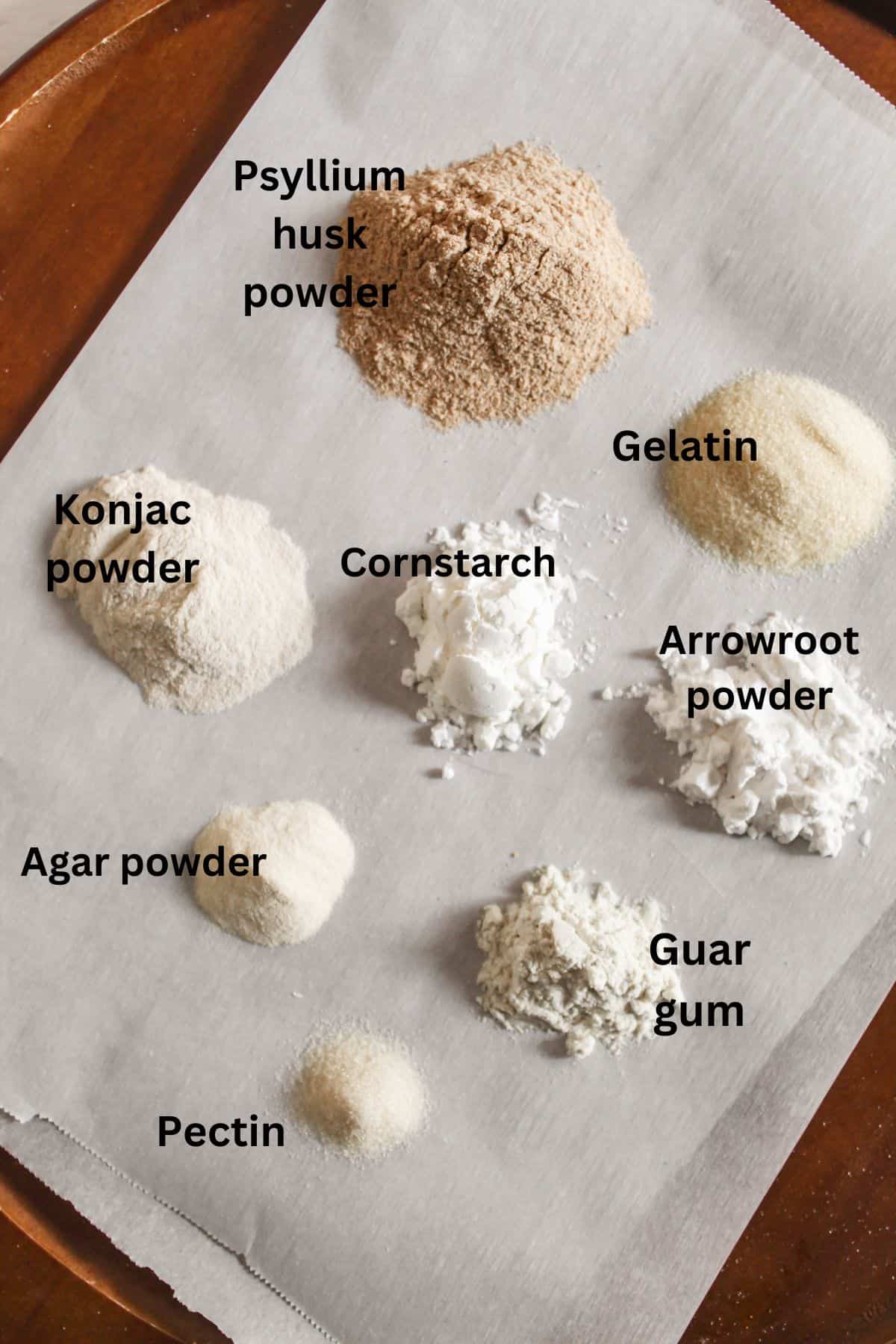
Arrowroot is sometimes used as a replacement for cornstarch because it performs similarly in most situations. It acts as a binder and provides a light and fluffy texture to breads and desserts. Arrowroot can also be used as a thickening agent for sauces, soups, or puddings.
It makes an excellent substitute for cornstarch in jellies, jams, and fruit fillings because it does not affect the color or translucency of the food and holds up well when paired with acidic ingredients.
Like cornstarch, arrowroot starch is often combined with a small amount of water or other liquid to create a slurry before adding it to your recipe. This allows the powder to combine fully with the rest of the ingredients without clumping. It’s important to note that arrowroot powder tends to break down if exposed to high temperatures for an extended period of time.
For this reason, it’s generally best to add it to recipes towards the end of the cooking process when possible. On the other hand, arrowroot thickens at a relatively low temperature, making it easy to use in many recipes. It also works well in cold recipes that must be refrigerated or frozen.
Choosing a Substitute for Arrowroot
Fiber and protein content are the most important considerations when choosing the best arrowroot powder replacement for your cooking and baking needs. If a possible replacement for arrowroot powder has a similar enough fiber and protein content, you can usually use it to replace arrowroot powder at a 1:1 ratio.
If the fiber and protein content varies by a significant amount, you may have to adjust the amount of arrowroot powder replacement to suit. It may affect the texture of your baked item otherwise, and can even cause common “fail modes” like an item that is too dense, too gummy, too dry, or that collapses after you take it out of the oven.
Arrowroot Substitute Comparison Chart
Here’s a quick comparison chart for arrowroot and its substitutions if you would rather grab this information to go!
| Thickener | Best For | Sub Ratio (for 1 tbsp arrowroot) | Heat Tolerance | Freezer Stable | Clear or Cloudy | Best for GF Baking? |
|---|---|---|---|---|---|---|
| Arrowroot Powder | Sauces, pie fillings, glazes | — | Medium (avoid long boiling) | Yes | Clear | Yes |
| Cornstarch | Gravies, soups, stir-fries | 1 tbsp | Medium–High | Can separate | Cloudy | Sometimes |
| Tapioca Starch | Pie fillings, puddings | 2 tbsp | High | Yes | Slightly glossy | Yes |
| Potato Starch | Soups, frying, baking | 1 tbsp | Medium | Fair | Slightly cloudy | Yes |
| Potato Flour | Baking, breads | 1 tbsp (reduce liquid) | Medium | Fair | Opaque | Dense texture |
| Psyllium Husk Powder | GF bread structure | ½–1 tsp (very strong) | High | Yes | Opaque | Excellent binder |
| Xanthan Gum | GF baking, sauces | ¼–½ tsp | High | Yes | Slightly cloudy | Structural support |
| Mashed Potato Flakes | Soups, casseroles | 1–2 tbsp | Medium | Fair | Opaque | Not ideal |
| Coconut Flour | Baking only | 1–2 tbsp (increase liquid) | Medium | Can dry out | Opaque | Very absorbent |
| Gluten-Free Flour Blend | Baking | 1–2 tbsp | Medium | Depends on the exact flour blend | Opaque | Yes |
Best Substitutes for Arrowroot
These are the best arrowroot powder replacements if your goal is to replace the amount of arrowroot at a 1:1 ratio. As the data on USDA FoodData Central shows, their fiber and protein content are pretty similar to arrowroot.
For reference, arrowroot powder is called arrowroot flour in the USDA FoodData Central database. It contains 0.3 grams of protein and 3.4 grams of dietary fiber per 100 grams of arrowroot flour.
1. Cornstarch
Cornstarch is made from the endosperm of corn grains and is naturally gluten-free.
It notably contains less dietary fiber than arrowroot at 0.9 grams of fiber per 100 grams. It also contains 0.26 grams of fiber per 100 grams, putting it pretty close to arrowroot.
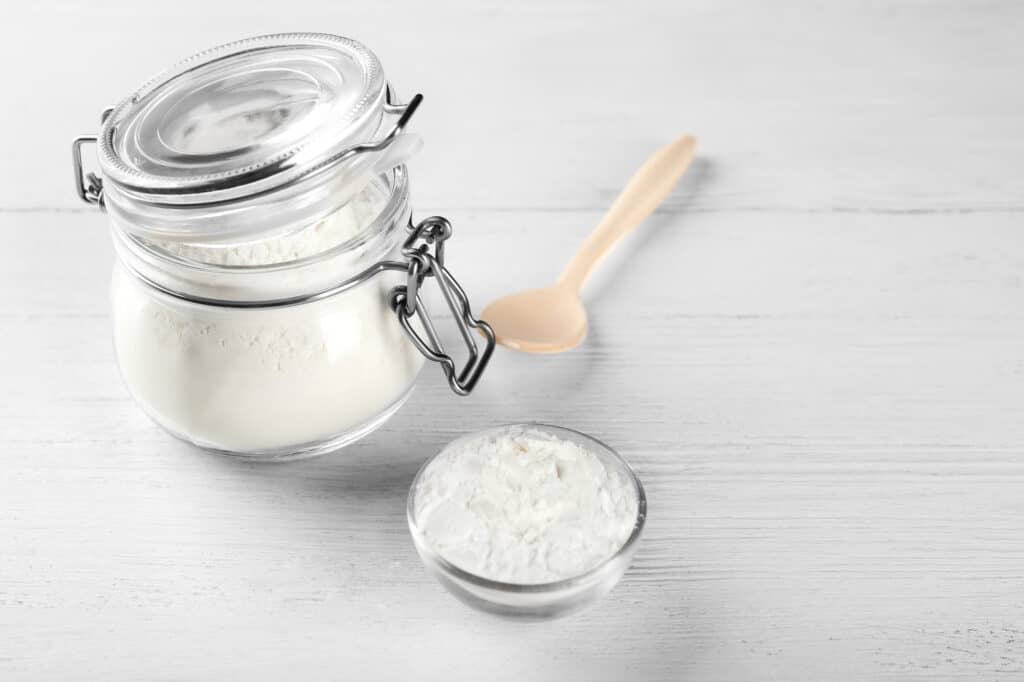
What’s an endosperm? The thing to remember about grains like corn and wheat is that they are the seeds of cultivated grasses. The seeds’ endosperm stores nutrients like protein, starch, and oil that can provide nourishment for these grasses’ embryos as they mature and germinate.
2. Tapioca Starch
Another great alternative is tapioca starch, which comes from the root of the cassava plant.
Tapioca starch is odorless and flavorless, so it won’t affect the taste of your recipes if you use it as a 1:1 replacement for arrowroot powder.
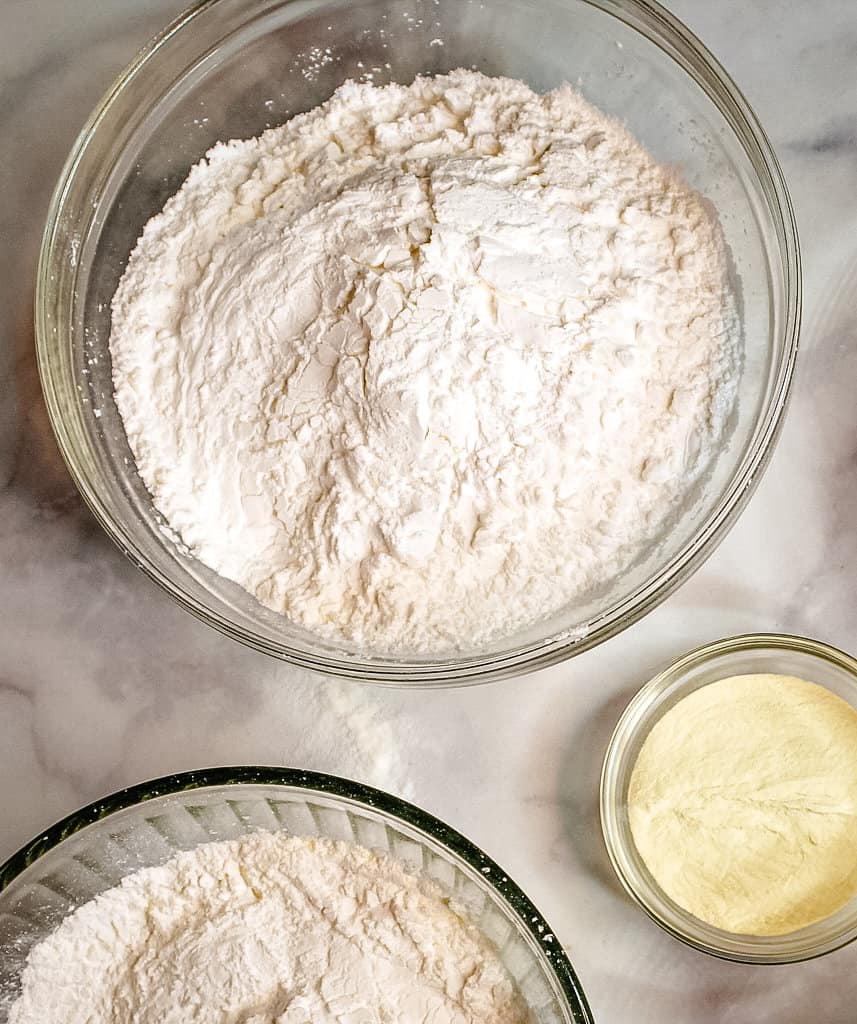
USDA FoodData Central only has data for major brands that sell tapioca starch, like Goya Foods. Most of this data indicates that tapioca starch generally has 3.3 grams of dietary fiber and 0 grams of protein per 100 grams.
3. Potato Starch
Potato starch is another substitute that adds moisture to baked goods. USDA FoodData Central again only had data for brands like Bob’s Red Mill that sell potato starch. The consensus is that it contains 0 grams of dietary fiber and 0 grams of protein per 100 grams.
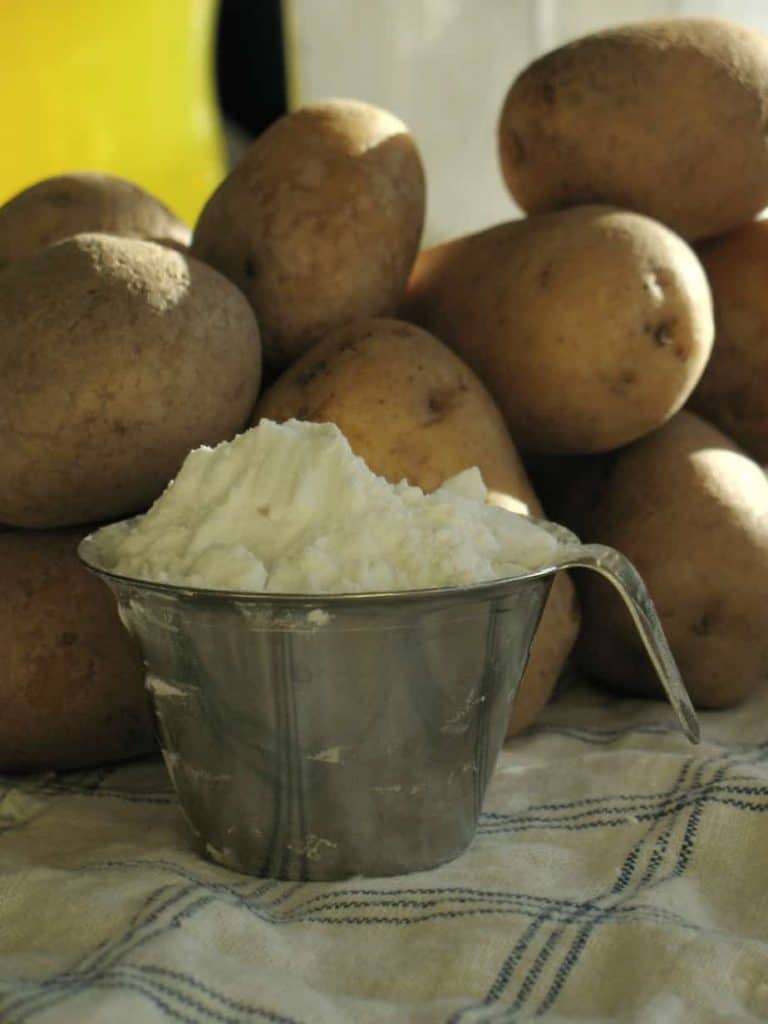
The number one thing to remember about cooking with potato starch is that it excels at absorbing moisture! When you use it to replace arrowroot flour, be careful not to add too much potato starch or liquid ingredients, or the baked item can come out all gummy.
Potato starch is different from potato flour. The starch does occur naturally in potatoes and makes up about 17% of a raw potato’s weight.
It is extracted from potatoes by crushing the potatoes, filtering out the water, and letting the starch in the water settle to the bottom. Then the water is discarded while reserving the starch. Wet potato starch can be used immediately in soups and sauces, though it is more commonly dried.
Other Substitutes for Arrowroot
These replacements for arrowroot powder can yield great results. However, due to wider differences in their nutrient content, they cannot replace arrowroot at a 1:1 ratio.
1. Potato Flour
While potato starch can be used as a 1:1 replacement, potato flour cannot. Potato flour differs from potato starch in that it is made from whole peeled potatoes that have been cooked, dried, and finely ground into flour. It lends a moist and tender crumb to baked goods, making it ideal for gluten-free baking.
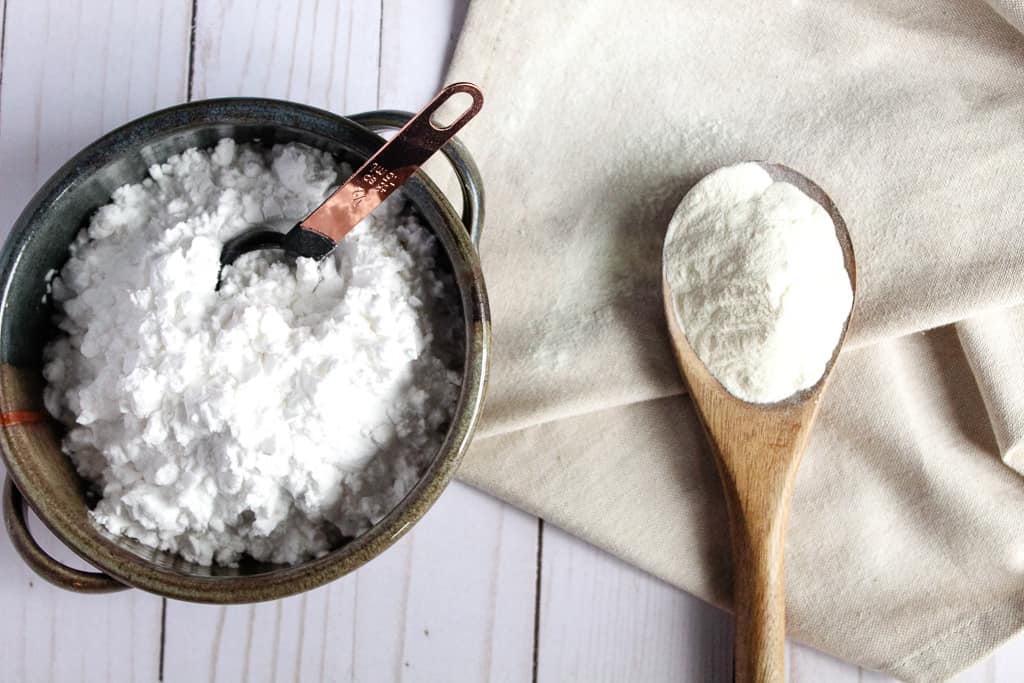
Potato flour contains significantly more protein and fiber than arrowroot powder does. Remember, arrowroot contains 0.3 grams of protein and 3.4 grams of dietary fiber per 100 grams. According to the USDA FoodData Central database, potato flour contains 5.4 grams of fiber and 8.11 grams of protein per 100 grams.
What does this mean for your recipes? It means you should use half the amount of potato flour when you use it to replace arrowroot flour. For example, if the recipe calls for 2 tablespoons of arrowroot flour, you should use 1 tablespoon of potato flour.
2. Psyllium Husk Powder
Psyllium husk Powder is another good substitute. Rich in fiber and naturally gluten-free, psyllium husk powder is milled from psyllium seeds harvested from the Plantago ovata plant, which is native to Asia.
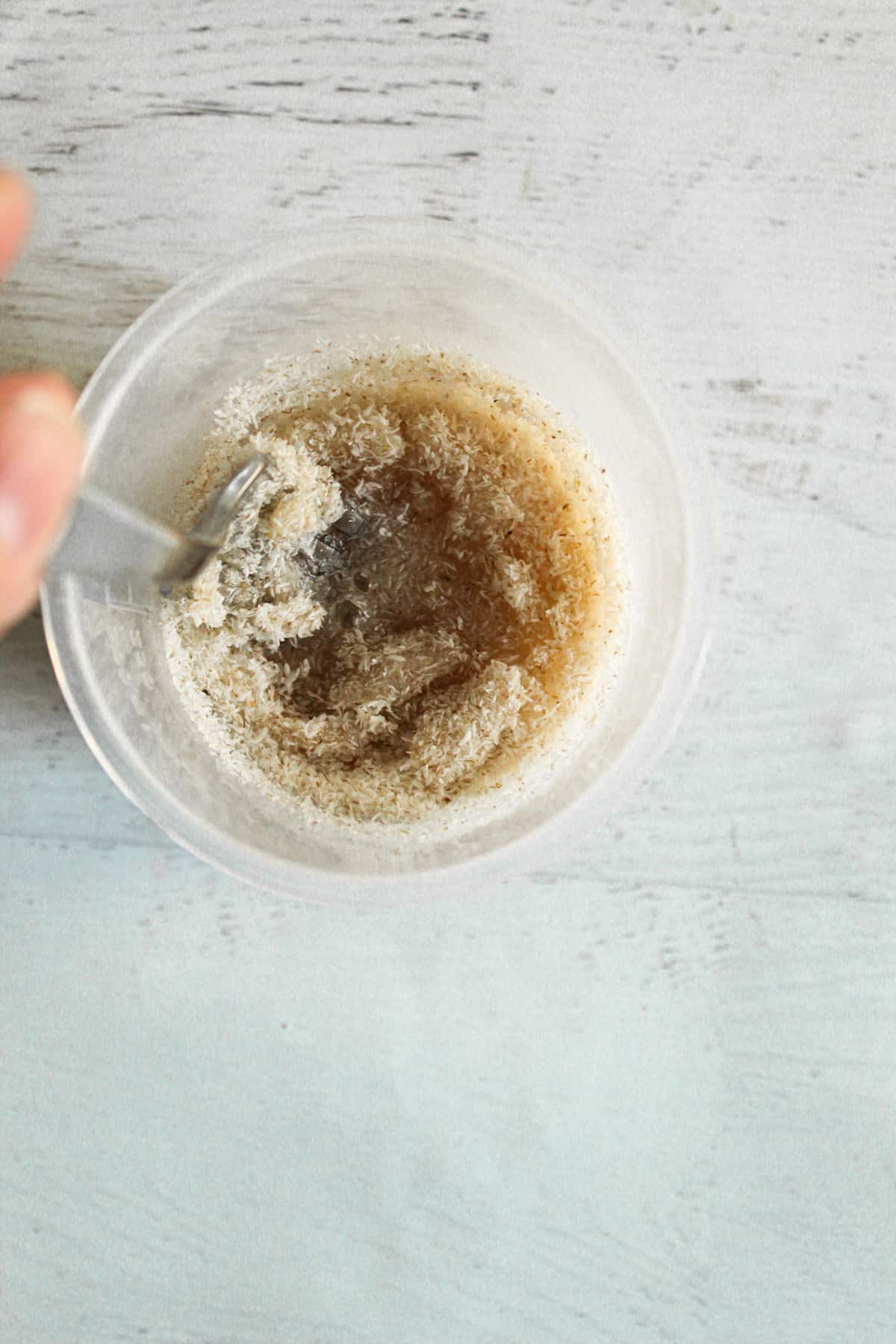
Psyllium husk powder forms a gel when added to liquids, making it ideal as a thickener and binder in various recipes. It also provides a light and fluffy texture to baked goods. You can replace arrowroot powder with half the amount of psyllium husk powder (e.g., replace 2 teaspoons of arrowroot starch with 1 teaspoon of psyllium husk powder).
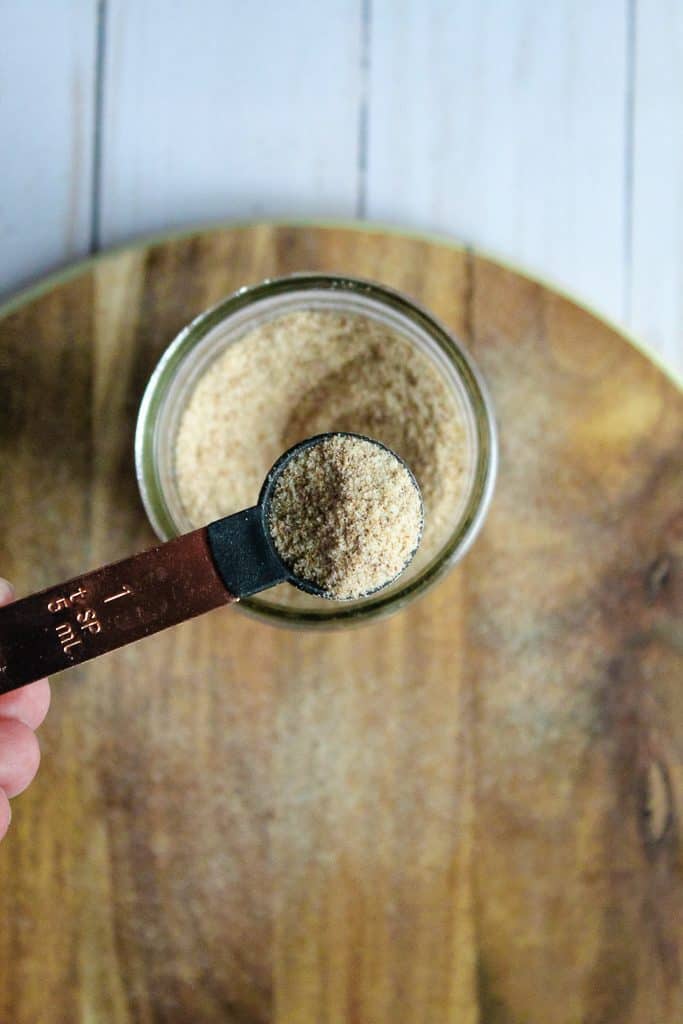
I do not usually recommend using more than 1 teaspoon of psyllium husk powder in a recipe, as it can cause digestive issues in larger quantities.
If you shop for psyllium husk powder online, keep in mind that it’s also sold as a dietary supplement. It would be easy to order the wrong version by accident. When I order it online, I tend to stick with the Viva Naturals Organic brand to make sure I’m getting the right thing.
3. Xanthan Gum
Xanthan gum is a common alternative to wheat flour in gluten-free recipes, and can also replace arrowroot flour. As an ingredient, Xanthan gum is most commonly used as a thickener and binder.
It is the product of fermented sucrose, glucose, and lactose that has been dried and ground into a fine powder. It has become a common ingredient in gluten-free baking.
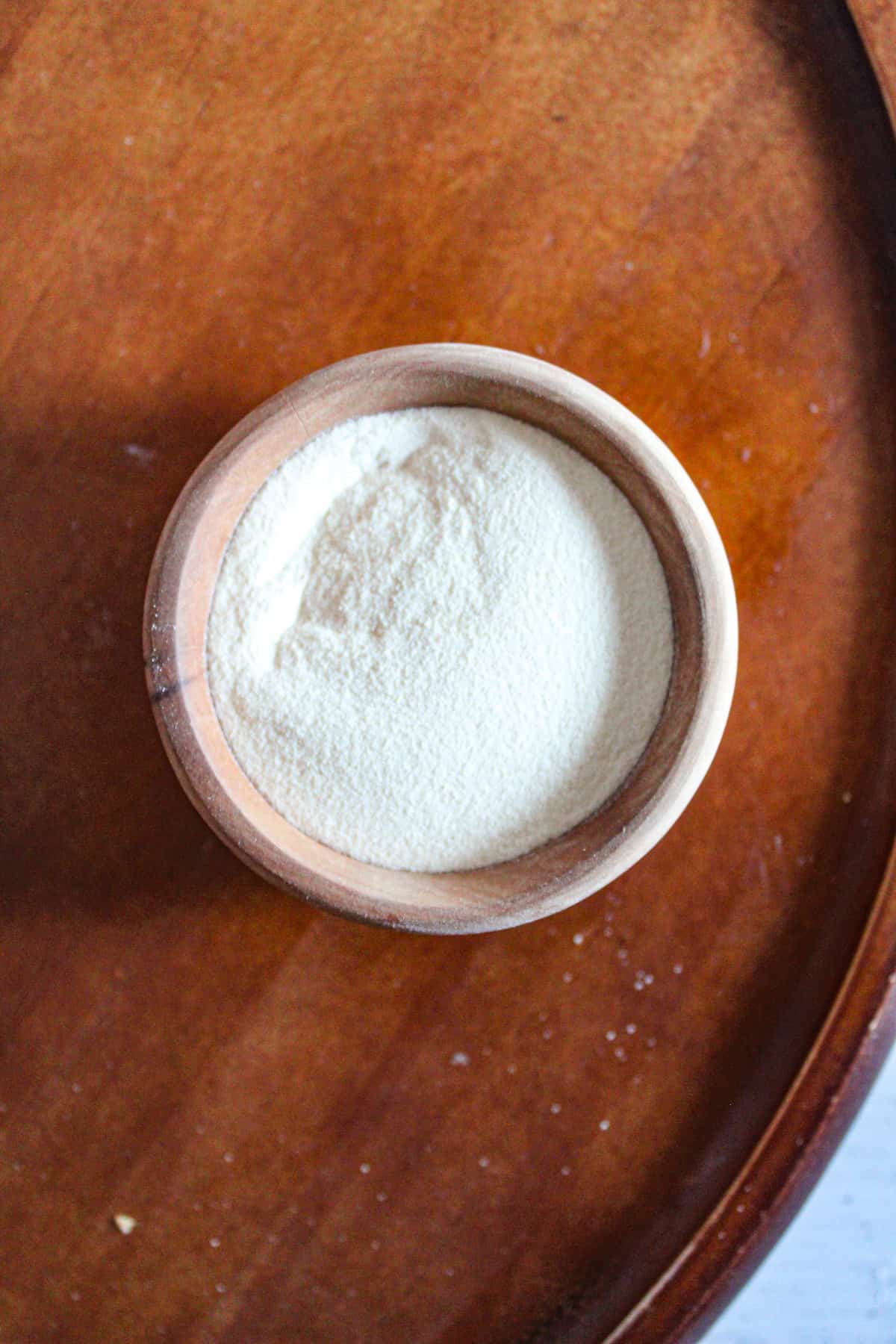
USDA FoodData Central says 100 grams of xanthan gum contains no protein, but contains a super high 100 grams of dietary fiber. When using xanthan gum to replace arrowroot, reduce the amount in the recipe by 1/3. One teaspoon of xanthan gum can replace one tablespoon of arrowroot powder.
Like psyllium husk powder, using too much xanthan gum powder in your recipes could cause digestive issues.
4. Mashed Potato Flakes
Mashed potato flakes are made from potatoes that have been boiled, mashed, and dehydrated. These flakes can be used as a binder and thickener in recipes like cinnamon rolls, and also to make breads light and fluffy.
The trick is to find a version of mashed potato flakes that has no dairy products added. If you can, they contain 8.34 grams of protein and 6.6 grams of dietary fiber per 100 grams.
You can replace it with half the amount of mashed potato flakes in a recipe. For example, replace 2 teaspoons of arrowroot flour with 1 teaspoon of mashed potato flakes.
5. Coconut Flour
Coconut flour is a good alternative that can retain moisture without adding much to the recipe. Made from dried and ground coconut flesh, coconut flour is a gluten and grain-free flour that is highly absorbent. Even recipes with coconut flour only use a small amount of coconut flour.
Coconut flour will add a slight coconut flavor to any recipe. So I like to mostly use it for recipes that are supposed to be somewhat tropical-themed anyway.
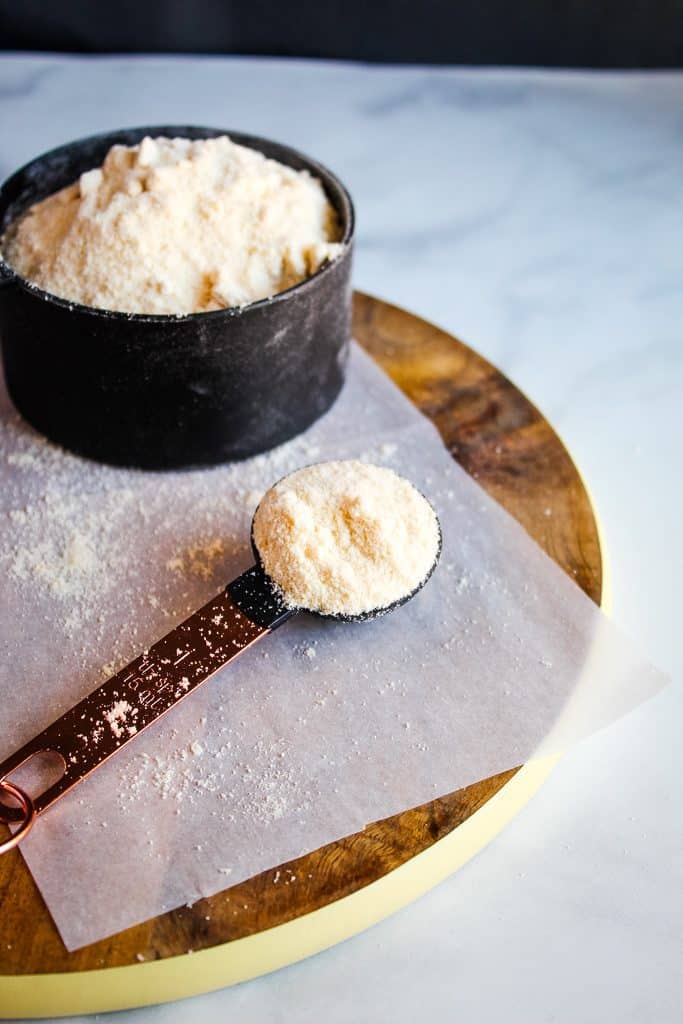
What to remember about coconut flour: According to the Iowa State University’s fact sheet on coconut flour, it is four times as absorbent as wheat and other grain-based flours! That means you can also use coconut flour to replace up to 20% of the wheat flour in a recipe, but you’ll have to adjust the amount of liquids to suit. Iowa State University also recommends adding an extra egg for every ounce of flour you are replacing if you are using it to replace wheat flour to help support the structure of your baked items.
It’s also high in both fiber and protein compared to arrowroot powder. The USDA’s FoodData Central database says it has 16.1 grams of protein and 34.2 grams of dietary fiber per 100 grams of coconut flour.
That means you only need half the amount of coconut flour if you’re using it to replace arrowroot powder in a recipe. For instance, replace 2 teaspoons of arrowroot starch with 1 teaspoon of coconut flour.
It also means you can get away with using a little more of it than you would for psyllium husk powder or Xanthan gum. Measure it carefully and use a digital kitchen scale if the recipe you’re using is being super precise and calling for amounts of the dry ingredients in grams instead of cups, tablespoons, or teaspoons. But you can worry less about possible digestive issues if the recipe calls for more of it.
6. Gluten Free Flour Blend
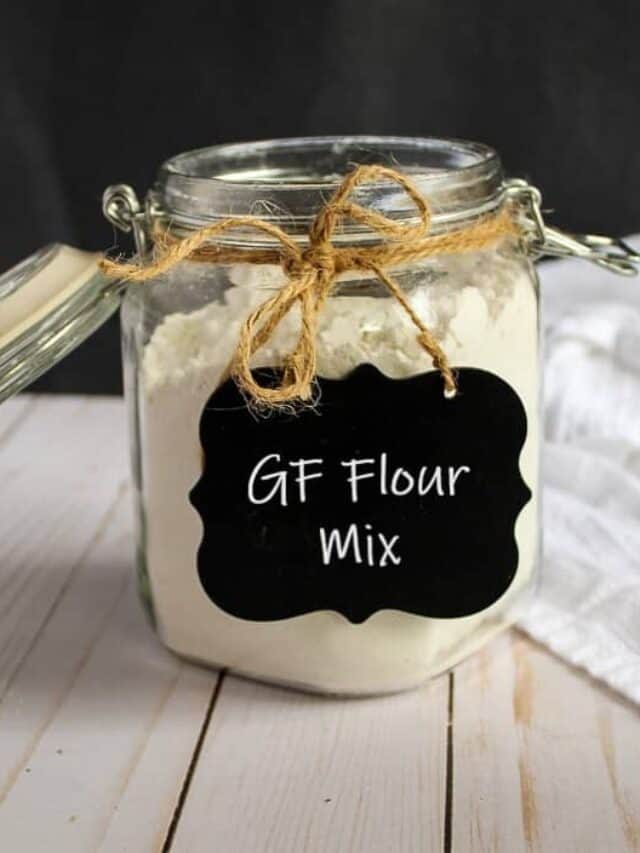
A gluten-free flour blend that contains a mix of flours and starches that are useful for gluten-free baking can handily replace arrowroot powder. I will often make my own gluten-free flour blend using a mix of white rice flour, brown rice flour, cornstarch, tapioca, and potato flour.
Why these five ingredients? Well, it’s rare for a single-ingredient, gluten-free flour to replace everything that a baked good needs to support its structure. This blend provides the right mix that provides both binding action and support for a light texture in baked goods.
Use half the amount of gluten-free flour blend to replace arrowroot powder.
If you prefer to buy instead of make your own, King Arthur Measure for Measure Gluten-Free Flour is usually a good pick.
Arrowroot Powder Substitute FAQs
We do sometimes get questions about arrowroot powder substitutes! We tried to answer the most commonly asked ones below. If you think of one we haven’t gotten to yet, feel free to ask in the comments section, and we’ll do our best to answer!
Why do fiber and protein matter so much when replacing arrowroot powder?
Protein is important to the texture and structure of baked goods. The gluten in grains like wheat and barley typically does most of the heavy lifting in creating structure for breads and other baked goods that depend on their ability to trap air in the dough to turn out correctly. Replacing the gluten typically requires finding another way to get the same structure and texture.
Fiber mostly handles the job of trapping moisture. As a general thing, flours that have a higher fiber content will trap more liquid. This can affect things like how moist the crumb is, how prone the final product might be to becoming too gummy, or how dense the final product is. You may have to adjust the amount of liquid ingredients to suit when you choose an alternative to replace arrowroot powder.
I tried adding a starch to a sauce to thicken it, but it still came out thin! Why is that?
One possible explanation is that the starch was exposed to high heat for too long, which caused it to break down and lose its ability to thicken the sauce. This breakdown is known as starch breakdown or over-gelatinization. Arrowroot tends to be the most prone to breaking down when overexposed to high heat. For this reason, most sauce recipes recommend adding the sauce near the end of the process of making them.
If you are thinking about replacing the arrowroot in a sauce, tapioca and potato starch do slightly better at tolerating high heat.
When I replaced arrowroot with another starch in a sauce, it turned cloudy! Why did it do that?
While you do have to be careful about heating arrowroot, it has more uniform starch granules that can stay translucent when heated. Cornstarch is one starch that contains proteins that will scatter light, which can make the sauce look cloudy.
Due to arrowroot’s ability to maintain a more translucent appearance, professional cooks and chefs prefer it for fruit glazes, clear sauces, and dessert fillings.
Can arrowroot or its replacements be frozen?
Arrowroot actually handles freezing the best, which makes it ideal for any recipe that you might expect to freeze some of later. It produces a more stable gel that handles being frozen and rethawed without becoming too watery (like cornstarch can) or recrystallizing enough to ruin pie fillings and frozen desserts (like some of the starchier replacements like potato starch can).
Tapioca also does pretty well at staying freezer-stable. So out of all the featured replacements, I recommend tapioca the most if you are making something to freeze for later.
Easy Recipes Using Arrowroot or Arrowroot Replacements
Looking for some recipes to try arrowroot or its replacements in? Here are a few of my faves!
- EASY Chocolate Chip Cookies Recipe Without Flour
- Coconut Flour Banana Pancakes
- Gluten-Free Blueberry Cobbler
These recipes are a great way to experiment with arrowroot and its substitutes while creating delicious gluten-free treats.
Share Your Arrowroot Cooking Experience
Have you tried using arrowroot powder or one of these substitutes in your cooking or baking? We’d love to hear how it worked for you. Share your favorite recipes, tips, or kitchen experiments in the comments so other readers can learn from your experience.