Need an agar agar substitute in a hurry? Not every replacement works the same way, and picking the wrong one can leave you with a runny dessert or a gummy filling.
The good news is that there are plenty of good alternatives that you may already have in your pantry if you do a lot of gluten-free baking.
Table of Contents
Below, you’ll find the best agar agar substitutes, their best uses, and how to choose the right one for your recipe.
Agar Agar Substitutes: Key Takeaways
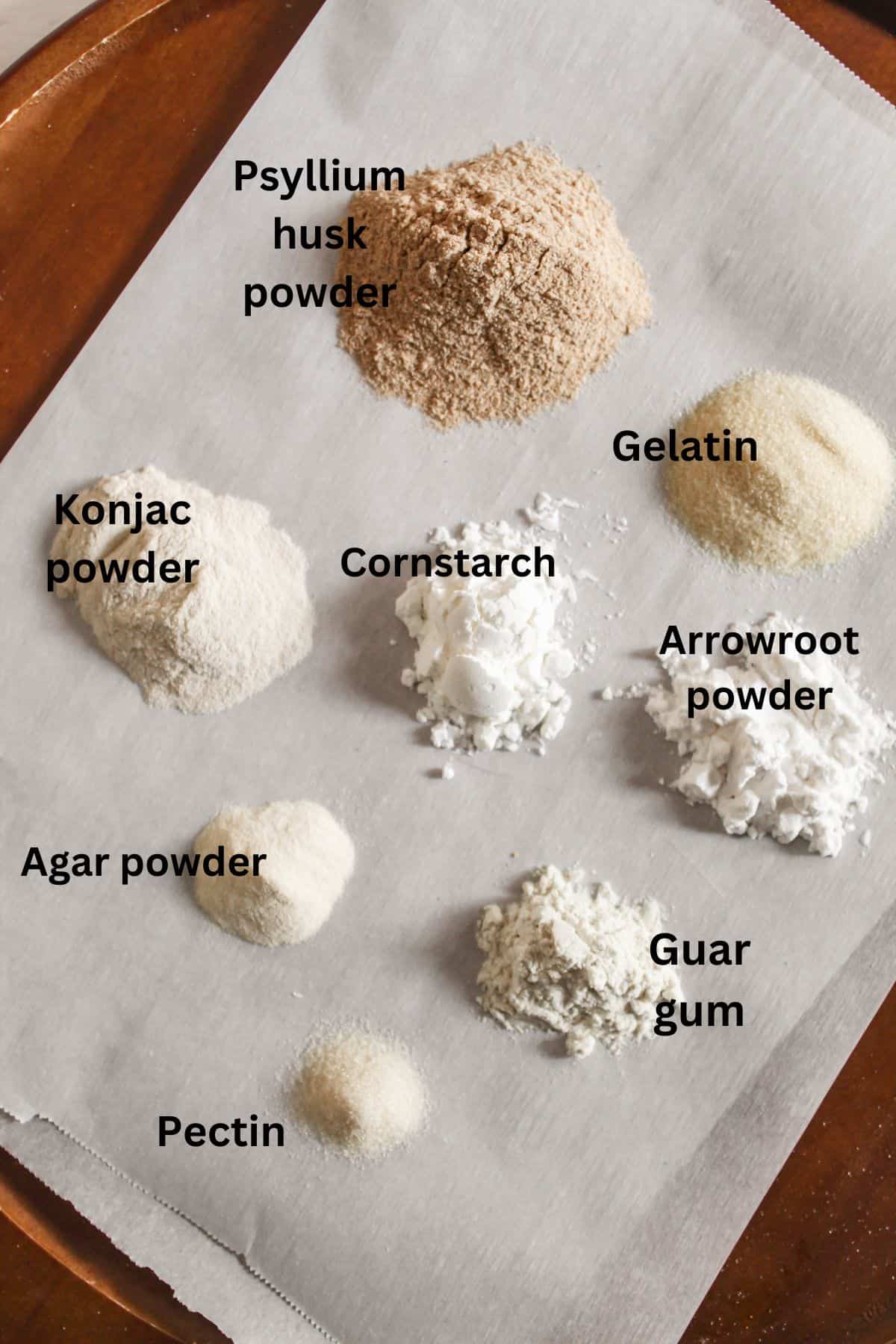
For best results when using a substitute for agar agar, use one of these products that will produce similar results:
- Best Alternatives: Gelatin, cornstarch, and pectin powder are some of the best substitutes for agar agar powder.
- Good Substitutes: Xanthan gum, arrowroot powder, tapioca starch, guar gum, cassava flour, carrageenan, and vegan Jel are also good alternatives for agar agar powder.
What is Agar Agar?
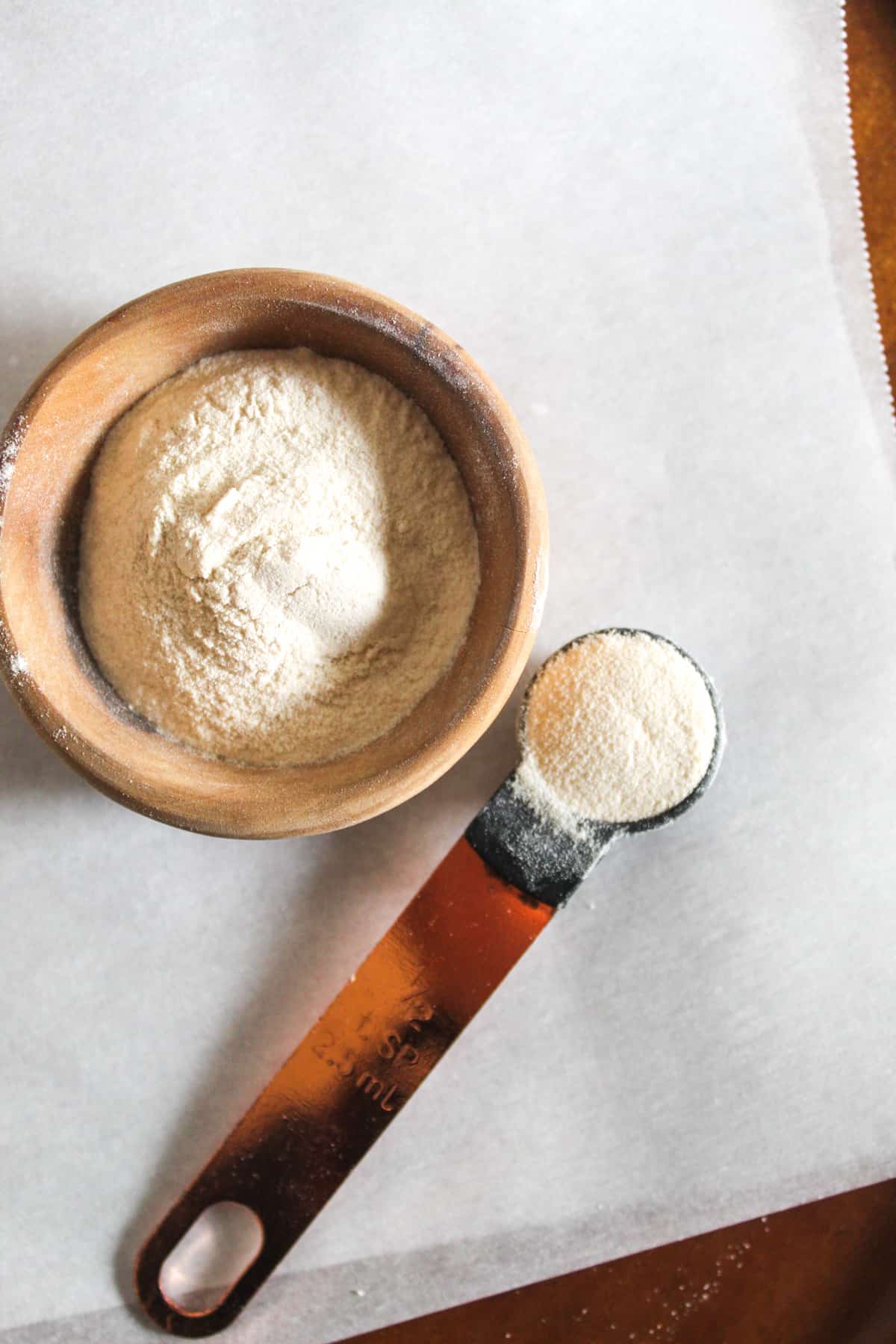
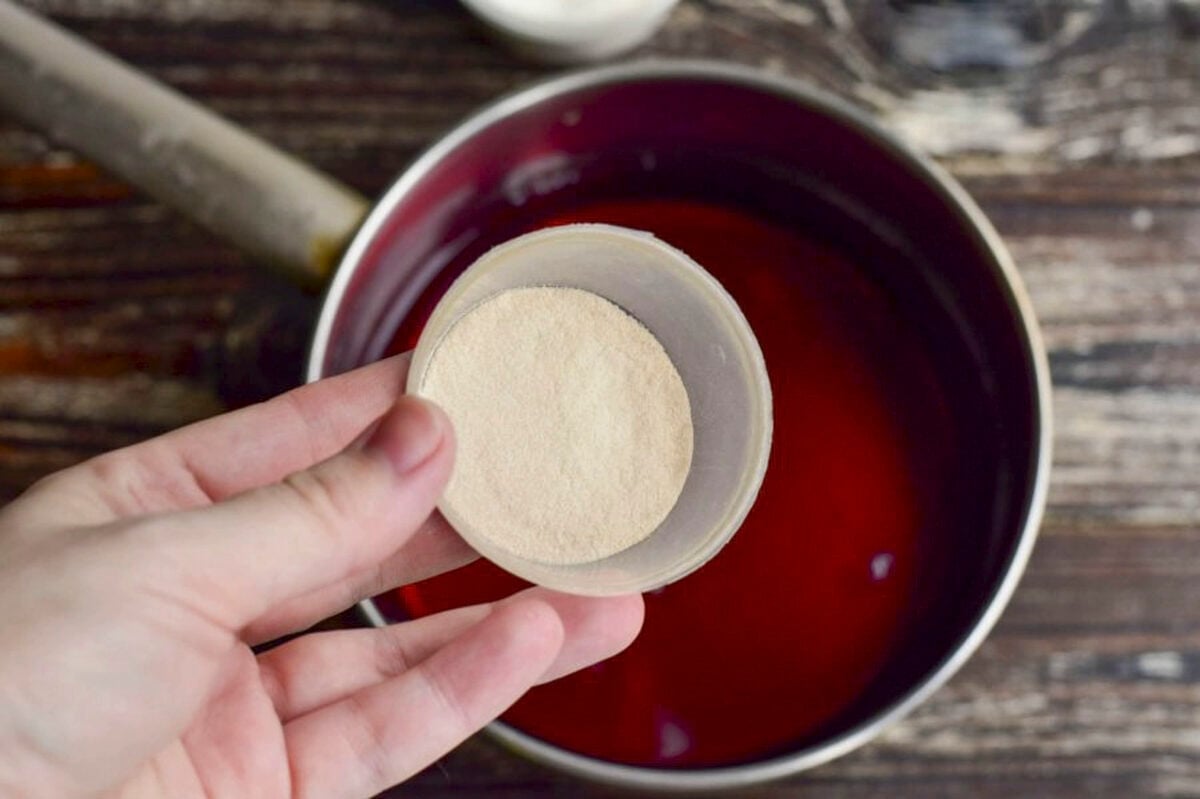
Agar agar is a white powder that provides elasticity and thickening capacity to many recipes. It functions similarly to gelatin. The difference? Agar agar is more “vegetarian-friendly” than gelatin because it’s made from the cell walls of red algae, a type of seaweed.
You might also see agar agar labeled as kantin, Japanese gelatin, or vegetarian gelatin.
Fun fact: Agar agar’s gelling properties also have applications in the laboratory setting! According to Microbiology Notes, scientists sometimes use it to turn a liquid medium into a firm base for microbial growth. This makes it easier for them to observe microbes without interfering with the medium’s nutritional content.
How to Use Agar Agar
Agar agar needs to “activate” in a way similar to gelatin before you use it in a recipe. That will usually mean dissolving the required amount in a hot liquid, usually water. One surefire way to do this properly is to just follow these steps:
Step One: Mix Agar Agar With Water
Mix the required amount of agar agar with enough water to dissolve it in a saucepan. Optionally, add any flavorings you need to the mix.
Step Two: Heat Agar Agar Mixture
Heat the agar agar mixture to a simmer over medium-high heat, stirring constantly to ensure it dissolves.
Step Three: Bring Mixture to Full Boil
Increase the heat to high and bring the mixture to a full boil. Boil for 1-2 minutes, stirring constantly.
Step Four: Remove from Heat
Remove from heat and allow the mixture to cool slightly.
Step Five: Strain Out Any Undissolved Particles
Having some undissolved particles is most common if you’re using agar agar flakes. If you see some undissolved particles, strain them out using a fine-mesh sieve and catch the liquid in a bowl. Discard the undissolved particles.
What is Agar Agar Used For?
Agar agar is a vegan substitute used to provide stability and elasticity in baked goods. It can also thicken sauces, dressings, puddings, and jellies. It can be used in a variety of dishes that call for gelatin powder, since it has the same gel-like, thickening properties.
Is Agar Agar the Same as Gelatin?
Agar agar and gelatin have similar properties, and both work well in cooking and baking as thickeners or to provide elasticity. The main difference between the two is what they are derived from.
Gelatin is made from animal collagen, while agar agar is a plant-based alternative derived from red algae. These two ingredients can be used interchangeably. Agar agar is more popular among those seeking a plant-based alternative to gelatin.
Is Agar Agar the Same as Pectin Powder?
Agar agar and pectin are different ingredients that share some similarities. The differences largely stem from their source. Agar agar comes from the cell walls of red algae. The University of Minnesota Extension describes pectin as a starchy carbohydrate that mostly comes from fruits.
Pectin is commonly used in jellies and jams to thicken them and give a jelly-like texture. It usually doesn’t have much flavor. If it adds a noticeable taste, it’s usually a slight bitterness that might have originated from the source.
Citrus peels usually have a higher amount of pectin, and the white parts of the peel can be quite bitter, for instance. (That’s why I don’t like to get into the white part of a peel when I grate some zest for a recipe.)
10 Best Agar Agar Substitutes
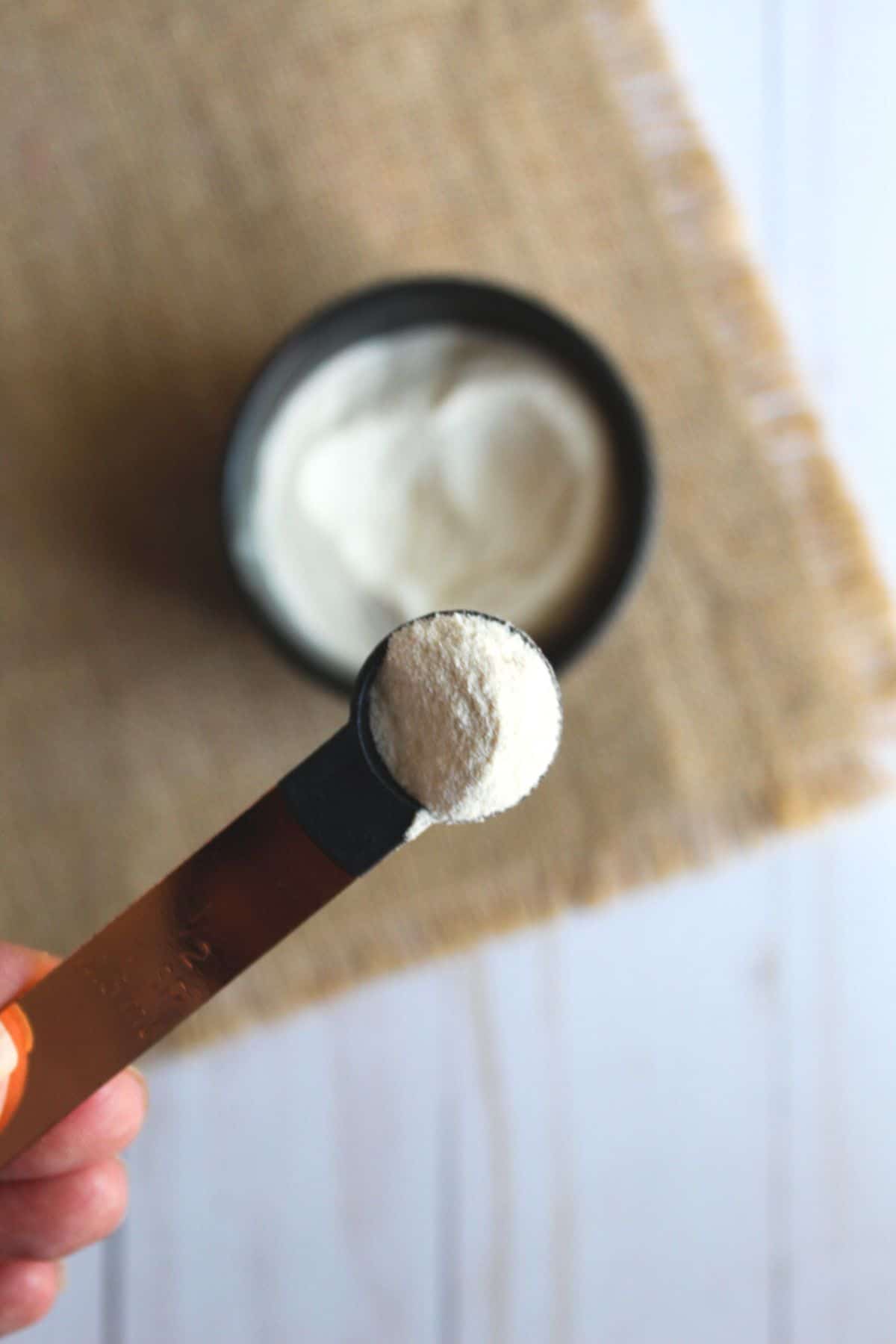
If you don’t have agar agar on hand or need an alternative, there are several ingredients that can provide similar thickening or gelling effects, depending on your recipe.
1. Gelatin (unflavored)
Unflavored gelatin is the best substitute for agar agar. It works by forming a hydrogel when mixed with water. This hydrogel can remain stable even when the mixture contains 10% gelatin and 90% water. Like agar agar, gelatin dissolves and forms the necessary gel more readily when it is added to water and boiled.
For most purposes, its only downside is that it isn’t vegetarian or vegan. It is most commonly derived from the skin and bones of animals.
Substitute gelatin for agar agar powder at a 1:1 ratio.
2. Cornstarch
Cornstarch is another great option, and one that you most likely already have at home. This ingredient’s name says it all: cornstarch is a starchy powder made from corn.
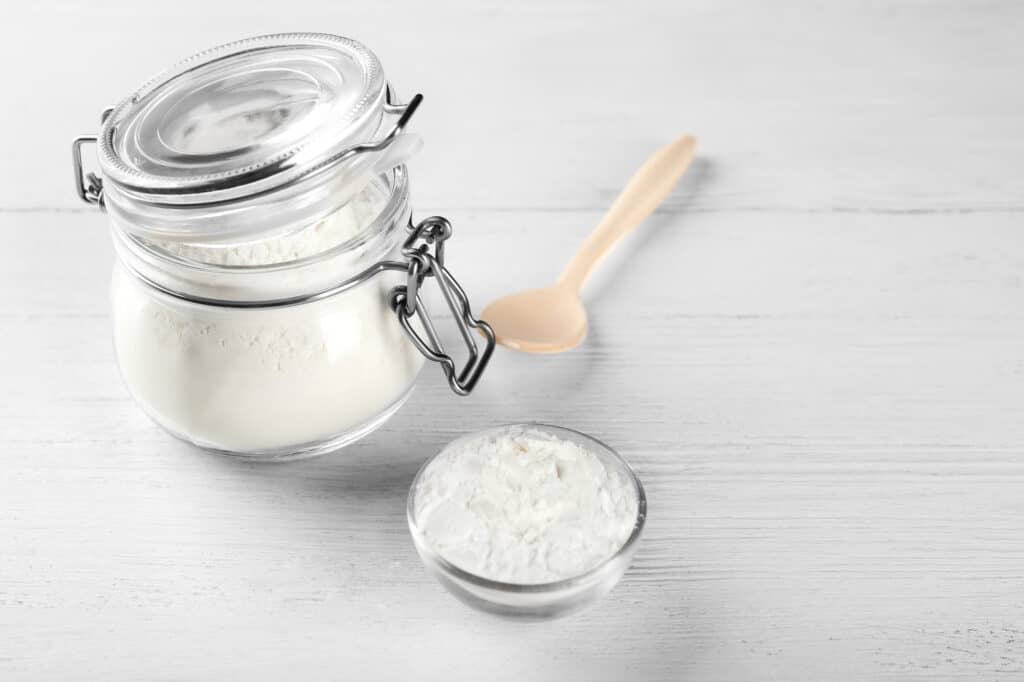
In baking, I most often use cornstarch in my favorite homemade gluten-free flour mix. Cornstarch is also common as a thickening agent in gravies, sauces, and soups.
It’s usually necessary to make a slurry before adding cornstarch to a gravy, sauce, or soup. To make the cornstarch slurry, mix equal parts cornstarch and water until smooth. Unlike activating agar agar or gelatin, it isn’t necessary to heat the water before making a cornstarch slurry. Cold or room temperature water should work.
Substitute cornstarch for agar agar at a 1:1 ratio.
3. Pectin
Pectin typically comes in a powder form and is made from fruit. Pectin occurs naturally in the cell walls of some fruits and helps support their structure. It gives jams and jellies their signature gel-like consistency, so you typically add it near the end of the boiling process.
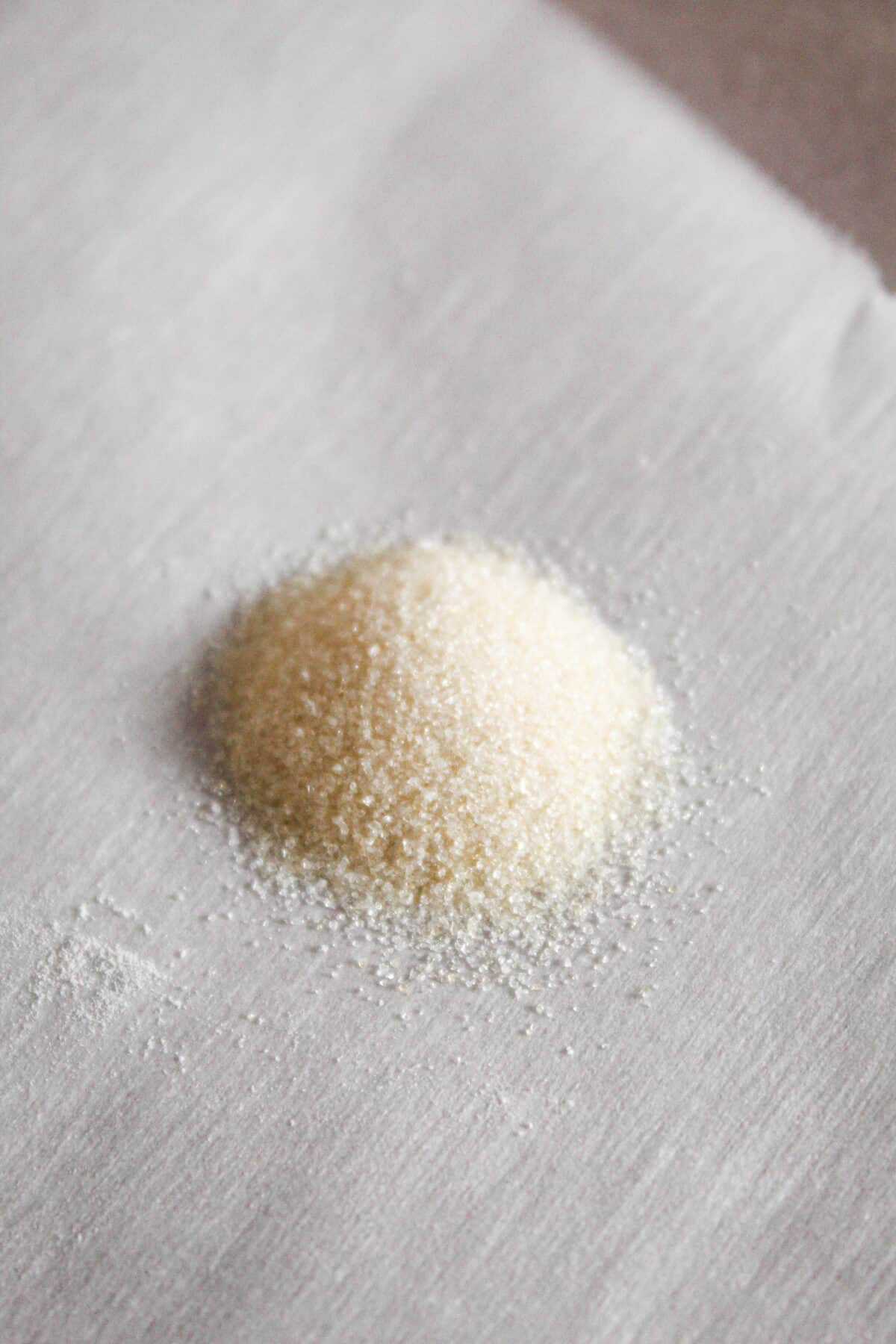
Pectin is also used in some desserts. This property makes pectin an excellent substitute for agar agar. As mentioned above, it is usually flavorless but can have a slight bitter taste if it comes from certain sources, such as citrus peel.
Substitute pectin powder for agar agar powder at a 3:1 ratio.
4. Xanthan Gum
Xanthan gum is most commonly used as a thickener for gluten-free baked goods and sauces. Unlike pectin, it usually doesn’t work for jams and jellies. Because it’s quite a good thickener, you usually won’t need very much xanthan gum for your recipes.
What is xanthan gum, anyway?
Xanthan gum is a type of fiber made by fermenting sugar with a naturally occurring bacterium, then processing and drying it into a powder. In simple terms, it’s an ingredient that helps improve texture and hold things together in foods like gluten-free baked goods.
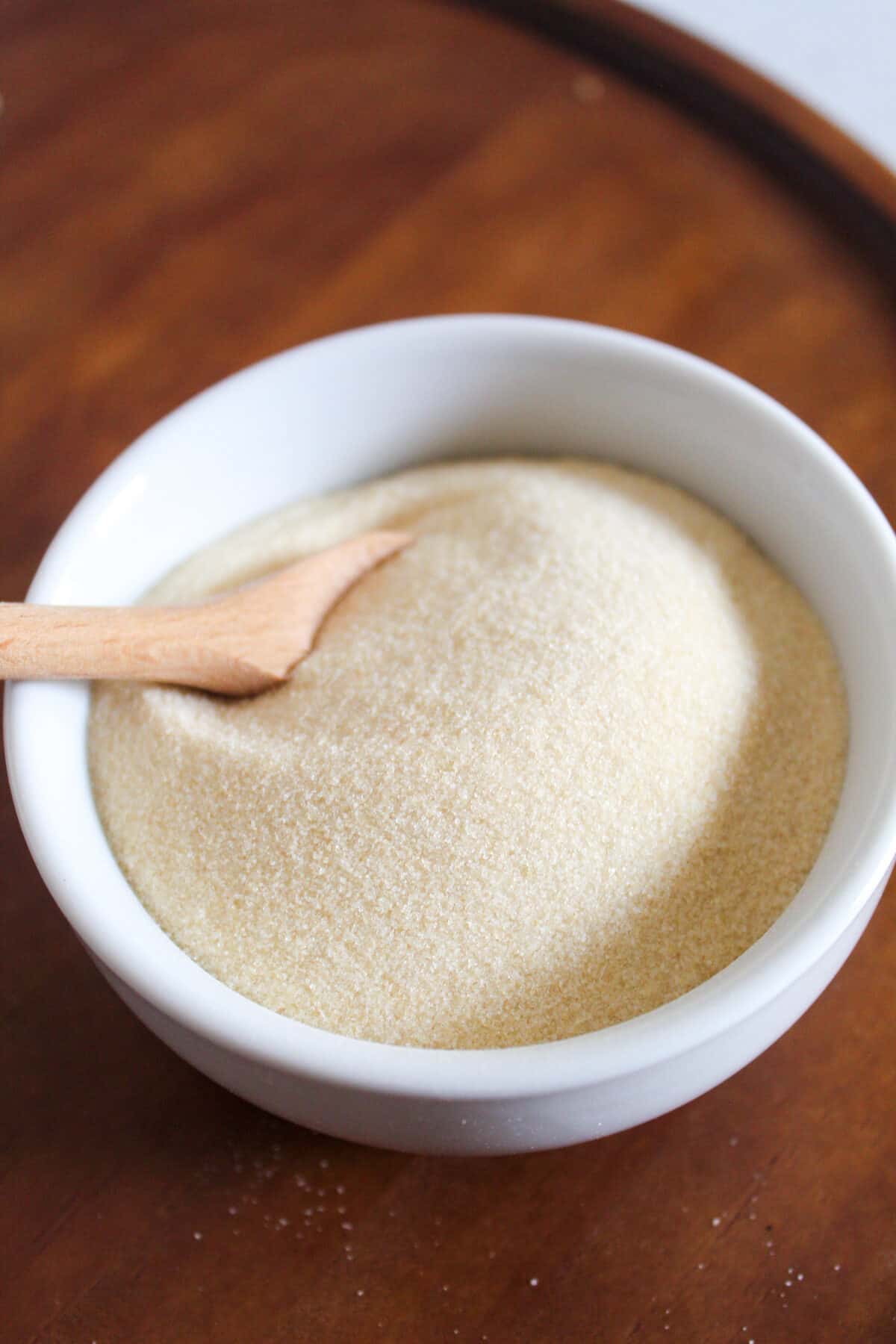
What to remember about xanthan gum: Because it is a refined dietary fiber, it can cause digestive issues in individuals who are especially sensitive to dietary fiber. For this reason, I never like to use too much in a recipe.
Substitute xanthan gum for agar agar powder at a 1:1 ratio.
5. Arrowroot Powder
Arrowroot powder is a fine powder made from the root of the arrowroot plant. It performs similarly to cornstarch, so it is popular as a thickener and stabilizer in baked goods and sauces.
In gluten-free baking, it can be used on its own or as part of a blend of gluten-free flours. It creates a light, soft texture in baked goods. When using it in place of agar agar, arrowroot powder doesn’t need to be activated in boiling water.
Substitute arrowroot powder for agar agar at a 2:1 ratio.
6. Tapioca Starch
Tapioca starch (also known as tapioca flour) is a fine powder that is made from the starchy pulp of the cassava root. It has a neutral flavor and excellent binding properties, which make it a staple in gluten-free baking. Since it is so starchy, it’s great for replacing agar agar in recipes that need a thickener.
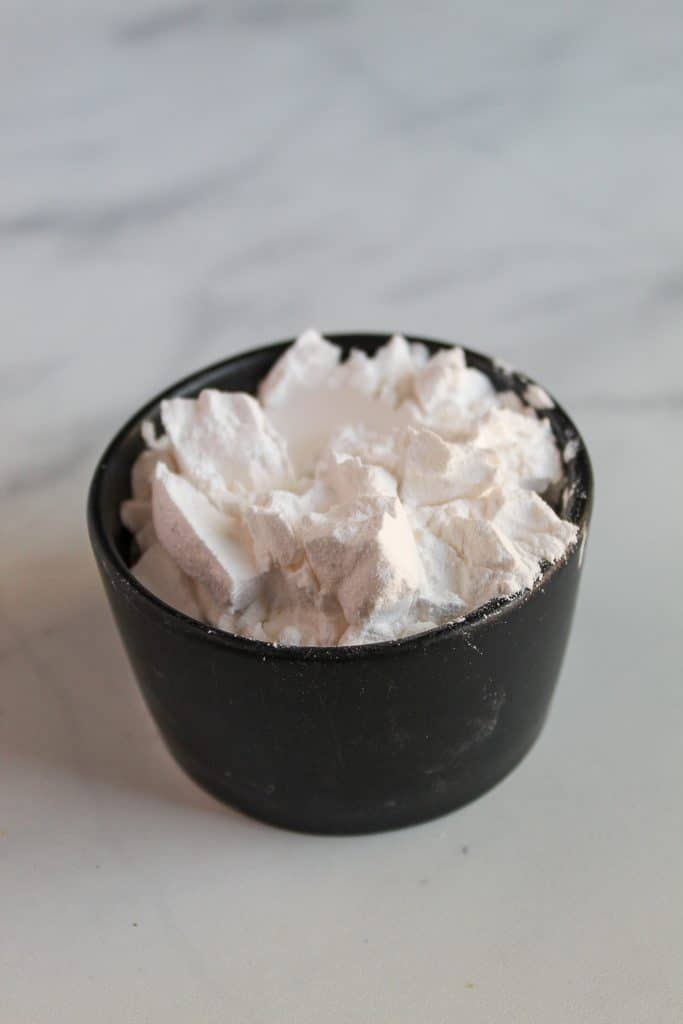
It doesn’t necessarily work well with acidic ingredients such as citrus, which can rule it out for recipes containing a lot of citrus or vinegar. It does do relatively well as part of a gluten-free flour mix in baking, though.
Substitute tapioca starch for agar agar powder at a 2:1 ratio.
7. Guar Gum
Guar gum is a binding agent similar to xanthan gum. Guar gum comes from guar beans and helps bind and thicken gluten-free baked goods like bread. Bakers often use it as an alternative to xanthan gum, and you only need a small amount to get the desired effect.
Substitute guar gum for agar agar powder at a 1:2 ratio.
8. Cassava Flour
Cassava flour actually comes from the same plant that tapioca starch does! Unlike tapioca, which comes only from the starchy parts of the cassava root, cassava flour uses the entire root.
Because they come from the same plant, it would be easy to think they’re interchangeable. However, starches and flours are rarely that easy to substitute for one another on a 1:1 basis.
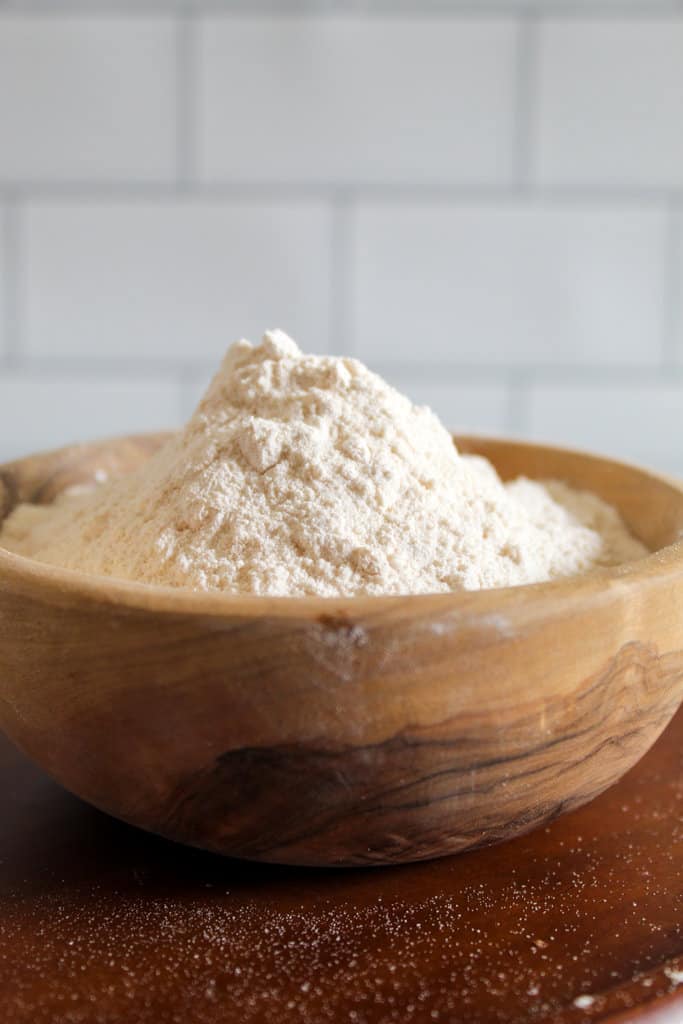
Here’s a decent rundown of how cassava flour and tapioca starch compare. I’ll most often use cassava flour for gluten-free baking.
Substitute cassava flour for agar agar powder at a 1:1 ratio.
9. Carrageenan
Carrageenan and agar agar have similar sources, since they both come from seaweed. The difference is the type of seaweed.
Carrageenan comes from red seaweed and has the same gelling and thickening properties as agar agar. Irish moss powder is a natural source of carrageenan. You may often see it as an ingredient in plant milks as a stabilizer. It can also work well in gluten-free recipes instead of agar agar.
Carrageenan is easy to find online and in most health food stores.
Substitute carrageenan for agar agar powder at a 1:1 ratio.
10. Unflavored Vegan Jello
Unflavored Vegan Jello is an excellent alternative for gelatin-based desserts, especially if you’re looking for a vegan alternative to gelatin and agar agar.
Vegan Jello comes in powder form and is activated by boiling water just like agar agar. So if you’re making a dessert that requires this kind of consistency and you don’t have agar agar, this is a great replacement.
Substitute vegan jello for agar agar powder at a 1:1 ratio.
What Are These Alternatives To Agar Agar Best Used For?
That’s a fair question! These alternatives each have a handful of “preferred” uses for best results. Here’s an easy reference chart for the best uses of each substitute.
| Alternative | What it does best | Best uses | Watch out for |
|---|---|---|---|
| Gelatin (unflavored) | Closest non-vegan jelling substitute | Jelly desserts, panna cotta, mousses, cheesecakes, soft-set fillings | Not vegan; it gives a softer, bouncier set than agar. |
| Cornstarch | Thickening, not true gel-setting | Puddings, pie fillings, gravies, and sauces | Won’t mimic agar’s firm set; best for spoonable textures. |
| Pectin | Fruit-based gelling agent | Jams, jellies, fruit fillings, fruit glazes | Best in fruit recipes; not a universal 1:1 swap for agar. |
| Xanthan Gum | Binding and light thickening | Gluten-free baking, dressings, and sauces | Don’t use too much! It can get gummy or slimy fast. |
| Arrowroot Powder | Smooth, glossy thickening | Fruit sauces, pie fillings, puddings, pan sauces | Better as a thickener than a gel substitute. |
| Tapioca Starch | Chewy, glossy thickening | Pie fillings, fruit fillings, puddings, chewy baked goods | It can turn sticky; not ideal when you need a firm, clean gel. |
| Guar Gum | Thickening and binding | Gluten-free baking, ice creams, and cold sauces | Can get pasty if overused; better for structure than a firm setting. |
| Cassava Flour | Bulk and light thickening | Gluten-free baking, breads, tortillas, batters | More of a flour replacement than a true agar substitute. |
| Carrageenan | Vegan gelling/stabilizing | Dairy-style desserts, vegan puddings, plant-based gels | Better match than starches for gelled desserts, but texture varies by type. |
| Vegan Jel | Vegan setting blend made for desserts | Jellies, no-bake desserts, custard-style fillings | Brand-dependent, so results vary by formula. |
Agar Agar Powder Substitute FAQs
Have any questions? We did our best to answer the most frequently asked questions here. If you have one we haven’t answered yet, feel free to ask in our comments section, and we’ll answer as soon as we can.
What can I do if I don’t want to use xanthan gum or guar gum?
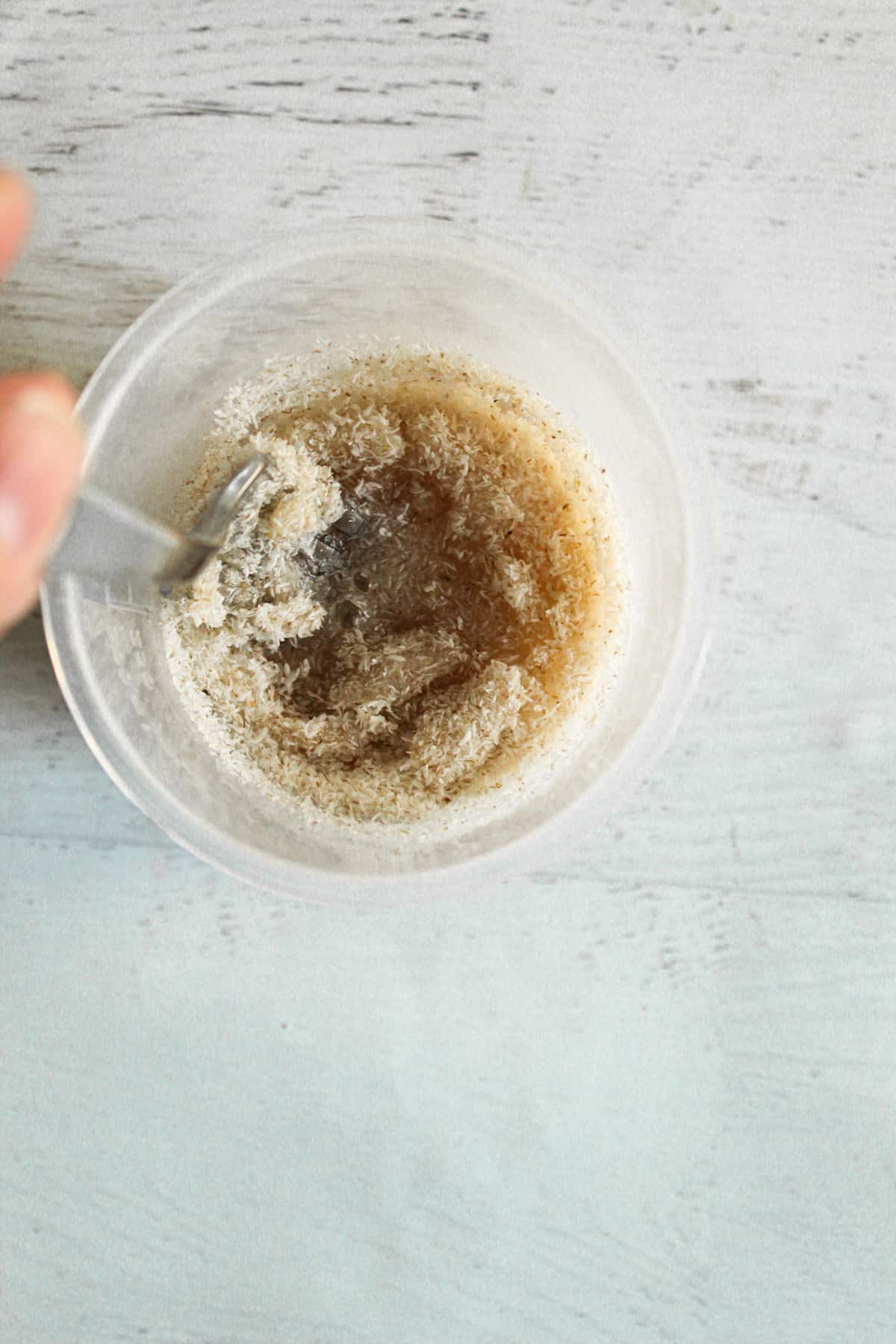
Honestly? That’s pretty legit. I don’t like to use too much of either xanthan gum or guar gum. If you are leery about using them for any reason, psyllium husk fiber is the best 1:1 substitute. We also created a list of xanthan gum substitutes that can work in a pinch.
Is the red algae in agar agar the same species as the toxic algae blooms that hit my beach that one time?
Fortunately no! The red algae used to make agar agar are actually a type of seaweed in the genus Gracilaria. The toxic red algae commonly referred to as “red tide” involve different species, like Karenia brevis. So the good part is that agar agar is perfectly harmless!
What can I use instead of agar agar in cheesecake or mousse?
Gelatin is often the closest substitute in cheesecake or mousse if you are not avoiding animal products. For vegan versions, pectin or another plant-based thickener may work better depending on the recipe.
What is the best vegan substitute for agar agar?
The best vegan substitute depends on the recipe. Pectin works well for jams and jellies, while arrowroot powder, tapioca starch, and cornstarch are often better for thickening sauces, fillings, and puddings.
More Helpful Gluten-Free Baking Tips and Substitutions
Mastering ingredients like agar agar is just one part of successful gluten-free baking. Understanding how different substitutes work together can make a big difference in your final results, especially when it comes to texture, structure, and moisture balance.
If you’re experimenting with swaps or working around dietary needs, these guides can help you make smarter substitutions with confidence:
- Learn more about gums and binders and what to use instead in this guide to alternatives to xanthan gum and guar gum.
- If you’re looking to swap out millet flour, check out these top substitutes for millet flour to find the best option for your recipe.
- Need an egg replacement? See how to substitute eggs with applesauce in baking.
- For more flexibility, learn how to bake practically anything using egg substitutes.
- Not sure which to use? Here’s the difference between flaxseed and flax meal.
- Swapping flours? Explore these coconut flour substitutes.
The more you understand how these ingredients behave, the easier it becomes to adapt recipes and still get great results. Gluten-free baking is all about balance, and with the right knowledge, you can tweak almost any recipe to fit your needs.
Let’s Talk Gluten-Free Baking
Have a question, a favorite substitute, or a baking tip that worked well for you? Share it in the comments below. I’d love to hear what you’re making and help with any questions along the way.