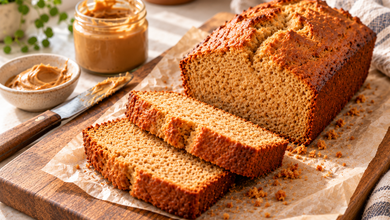
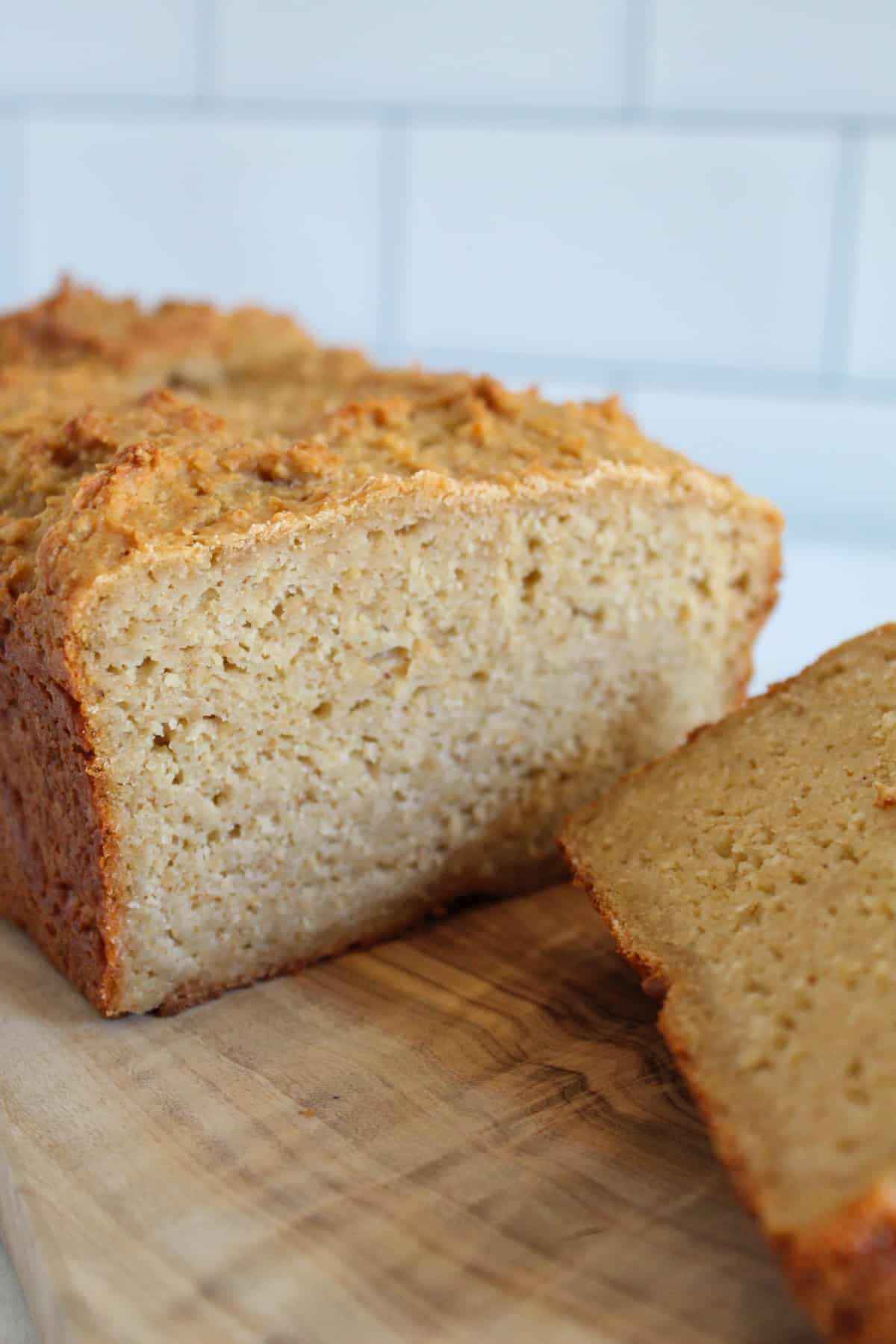
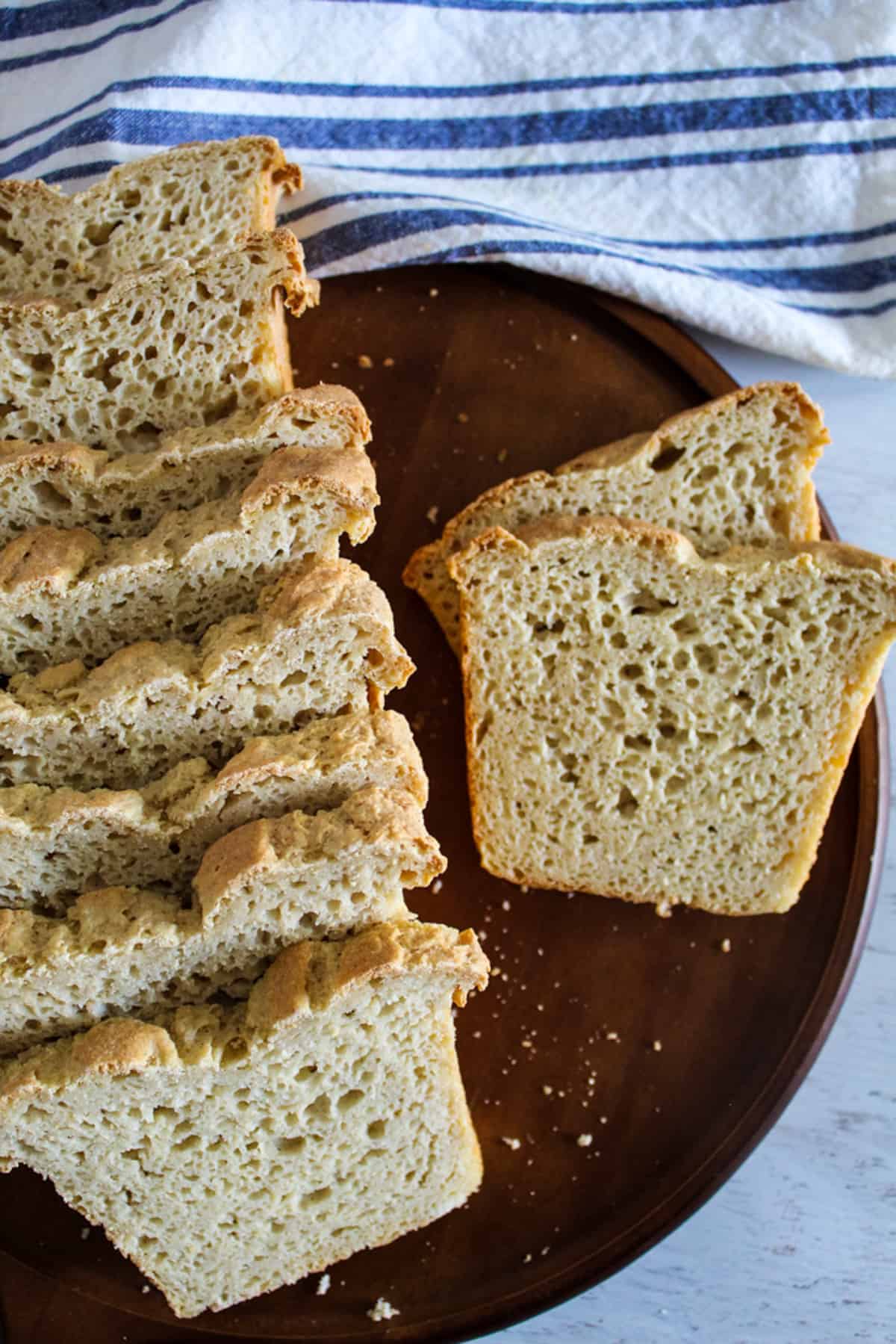
Flaxseed bread can go wrong fast. One extra splash of liquid, one early slice, or one tired packet of yeast can leave you with a loaf that is gummy in the middle, crumbly at the edges, or so dense it barely feels like bread.
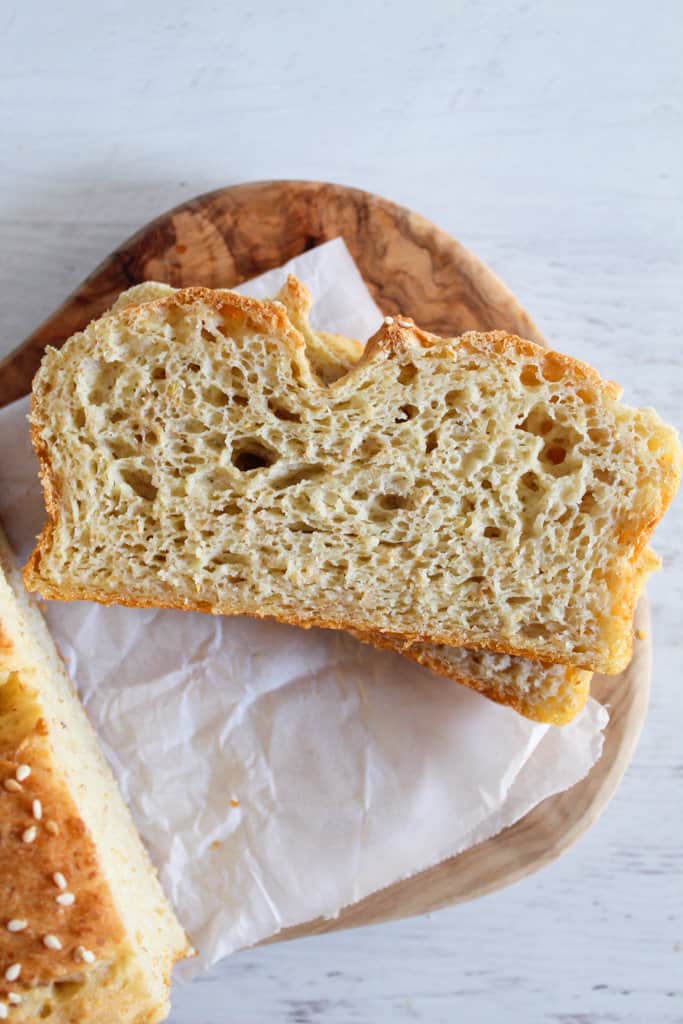
This gluten-free flaxseed bread is built to avoid those problems. Flaxseed meal gives the loaf its hearty, nutty flavor, while eggs, starch, yeast, and a short rise help create a softer crumb that slices cleanly for toast, sandwiches, and meal prep.
Table of Contents
The key is balance: enough moisture to keep the bread tender, enough structure to keep it from falling apart, and enough cooling time so the center sets properly before you cut into it.
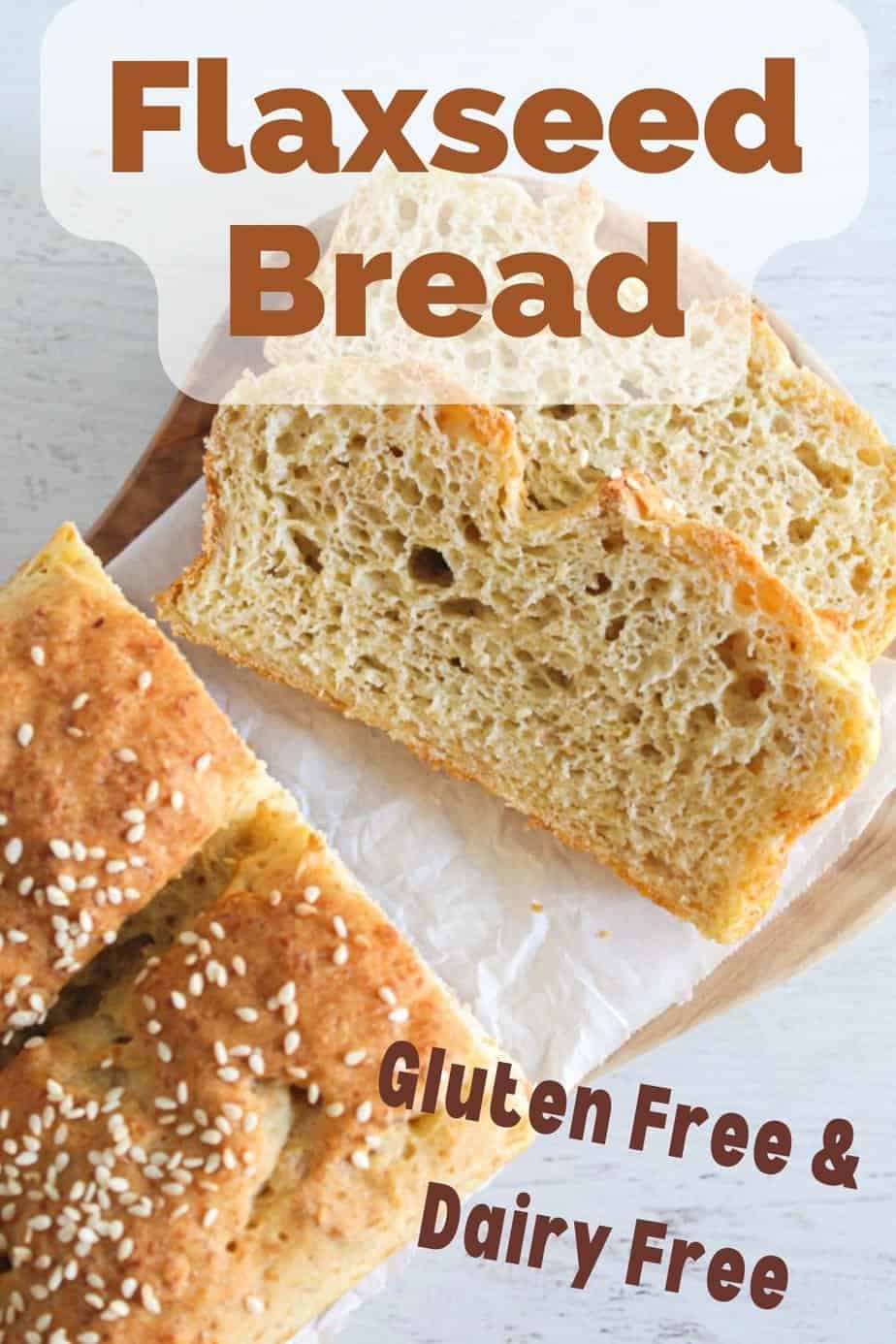
That said, if you enjoy homemade quick breads, you will love our coconut bread recipe.
Why This Flaxseed Bread Works
Many flaxseed bread recipes become too dense, wet, or fragile because the ingredient ratios are unbalanced.
Want our human-written content to rank above AI-generated garbage? Help us out by clicking this button!
This recipe works because the flaxseed meal absorbs moisture while the eggs and starches support the loaf during baking. The olive oil also helps keep the crumb from drying out too quickly.
Are you a fan of soft-texture gluten-free baking? Our One-Bowl Gluten-Free Banana Bread uses a similar approach.
What Makes Flaxseed Bread Different
One of the biggest differences between flaxseed and regular flour is how it handles moisture. Flaxseed absorbs a large amount of liquid very quickly, which is why flax bread can easily turn gummy if the recipe contains too much moisture.
At the same time, flaxseed is very high in fiber. That fiber creates a denser crumb because flaxseed does not develop the light, stretchy structure that gluten in wheat bread normally creates.
As the flaxseed hydrates, it also forms a gel-like texture. This helps the bread retain moisture and stay soft after baking, but too much hydration can make the loaf heavy or wet in the center.
The natural oils in flaxseed also affect the final texture. They help soften the crumb and prevent dryness, allowing well-balanced flaxseed bread to stay moist for several days.
Because flaxseed contains no gluten, the bread depends on eggs and other supporting ingredients for structure, stability, and sliceability.
Why Eggs Matter in Flaxseed Bread
Eggs help bind the ingredients and support the loaf as it bakes.
As the proteins firm up in the oven, they help prevent collapse and reduce crumbling after cooling. The whole eggs add richness, while the egg whites help lighten the loaf slightly.
Ingredient Quick Scan
Before you start mixing, here’s a quick look at everything you’ll need for this fluffy bread with flax recipe:
- Warm water
- Pure maple syrup
- Active dry yeast
- Gluten-free flour blend
- Arrowroot starch
- Flaxseed meal
- Buckwheat flour
- Xanthan gum
- Salt
- Baking powder
- Eggs
- Egg whites
- Olive oil
- Apple cider vinegar
- Sesame seeds
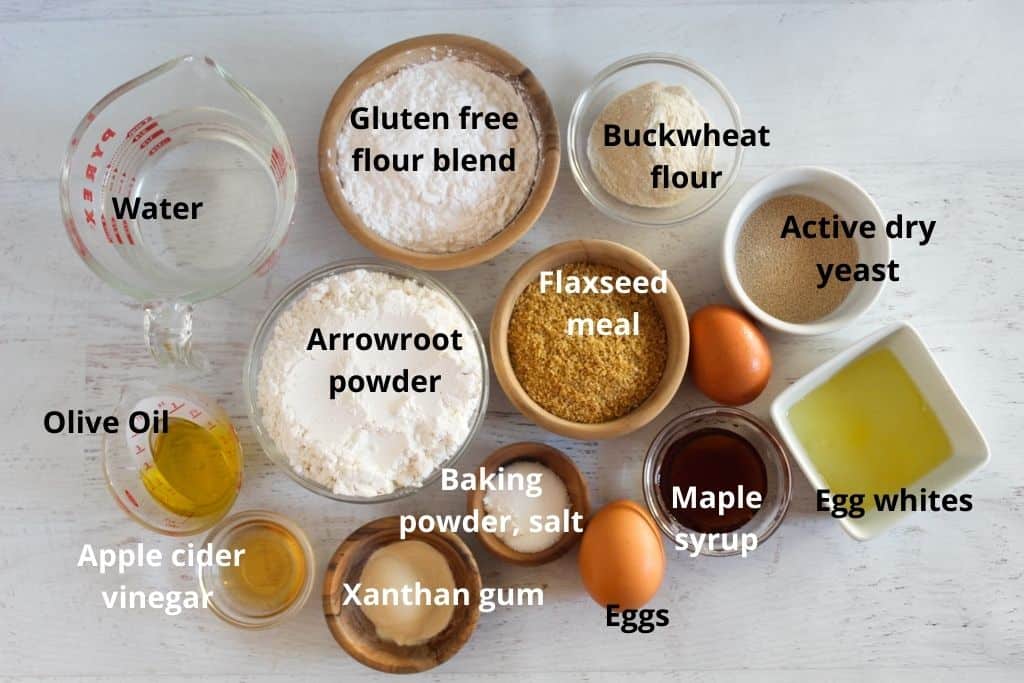
Ingredients & Substitutions Notes
Every ingredient in this flaxseed bread recipe affects the texture, moisture, and structure of the bread. Hence, make substitutions carefully to avoid a dense or crumbly loaf.
- Warm Water: Warm water activates the yeast and hydrates the flaxseed meal. The water should feel warm to the touch, not hot, or the yeast may not rise properly.
- Pure Maple Syrup: Maple syrup helps feed the yeast and supports browning during baking. Honey can be used as a substitute, but it may slightly alter the flavor.
- Active Dry Yeast: Active dry yeast gives the loaf a lighter texture and better rise than many dense flax bread recipes. Instant yeast can usually be substituted in the same amount.
- Gluten-Free Flour Blend: The gluten-free flour blend provides structure, helping keep the bread soft rather than gritty or dry. Different blends absorb moisture differently, so changing brands may slightly affect the texture.
- Arrowroot Starch: Arrowroot starch softens the crumb and helps reduce heaviness. Tapioca starch can usually be used instead.
- Flaxseed Meal: Flaxseed meal gives the bread its fiber-rich structure and mild nutty flavor. Finely ground flaxseed works best for even texture and moisture absorption. Should you need alternatives, this guide on Best Flaxseed Substitutes for Gluten-Free Baking covers options that work well in baking recipes.
- Buckwheat Flour: Buckwheat flour adds flavor and improves the texture of the loaf. Despite its name, it is naturally gluten-free. Sorghum flour may work as a substitute, although the taste will be milder.
- Xanthan Gum: Xanthan gum helps replace the elasticity normally created by gluten. It improves the structure and helps prevent the bread from crumbling after slicing.
- Salt: Salt balances the flavor and reduces bitterness from the flaxseed meal.
- Baking Powder: Baking powder provides additional lift and helps create a softer interior.
- Eggs: Eggs are essential in this flaxseed bread with eggs because they provide structure, moisture, and stability. They help the loaf hold together and improve sliceability.
- Egg Whites: Extra egg whites lighten the texture and reduce density without making the bread dry.
- Olive Oil: Olive oil adds moisture and softness to the loaf. Avocado oil or another neutral oil can also work.
- Apple Cider Vinegar: Apple cider vinegar reacts with the baking powder to improve rise and texture. White vinegar or lemon juice may also work in small amounts.
- Sesame Seeds: Sesame seeds add crunch and texture to the crust. You can also use sunflower seeds, pumpkin seeds, or leave them out completely.
For more guidance on how gluten-free flour blends work in bread, see our gluten-free bread flour blend guide.
Before You Start
For the best texture, use finely ground flaxseed meal, warm water around 110°F, room-temperature eggs, and a 9×5-inch loaf pan. Do not slice the loaf while warm; cooling fully is what prevents the center from turning gummy.
Printable Soft Flaxseed Bread That Slices Without Crumbling Recipe Card
Ingredients
- 1¼ cups warm water 110 F
- 1 Tablespoon pure maple syrup
- 2 ¼ teaspoons active dry yeast
- 1¼ cups gluten-free flour blend, about 165 grams
- ¾ cup arrowroot starch, about 90 grams
- ½ cup flaxseed meal, about 45 grams
- 21 grams buckwheat flour
- 2 teaspoons xanthan gum
- 1 teaspoon salt
- 1 teaspoon baking powder
- 2 egg whites
- 2 egg
- 2 Tablespoons olive oil
- 2 teaspoons apple cider vinegar
- sesame seeds
Instructions
- In a mixing bowl, combine the warm water, maple syrup, and yeast. Let the mixture sit for 5–10 minutes until foamy.
- In a separate large bowl, whisk together the gluten-free flour blend, arrowroot starch, flaxseed meal, buckwheat flour, xanthan gum, salt, and baking powder.
- Add the eggs, egg whites, olive oil, and apple cider vinegar to the yeast mixture.
- Pour the wet ingredients into the dry ingredients and mix until a thick batter forms.
- Transfer the batter to a lined loaf pan and smooth the top. Sprinkle sesame seeds over the surface.
- Cover loosely and let the dough rise for 35–45 minutes or until slightly puffed.
- Meanwhile, prepare a 9" x 5" baking pan by spraying the pan with cooking spray.
- Preheat oven to 375°F (190°C). Bake the risen loaf for 45-50 minutes, or until an instant-read thermometer reads 205–210 F.
- Remove from the oven and cool in the pan for 10–15 minutes before transferring to a wire rack.
- Allow the bread to cool fully before slicing to avoid crumbling or a gummy texture.
Notes
- Finely ground flaxseed meal gives the best texture.
- Because gluten-free flour blends absorb moisture at different rates, the batter’s thickness may vary.
- The egg whites help lighten the loaf and reduce density.
- If the bread feels gummy, it likely needs more baking time or longer cooling.
- Store flaxseed meal in the refrigerator or freezer to prevent oxidation and bitterness.
Doneness Cues
- The top should look firm and lightly golden.
- The loaf should sound slightly hollow when tapped.
- The center should feel set, not soft or wet.
- A thermometer inserted into the center should read about 205°F–210°F.
Storage
- Store the bread tightly wrapped at room temperature for up to 2 days.
- Refrigerate for up to 5 days for longer freshness.
- Freeze individual slices for up to 2 months.
- Reheat slices in a toaster or skillet for the best texture.
Nutrition
Did you make and love this recipe? Give it your review and rating below! And make sure to follow me on Instagram, Pinterest, and Facebook , too!
Essential Kitchen Tools for This Recipe
Having the right tools helps keep the texture and bake time consistent.
- Large Mixing Bowls: Needed to evenly separate and combine wet and dry ingredients.
- Measuring Cups and Spoons: Ensures the proper balance between moisture and flour is maintained.
- Whisk: Breaks up clumps and evenly distributes the dry ingredients.
- Silicone Spatula or Wooden Spoon: Useful for thoroughly mixing the thick flaxseed batter.
- 9×5-inch Loaf Pan: Provides the bread with proper height and even baking.
- Parchment Paper: Prevents sticking and makes the dough easier to remove.
- Wire Cooling Rack: Allows airflow around the bread as it cools, reducing gumminess.
- Instant-Read Thermometer: Helps check doneness.
How to Make Gluten-Free Flaxseed Bread: Step-by-Step Instructions
This flaxseed bread comes together like a thick batter rather than a traditional kneaded dough. As you move through each step, pay attention to the texture and visual cues because they make a big difference in the final loaf.
Step 1: Activate the Yeast
In a mixing bowl, combine the warm water, maple syrup, and active dry yeast. Let the mixture sit for 5–10 minutes.
The surface should become foamy and slightly bubbly. If the mixture stays flat, the yeast may be inactive, or the water may have been too hot or too cold.
Step 2: Mix the Dry Ingredients
In a separate large bowl, whisk together the gluten-free flour blend, arrowroot starch, flaxseed meal, buckwheat flour, xanthan gum, salt, and baking powder.
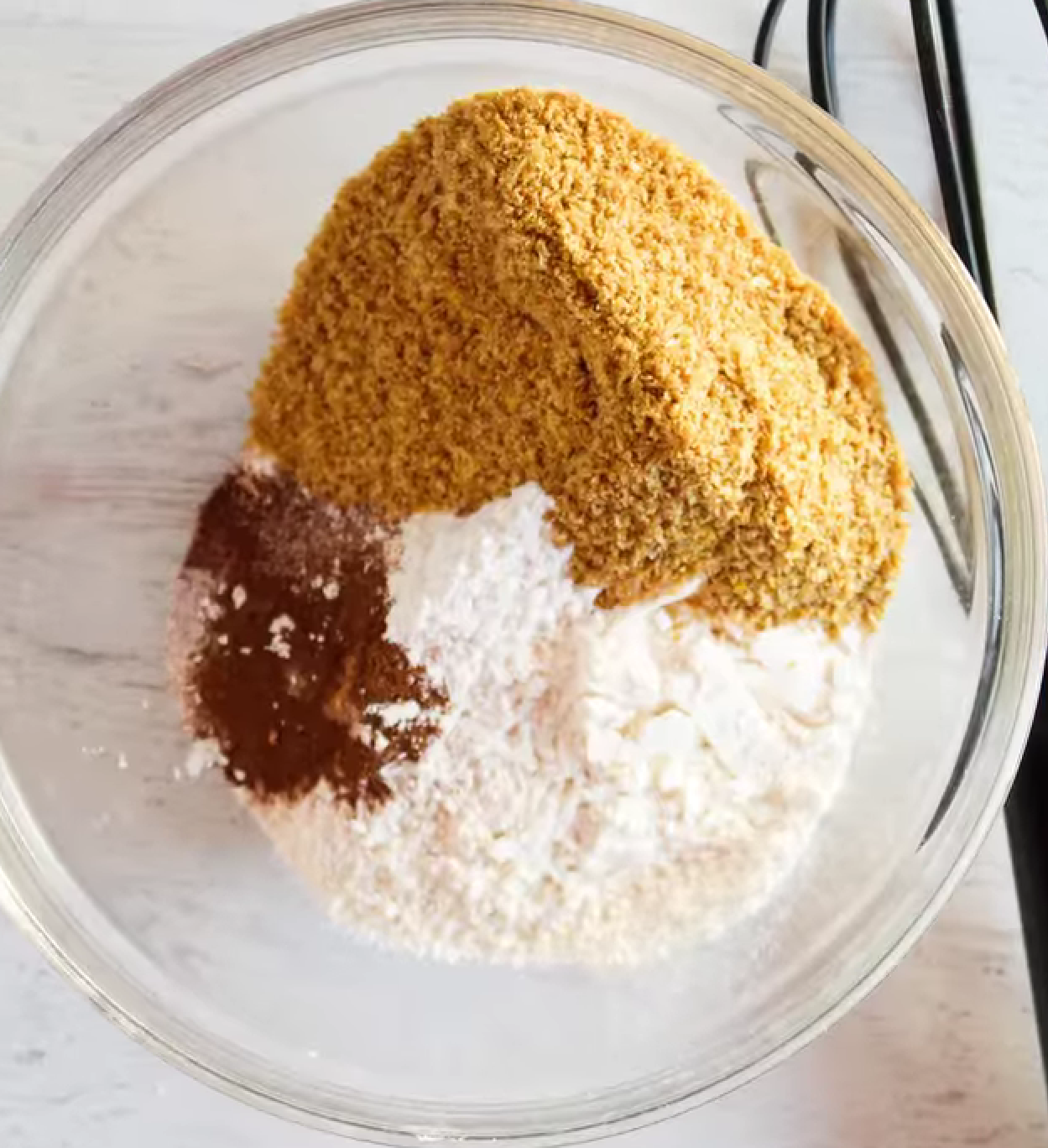
The mixture should look evenly combined with no visible streaks of flour or clumps of flaxseed meal.
Step 3: Add the Wet Ingredients
Add the eggs, egg whites, olive oil, and apple cider vinegar to the yeast mixture. Stir until fully combined.
Pour the wet mixture into the dry ingredients and mix until a thick batter forms.
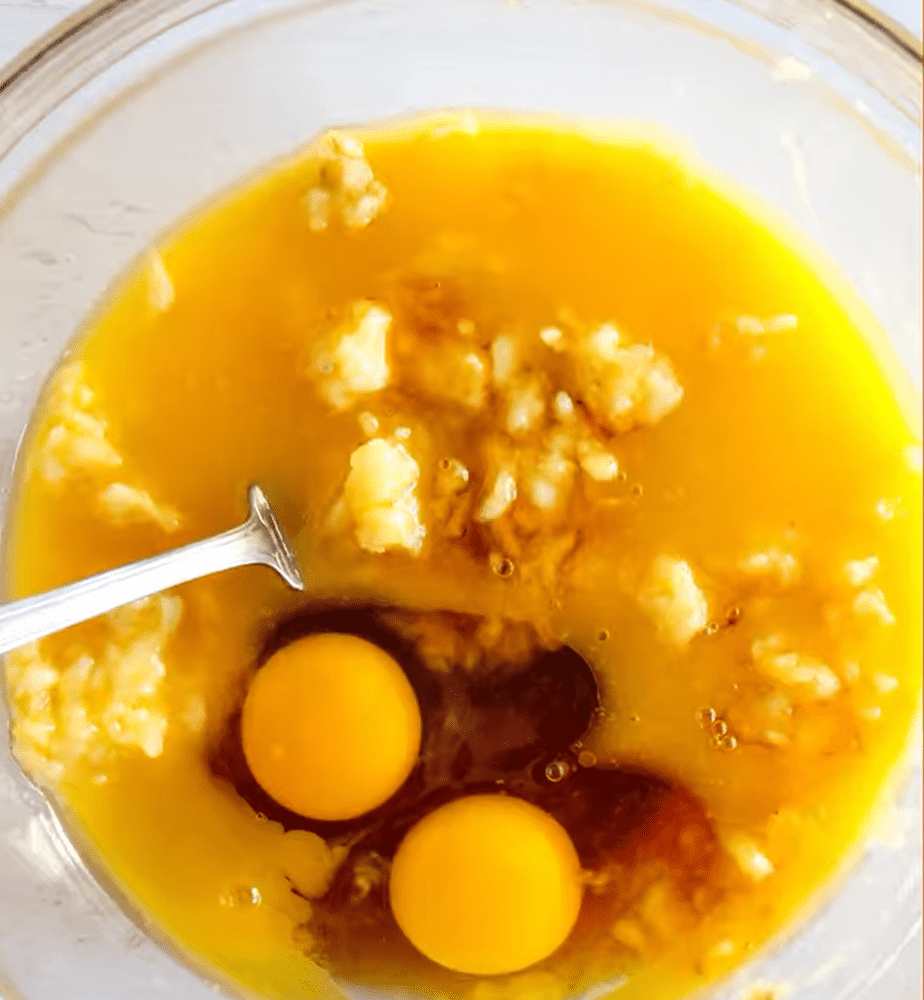
The batter should look smooth, thick, and spreadable. It will be much wetter than traditional bread dough but thicker than cake batter.
Step 4: Transfer the Batter to the Pan
Line a 9×5-inch loaf pan with parchment paper and spread the batter evenly into the pan.
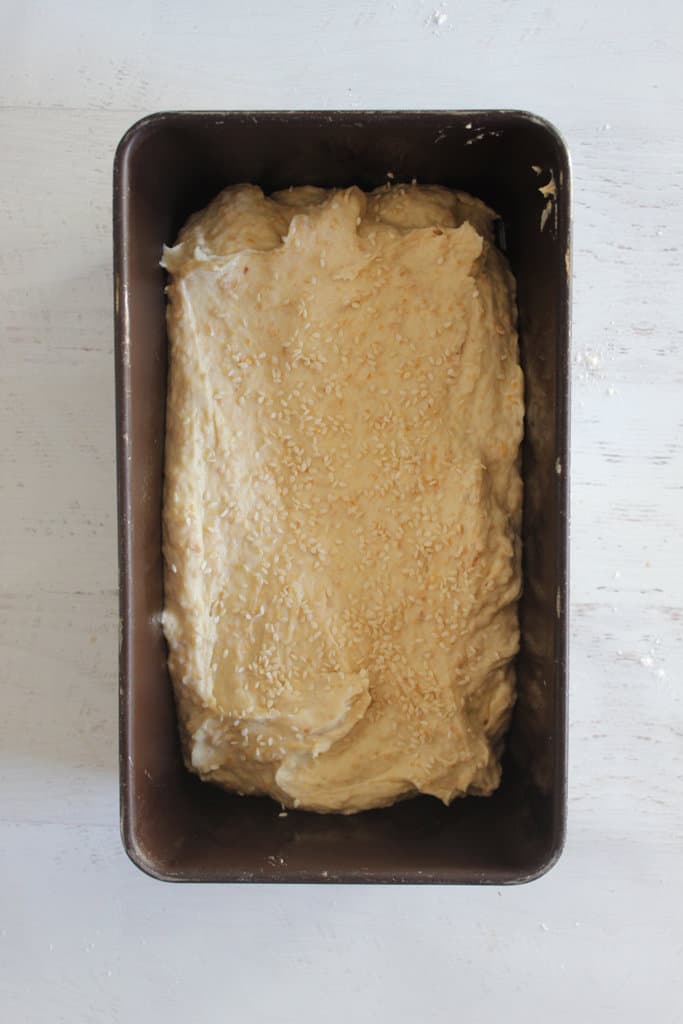
Afterward, smooth the top with a spatula and sprinkle sesame seeds over the surface.
The batter should sit firmly in the pan without running or collapsing at the edges.
Step 5: Let the Batter Rise
Slice a ¼” lengthwise slice in the middle of the batter. Then cover the pan loosely and let the batter rise for 35–45 minutes in a warm area.
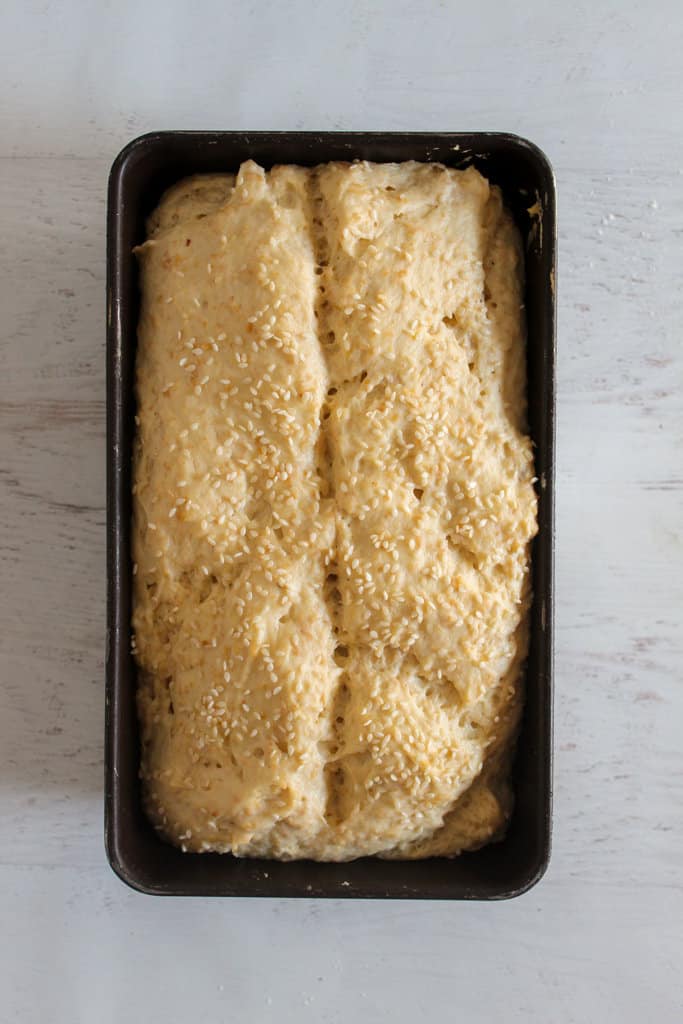
The loaf should look slightly puffed and expanded. It will not double in size like wheat bread because gluten-free dough rises differently.
Step 6: Bake the Bread
Bake at 375°F (190°C) for 45–50 minutes.
Use the cues below to confirm the bread’s doneness:
- The top should look firm and lightly golden.
- The center should feel set.
- The bread should sound slightly hollow when tapped.
- The internal temperature should reach about 205°F–210°F.
If the top browns too quickly, loosely cover it with foil during the final part of baking.
Step 7: Cool Before Slicing
Let the bread cool in the pan for 10–15 minutes, then transfer it to a wire rack.
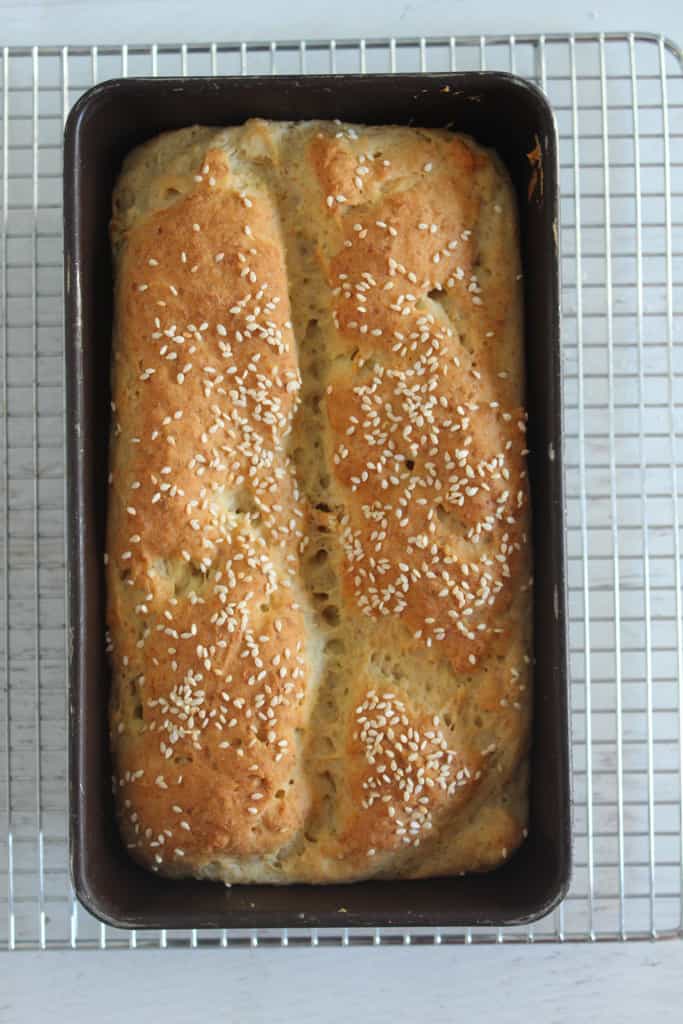
Cool completely for at least 1 hour before slicing.
The loaf should feel firm and fully set before cutting. Note that slicing too early can trap steam, resulting in a gummy texture.
Common Mistakes and Fixes
Most flaxseed bread problems come from hydration, structure, or cooling issues rather than the recipe itself. Understanding what causes these problems makes troubleshooting and improving flax bread much easier.
Why Is My Flaxseed Bread Gummy?
A gummy center usually comes from underbaking or excess moisture.
Even if the top looks done, the center may still need more baking time. The loaf should feel firm, sound slightly hollow when tapped, and reach an internal temperature of about 205°F–210°F.
Too much liquid, inaccurate flour measurements, or slicing before cooling can also leave the center wet.
Why Does Flax Bread Crumble?
Crumbly bread usually means the loaf lacks enough support.
Without enough eggs or proper cooling time, the bread can break apart during slicing. Excess flaxseed meal can also make the loaf dry and fragile because of its high fiber content.
Why Is My Bread Dense?
Flaxseed bread is naturally denser than wheat bread, but it should not feel compact or heavy.
A dense texture usually occurs when the yeast does not activate properly, the batter contains too much flaxseed meal, the loaf does not rise long enough, or the flour blend absorbs too much moisture.
Old yeast, incorrect water temperature, or overly thick batter can also reduce expansion during baking.
Why Does Flaxseed Bread Taste Bitter?
Bitterness usually comes from old flaxseed meal. Flaxseed contains natural oils that can become bitter as they oxidize over time.
Using fresh flaxseed meal and storing it in the refrigerator or freezer helps reduce bitterness. Overbaking can also cause the crust to become bitter.
Why Didn’t My Bread Rise?
Flaxseed bread does not rise as much as wheat bread, but it should still expand a little during proofing and baking.
Poor rise usually happens because the yeast was inactive, the water was too hot or too cold, the room temperature was too cold, or the batter was too heavy.
If the yeast mixture does not become foamy within 5–10 minutes, the yeast may no longer be active.
What Good Bread with Flax Seeds Should Look Like
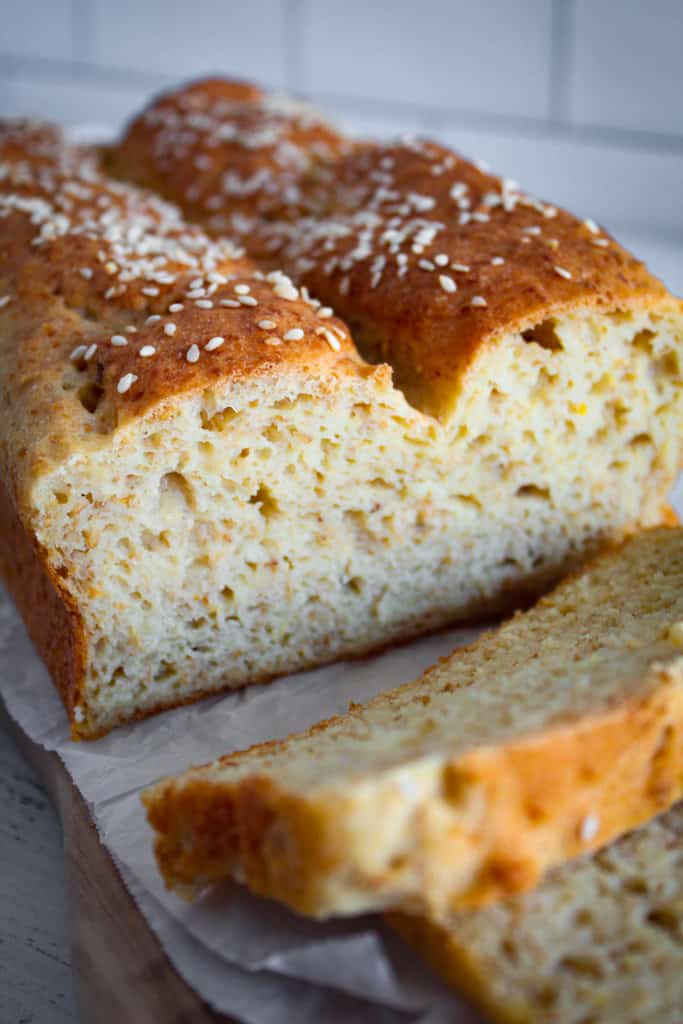
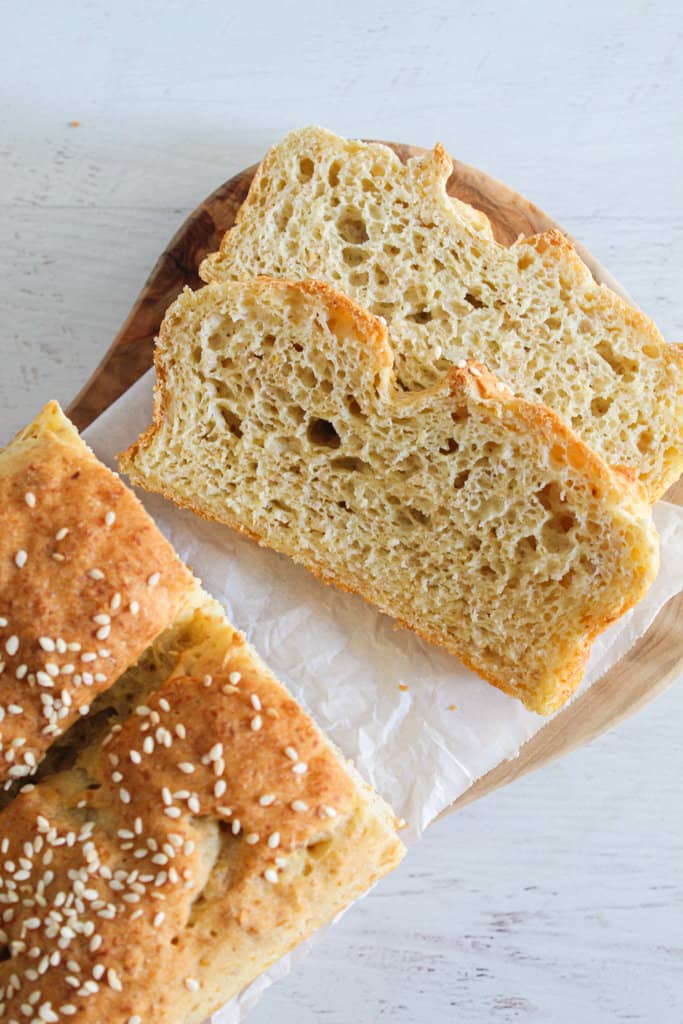
A properly baked flaxseed bread should feel moist but fully set in the center.
When sliced, the crumb should stay intact and have a slightly chewy texture, unlike the airy crumb of traditional sandwich bread.
If the loaf feels wet, collapses easily, or sticks heavily to the knife, it likely needs adjustments to the moisture balance or baking time.
Would you like to try another gluten-free loaf with a soft texture? See our Easiest Gluten-Free Banana Bread.
Flaxseed Bread Variations
One of the easiest ways to customize flaxseed bread is by adjusting the flour blend, add-ins, or baking format. Let’s show you how to make small changes without altering the loaf’s overall structure.
Keto Flaxseed Bread
For a lower-carb version, replace the buckwheat flour and gluten-free flour blend with almond flour and an additional 1/4 cup of flaxseed meal. This creates a denser loaf with higher fat content and fewer carbohydrates.
Because keto versions absorb moisture differently, the batter may need slightly more eggs or liquid to prevent dryness.
Gluten-Free Sandwich Bread
For a softer, sandwich-style loaf, keep the gluten-free flour blend and starches in the recipe. These ingredients help create a lighter crumb and improve flexibility after cooling.
This version works best for toast, sandwiches, and meal prep because it slices more cleanly than heavier low-carb variations.
For another soft loaf made for sandwiches and toast, try this beginner-friendly gluten-free sandwich bread.
Seeded Flax Bread
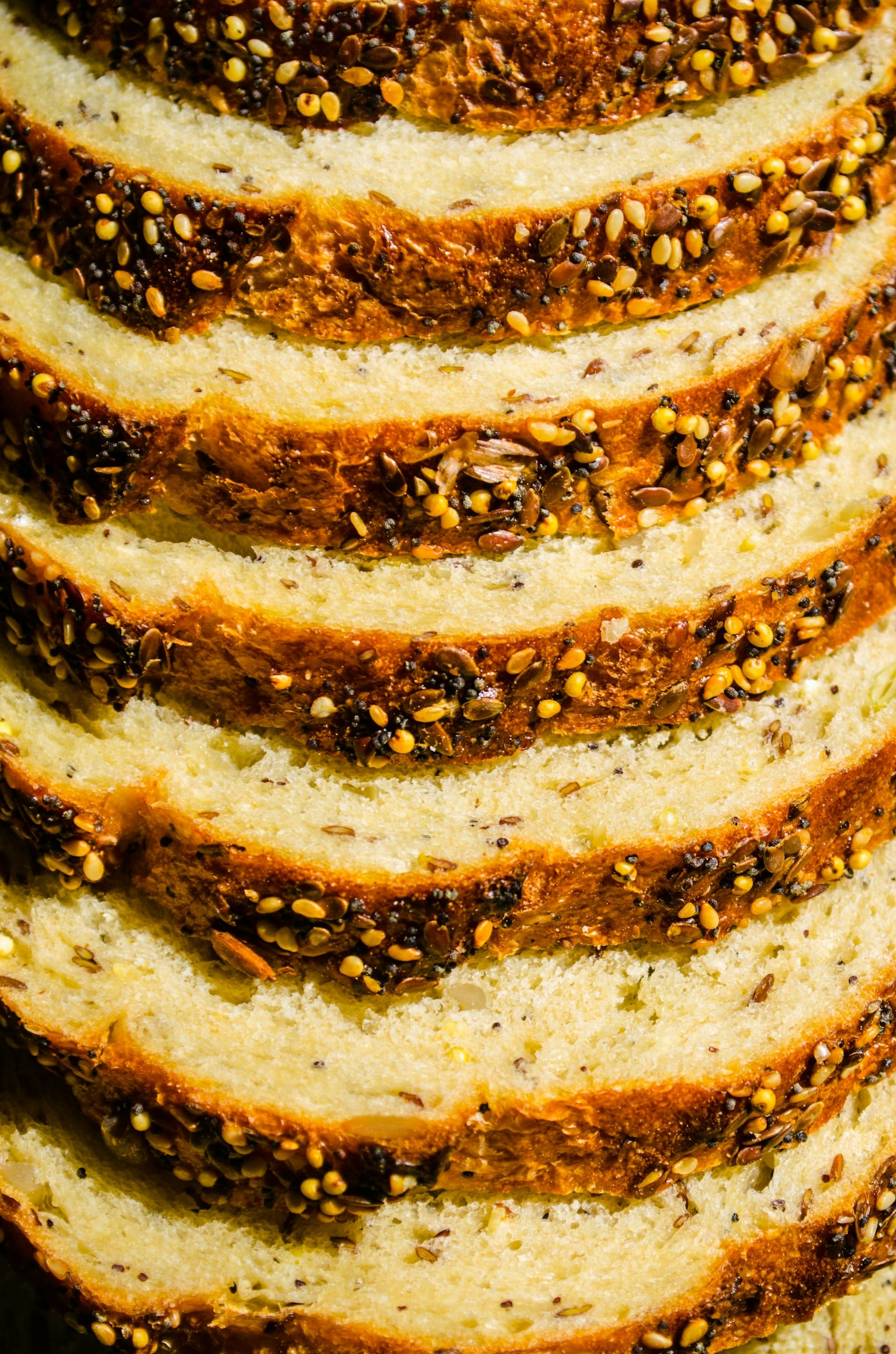
Adding seeds creates more texture and crunch throughout the loaf. Sesame seeds, sunflower seeds, pumpkin seeds, or chia seeds work especially well with the mild nutty flavor of flaxseed bread.
Seeds can be mixed into the batter or sprinkled over the top before baking.
Dairy-Free Flax Bread
This recipe is already naturally dairy-free if made with olive oil instead of butter. Neutral oils, such as avocado oil, also work well and help retain moisture in the loaf.
Flaxseed Bread Muffins
The batter can also be baked in a muffin tin instead of a loaf pan. Muffins bake faster, cool more quickly, and work well for portioning and freezing.
Bake at the same temperature and begin checking for doneness after about 20–25 minutes.
Savory Herb Flax Bread
Fresh or dried herbs can give the loaf a more savory flavor for sandwiches or side dishes.
Rosemary, thyme, oregano, garlic powder, and onion powder work especially well. Adding herbs directly into the batter distributes the flavor more evenly throughout the bread.
Best Ways to Serve Flaxseed Bread
Flaxseed loaf works best in meals where a sturdy, moist texture is important. Because the loaf holds together well after slicing, it can be used much like traditional bread while adding more fiber and staying more filling.
- Avocado Toast: The dense texture supports heavier toppings without becoming soggy.
- Breakfast Toast: It pairs well with eggs, nut butter, cream cheese, fruit, or honey.
- Grilled Sandwiches: Flax bread holds its structure well during heating and stays firm after toasting.
- Garlic Toast: The loaf’s lightly chewy crumb works well with butter, garlic, and herbs.
- Soup Side: It remains firm when dipped into soups or stews and does not fall apart quickly.
- Meal Prep: Individual slices freeze and reheat well for quick breakfasts or sandwiches throughout the week.
Best Toppings for Flax Bread
Flaxseed bread pairs best with toppings that balance its dense texture and mild nutty flavor.
Below are good options:
- avocado
- eggs
- nut butter
- cream cheese
- hummus
- smoked salmon
- turkey
- roasted vegetables
- garlic butter
Sweet toppings like honey or fruit spreads also work well because the bread itself is not overly sweet.
Can You Toast Flaxseed Bread?
Flaxseed bread toasts very well because of its sturdy structure and balanced moisture content.
Toasting helps firm the outside while keeping the center soft. It also improves the flavor and texture of refrigerated or frozen slices.
For the best texture, toast the slices until the edges are lightly crisp, but the center still feels soft.
Storage, Freezing & Reheating
Flaxseed bread stores differently from wheat bread because of its higher fiber and moisture content. Proper storage helps prevent gumminess and dryness.
Flaxseed Bread Shelf Life
At room temperature, a flax loaf stays fresh for about 2 days when sealed properly. But in the refrigerator, it can last up to 5 days, although the texture may become firmer over time.
Freezing works best for longer storage because it preserves the texture more effectively.
Best Way to Store It
Let the bread cool completely before storing it.
Store the loaf in an airtight container or wrap it tightly to help prevent dryness. If refrigerating, keep parchment paper between slices to reduce sticking.
Can You Freeze Flaxseed Bread?
Flaxseed bread freezes well, especially when sliced before freezing.
Let the loaf cool fully, then place parchment paper between the slices and store them in a freezer-safe bag or container.
Slices can thaw at room temperature or be toasted directly from frozen for the best texture.
For reheating, do the following:
- Toast slices directly from frozen for the best texture.
- Warm in a skillet for a firmer crust.
- Avoid overheating in the microwave because it can make the bread gummy.
- Toasting usually restores the texture best after refrigeration or freezing.
Nutrition Benefits of Flaxseed Bread
Flaxseed meal adds fiber, plant protein, and alpha-linolenic acid, a plant-based omega-3 fatty acid. It also contains lignans, compounds commonly discussed in flaxseed nutrition research. For the best nutrition and texture, use fresh ground flaxseed meal and store it cold to help protect its natural oils.
Baking Questions Answered (FAQ)
These are questions we often get regarding this recipe. If you can’t find yours here, let us know in the comments.
Can I Make Flaxseed Bread Without Yeast?
You can make a quicker version by removing the yeast and relying only on baking powder for lift. The texture will be denser and less airy, but the bread will still hold together well.
This recipe is designed as a yeast bread, but if you need a no-yeast option, try this gluten-free yeast-free bread instead.
Should I Use Golden or Brown Flaxseed Meal?
Both work, but golden flaxseed meal usually has a milder flavor and lighter color. Brown flaxseed meal has a stronger nutty flavor and produces a darker loaf.
Why Is My Flaxseed Bread Wet on the Bottom?
This usually happens when the loaf cools in the pan for too long. Steam becomes trapped beneath the bread, softening the bottom crust. Transfer the loaf to a wire rack after 10–15 minutes of cooling.
Can I Make This Bread Without Buckwheat Flour?
You can substitute sorghum flour or oat flour, but this may slightly alter the bread’s texture and flavor. Different flours absorb moisture differently, so the batter consistency may also vary.
Can I Turn This Recipe Into Rolls or Buns?
Divide the batter into smaller portions and reduce the baking time. Rolls and buns usually bake faster than a full loaf and should feel firm and lightly golden when done.
Related Healthy Bread Recipes
If you enjoy baking soft, hearty gluten-free breads, there are several other recipes worth trying next.
- Traditional Gluten-Free Easter Bread – A softer, lightly sweetened gluten-free bread with a more traditional texture and enriched crumb.
- Foolproof One-Bowl Oat Flour Banana Bread Recipe – A simple, quick bread with balanced moisture and a soft texture, made in one bowl.
- Sliceable Chia Seed Bread for Gluten-Free Toast and Sandwiches – Another sturdy gluten-free loaf designed for toast, sandwiches, and meal prep, with a soft, yet sliceable, crumb.
- Sorghum Bread – A hearty, naturally gluten-free loaf with a mild whole-grain flavor and sturdy texture that works well for toast, sandwiches, and everyday slices.
Each one offers a different texture, flavor, and baking style, so you can keep building your gluten-free bread rotation with recipes that are practical, reliable, and easy to enjoy all week.
Share Your Experience!
Did you try this flaxseed bread recipe?
Leave a comment below and share your results, substitutions, or storage tips. We’d love to hear how your loaf turned out.