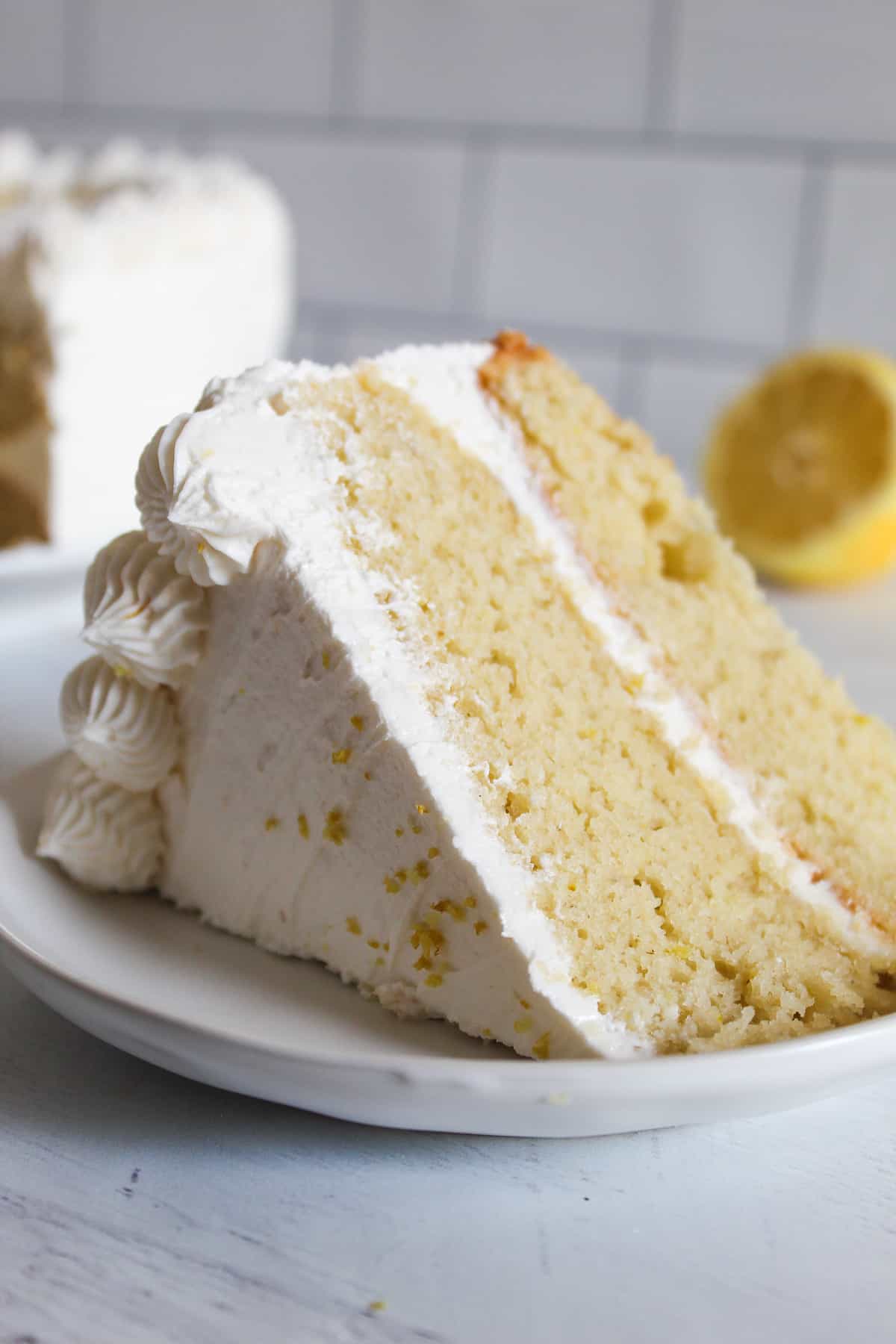
Most gluten-free lemon cake recipes promise a lot but end up dry, dense, or forgettable. This one is different.
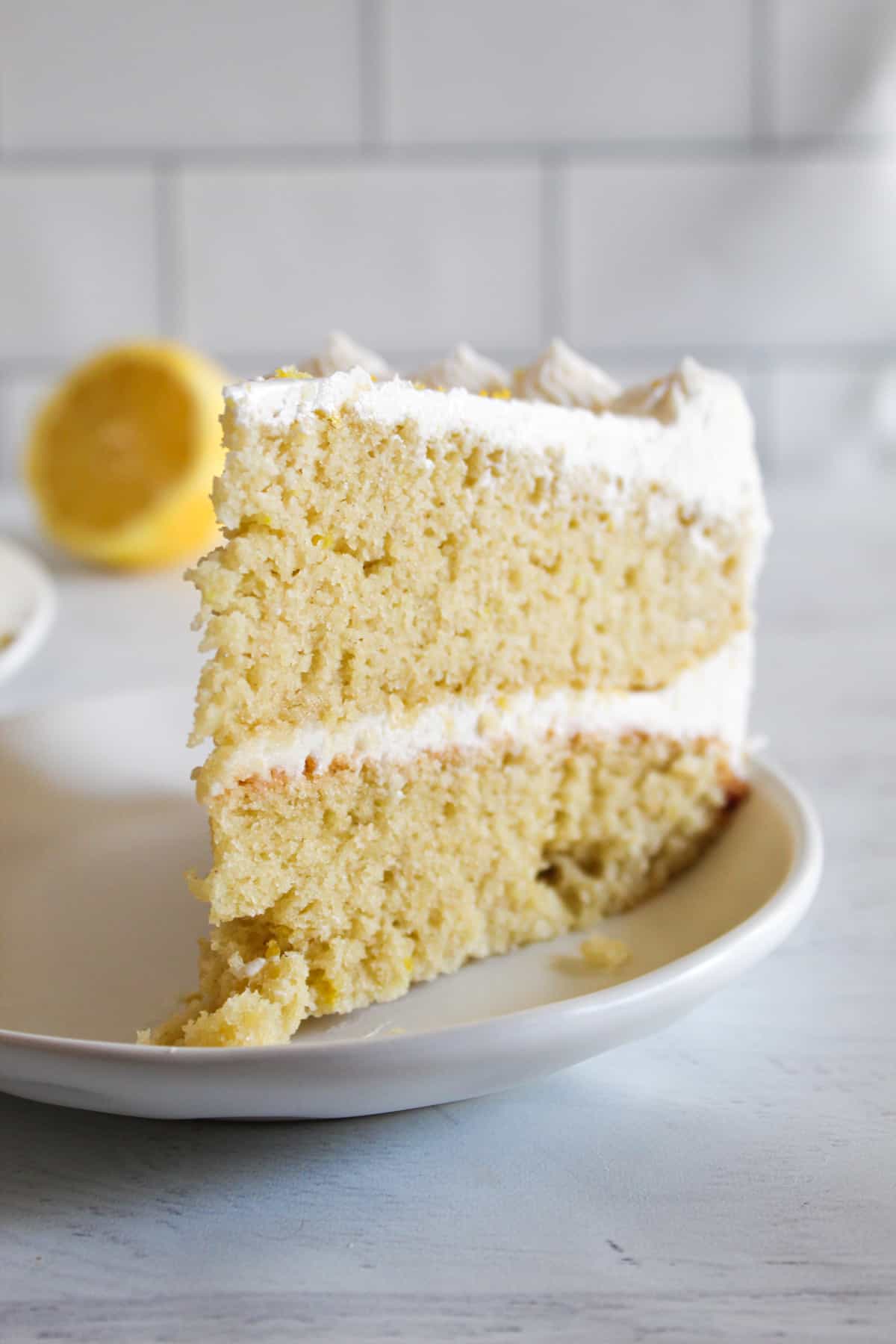
It’s soft, airy, and bursting with real lemon flavor, like something straight from a bakery, but made easily in your own kitchen. Every slice is light, moist, and finished with a silky lemon buttercream that ties everything together beautifully.
Table of Contents
If you want to try another delightful gluten-free cake with nearly the same taste, texture, and flavor, you’ll enjoy this Gluten Free Lemon Pound Cake.
From birthdays to spring gatherings, baby showers, or casual weekend baking, this cake fits every occasion and quickly becomes the one people ask you to make again.
Why You’ll Love This Gluten-Free Lemon Cake
- This lemon cake is soft, moist, and wonderfully fluffy despite being gluten-free. It has a sturdy, well-structured crumb that holds together beautifully when sliced.
- Each bite is filled with fresh lemon zest, while the lemon buttercream adds a light, tangy sweetness that perfectly complements the cake without overpowering it.
- It’s also designed to be simple and convenient: no hard-to-find ingredients, minimal cleanup, and both the cake and frosting come together quickly, often in just one bowl, before baking in no time.
- Naturally gluten-free with a dairy-free option available, this recipe can easily accommodate a range of dietary needs and preferences.
- This recipe also yields 12 slices, so it’s ideal for celebrations of all kinds, whether you’re hosting a birthday, wedding, or housewarming.
Ingredient Quick Scan List
One of the best things about this recipe is its simplicity. You only need 8 ingredients, and here is a quick look at them:
- Vegetable oil
- Granulated sugar
- Eggs
- Gluten-free flour mix
- Salt
- Baking powder
- Almond milk.
- Lemon zest
Ingredient Roles And Their Best Substitutes
Achieving the best results with this recipe starts with understanding the role of each ingredient. We’ll break them down one by one, explaining how each contributes to the cake’s flavor, texture, and structure, and sharing effective substitutions you can use:

Gluten-free flour mix
The gluten-free flour mix provides the structure and bulk of this cake. It absorbs liquids and fats evenly, creating a stable crumb that holds together beautifully.
It also allows the fresh lemon flavor to stand out. For best results, no substitute is recommended for this ingredient.
Vegetable oil
Vegetable oil serves as a key fat in this gluten-free lemon cake, ensuring moisture and tenderness without relying on butter. It excels in this recipe by evenly coating the particles, resulting in a soft crumb.
Granulated sugar
Granulated sugar does far more than add sweetness in this recipe. It creates a bright, zesty-sweet flavor that enhances the citrus notes without overwhelming them. Maple syrup, honey, or coconut sugar can be used as suitable alternatives for this ingredient.
Eggs
The yolks add fat, richness, and natural emulsifiers that help create a tender crumb, while the whipped whites incorporate air into the batter, giving the cake a light, airy texture. Chia or flax eggs can be used as a substitute, though the cake will likely be denser. You can also try applesauce as an egg replacement.
Salt
Salt balances the sweetness of the sugar and offsets the richness from the butter or oil, preventing the cake from tasting flat or overly sweet. If you’re following a low-sodium diet, you can reduce or omit it.
Baking Powder
When mixed with wet acidic ingredients and heated in the oven, baking powder releases carbon dioxide gas. This creates bubbles that expand in the oven, resulting in a fluffy rise. For the best results, don’t substitute anything for baking powder in this recipe.
Almond Milk
Almond milk thins the batter, allowing it to mix evenly with the flour, ensuring a smooth pour and a uniform bake. Its mild, nutty taste also complements lemon’s brightness and adds subtle creaminess, while keeping the cake light. You can swap this with coconut or oat milk.
Lemon Zest
This element provides concentrated lemon essence without added liquid, ensuring a bright, authentic taste that permeates the crumb. The oils balance sugar’s sweetness and enhance volatile compounds released during baking for a lasting zing.

Printable Gluten-Free Lemon Cake Recipe Card
Ingredients
- 1 cup vegetable oil
- 250 grams granulated sugar ,about 1½ cups
- 4 large eggs
- 330 grams gluten-free flour mix ,about 2½cups
- ½ teaspoon salt
- 3 teaspoons baking powder
- 1 cup almond milk
- 3 teaspoons lemon zest ,about 2 lemons
- extra lemon zest for decorating
Instructions
- In the bowl of a stand mixer, add the oil and granulated sugar. Mix on low speed for 1 minute.
- Add two eggs to the oil mixture and mix on medium speed for 10 seconds.
- Add the remaining two eggs and mix on medium speed for 10 seconds.
- Add gluten-free flour mix, salt, and baking powder. Mix on low speed for 15 seconds. Stop the machine and scrape down the sides.
- Add the milk and lemon zest. Mix on low speed for 15 seconds.
- Scrape down the sides, then set the batter aside to rest for 30 minutes.
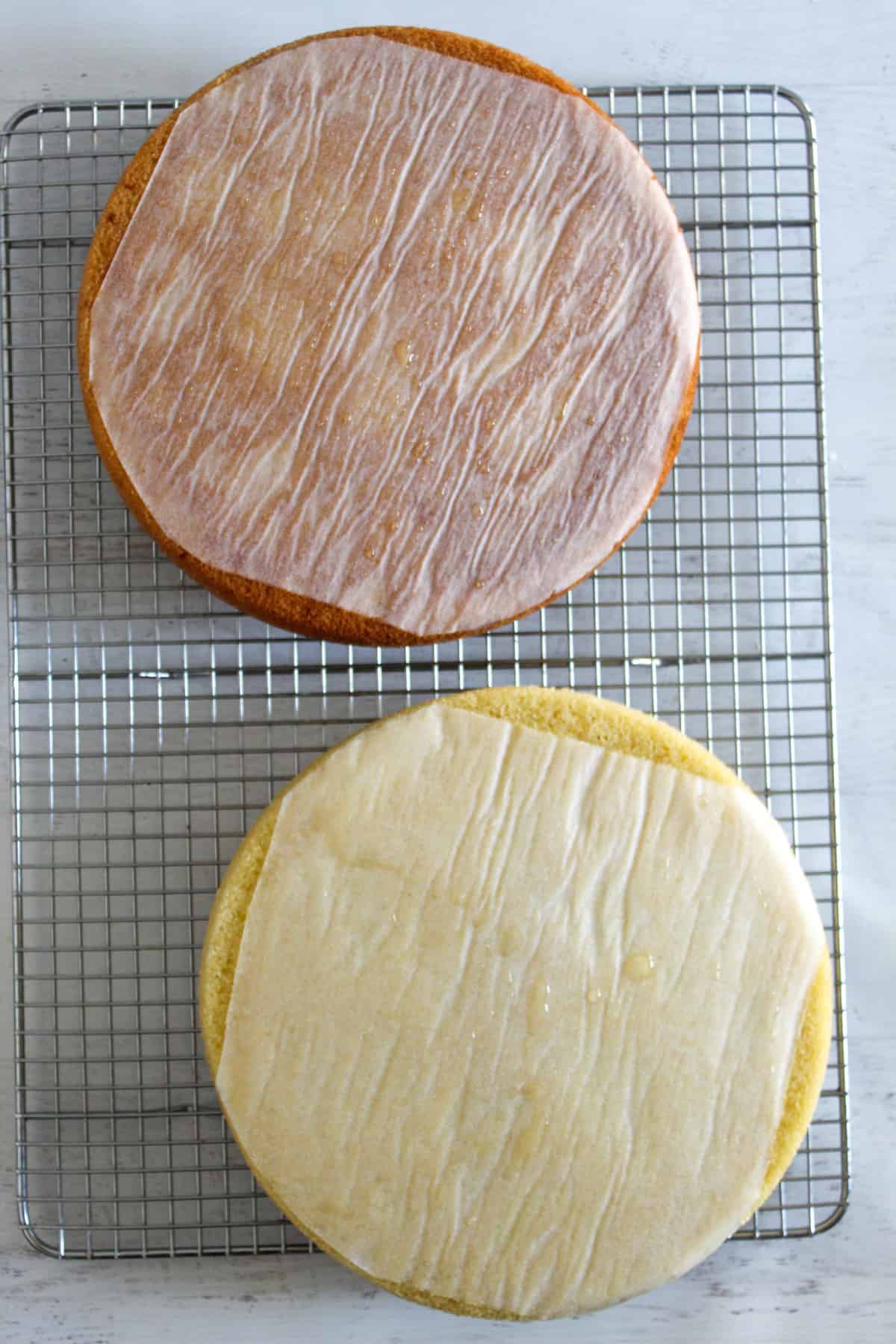
- Toward the end of the rest time, preheat the oven to 350F. Spray two 9" cake pans with cooking spray, then line the pans with parchment paper, cut to fit as necessary.
- Pour batter evenly between the two pans. Bake for 25-30 minutes or until a toothpick inserted into the center of the cake comes out crumb-free.
- Remove cakes from the oven and let cool in the pans on wire racks for 15 minutes.
- Turn the pans over and let cool on the wire racks until cakes release easily from the pans.
- Cool cakes completely before frosting.
Notes
- Make sure all ingredients are at room temperature.
- Be sure to mix the batter for only 15 seconds after adding the flour; the texture may be dense.
- Cut the parchment paper to fit the bottom of the 9″ pans.
- Cool cakes completely before frosting. The frost recipe is this lemon buttercream frosting.
- This batter can be used to make cupcakes. It will make at least 24 cupcakes. Bake at the same temperature and check for doneness at 22 minutes.
- Batter can also be baked in a 9″ x 13″ pan. Bake at the same temperature and check for doneness every 30 minutes.
- Cool cakes completely before frosting. The frost recipe is this lemon buttercream frosting.
Storage Notes
- Cakes can be made a day ahead and frosted.
- Store frosted cake in the refrigerator for up to 2 days. Freeze individual slices for longer storage.
Nutrition
Did you make and love this recipe? Give it your review and rating below! And make sure to follow me on Instagram, Pinterest, and Facebook , too!
How to Make Moist Gluten-Free Lemon Cake
Here are detailed instructions for making your gluten-free lemon cake moist, tender, and flavorful. With these easy-to-follow instructions, you can confidently make a delicious dessert that everyone will keep coming back to.
Essential Kitchen Tools
Before starting, make sure you have these tools for the best results:
- Electric hand mixer — For creaming butter and sugar while whisking the batter smooth in one bowl
- Large mixing bowl — To hold all ingredients for easy one-bowl method; silicone or glass works best
- Measuring cups and spoons — For weighing ingredients precisely.
- Microplane grater — To finely zest the lemons for maximum flavor oils.
- Round cake pans — For holding cake batter for even baking.
- Wire cooling rack — To cool the cake evenly and prevent sogginess.
- Toothpick — For testing doneness.
- Rubber spatula — To gently fold batter and scrape bowls clean.
Step 1: Prep The Oven
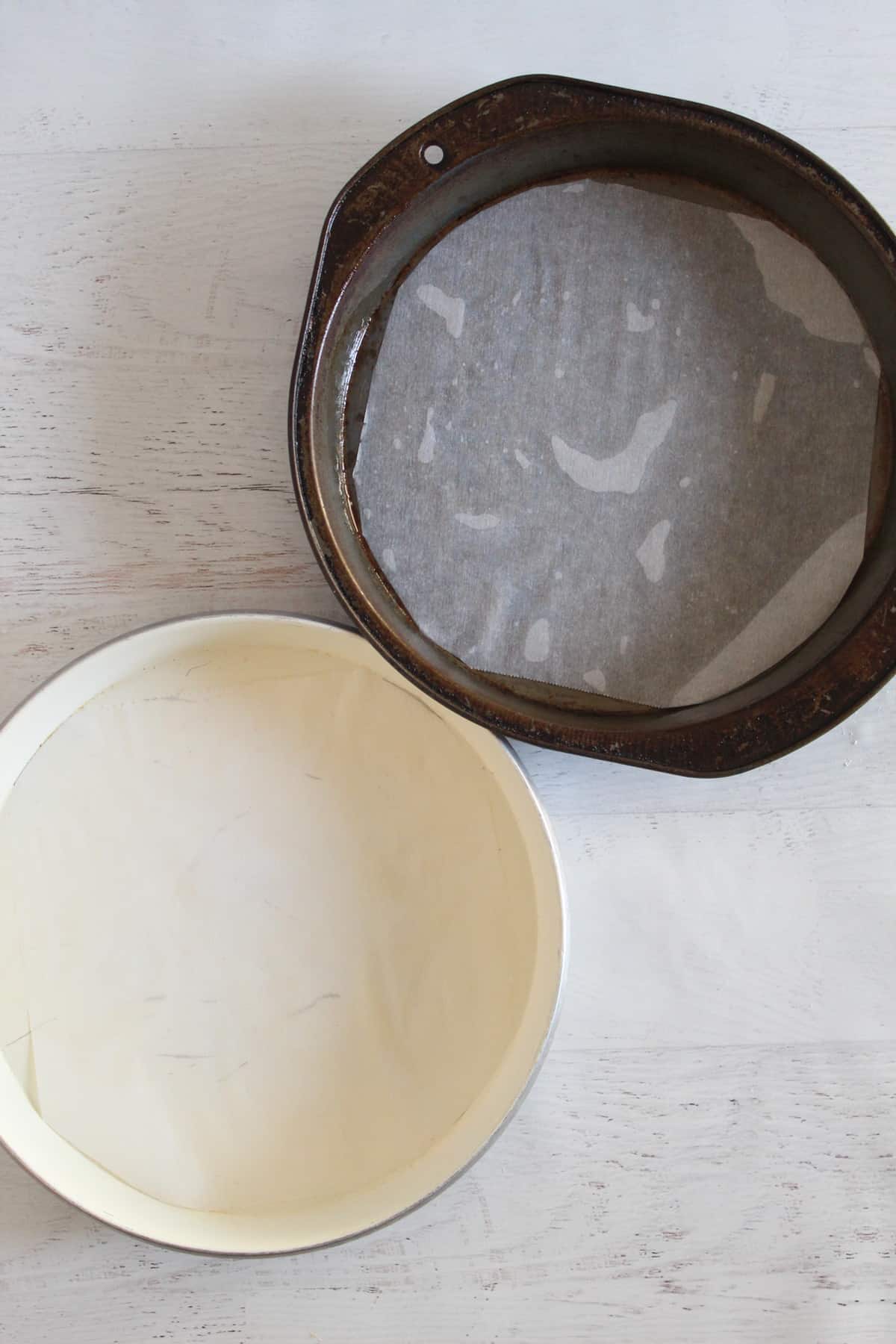
Preheat the oven to 350F and spray two 9-inch cake pans with cooking spray and line them with circles of parchment paper.
Step 2: Zest The Lemons
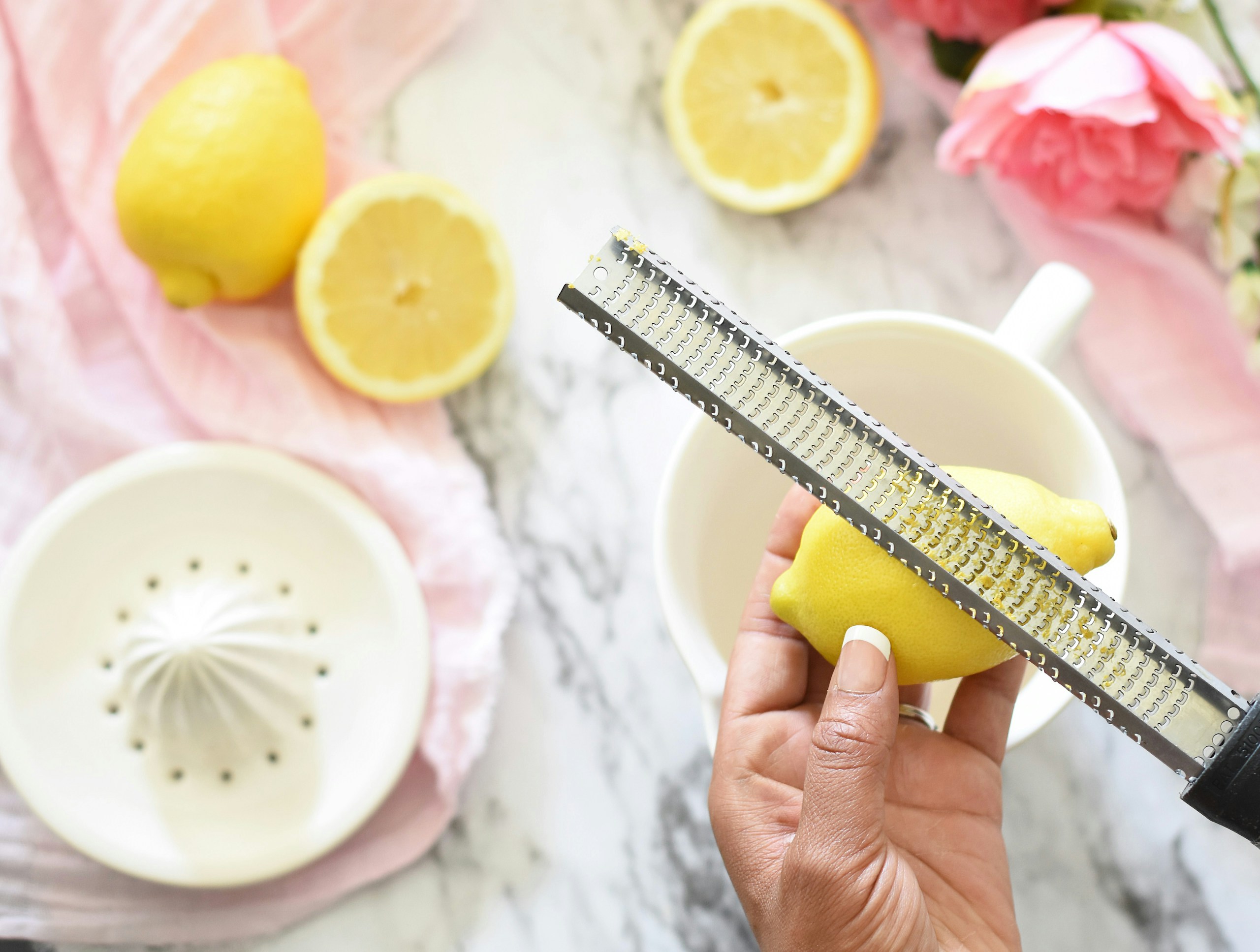
Zest the lemons and rub the zest into the granulated sugar with fingertips to release oils.
Zesting a Lemon
- To zest a lemon, you’ll need a small grater.
- Start by washing and drying your lemon.
- Then rub the lemon with the grater 3 times back and forth.
- Do this in sections all over the lemon.
- Be careful not to get into the white part of the lemon.
- Make sure to zest the lemon right before using it in the recipe.
Check out this detailed guide for more tips on how to zest a lemon properly.
Step 3: Mix The Wet Ingredients
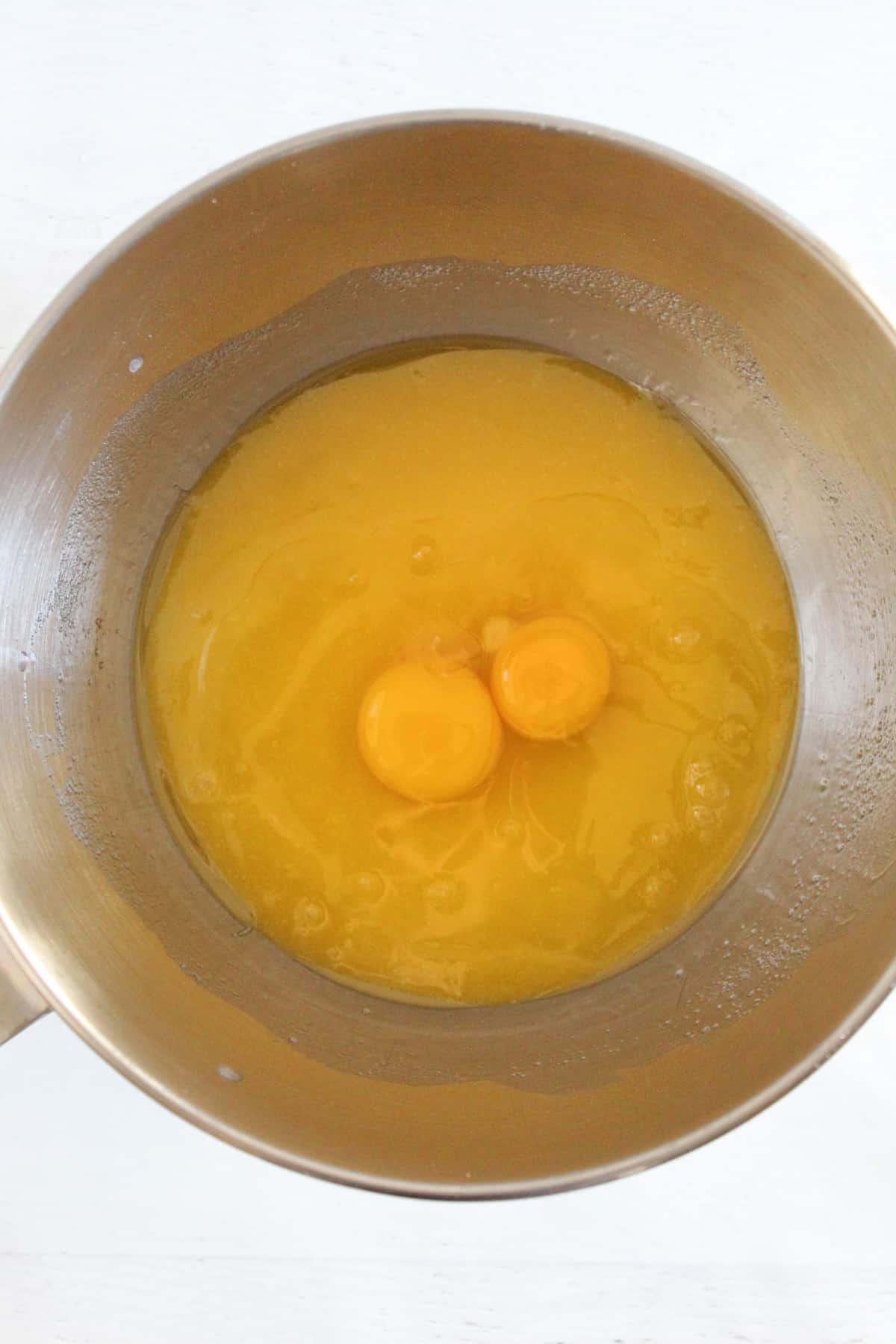
In a large mixing bowl, add the oil and zested sugar, and beat until light and fluffy. Then add in 4 eggs and mix on medium speed for 20 seconds.
Step 4: Add The Dry Ingredients
Add the gluten-free flour mix, salt, and baking powder to the wet ingredients and mix on low speed for about 15 seconds. Scrape down the sides of the bowl.
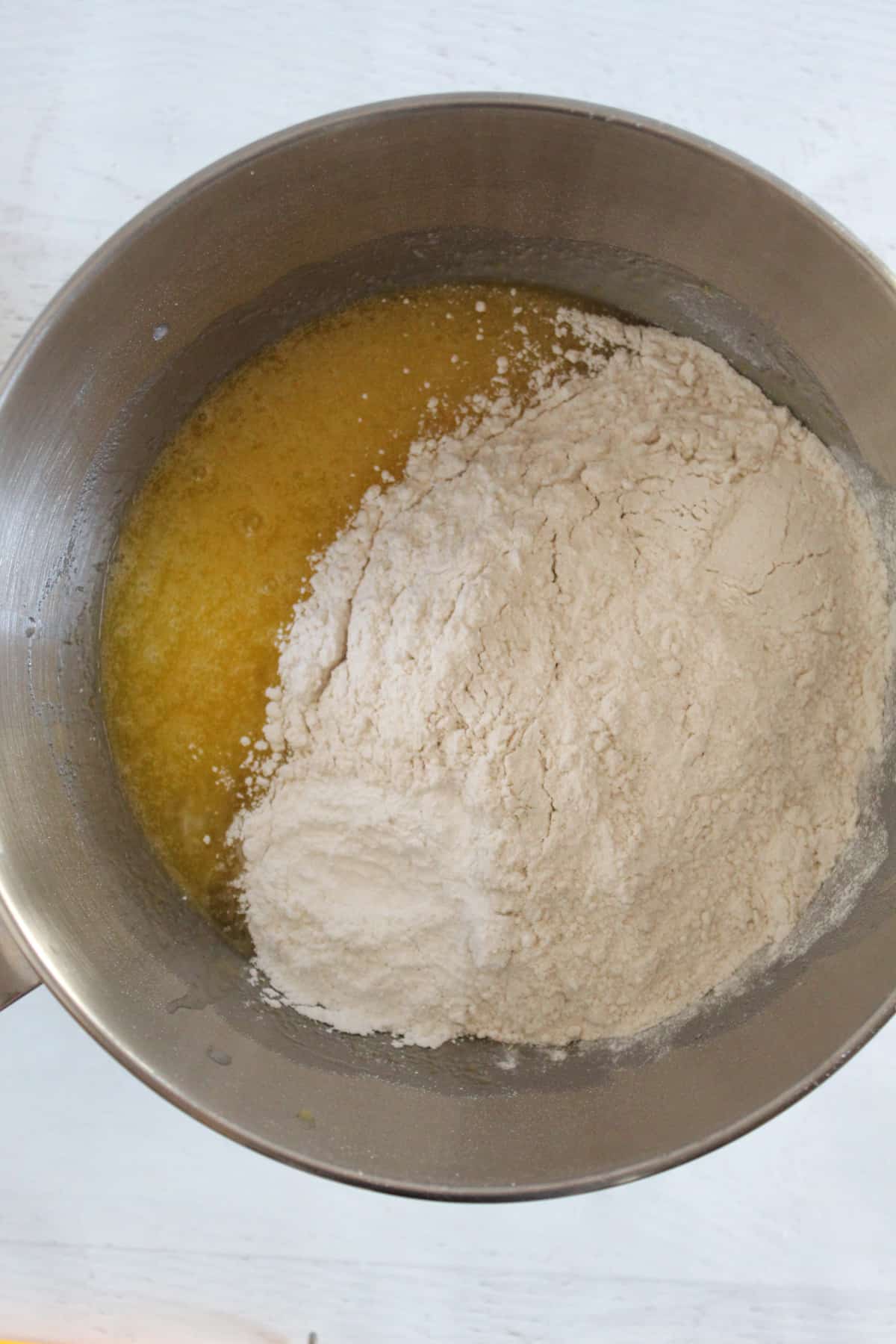
Next, add the milk and lemon zest, and mix just until the batter is smooth and no lumps remain.
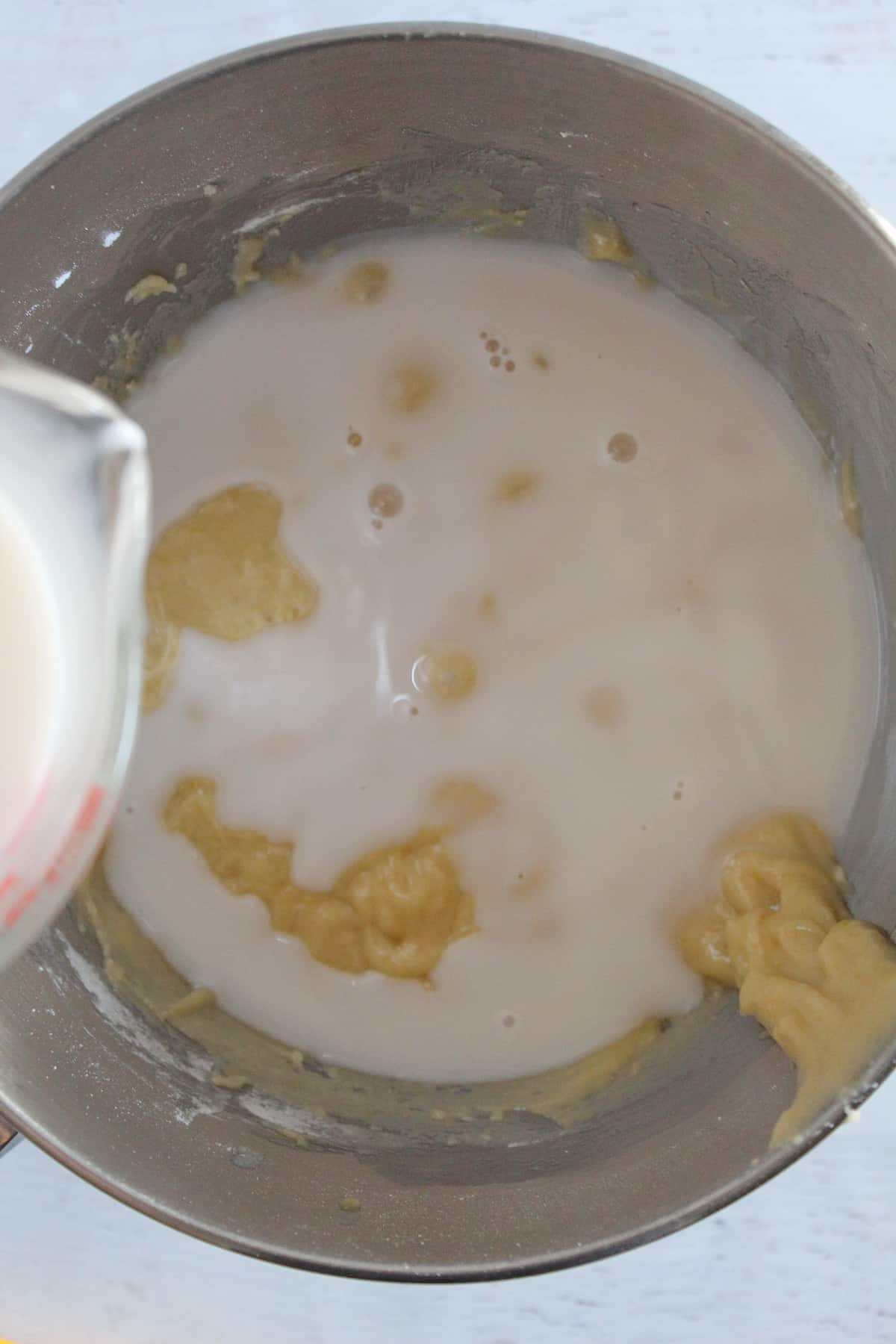
Step 5: Let The Batter Rest
Scrape the bowl and let the batter rest for 30 minutes.
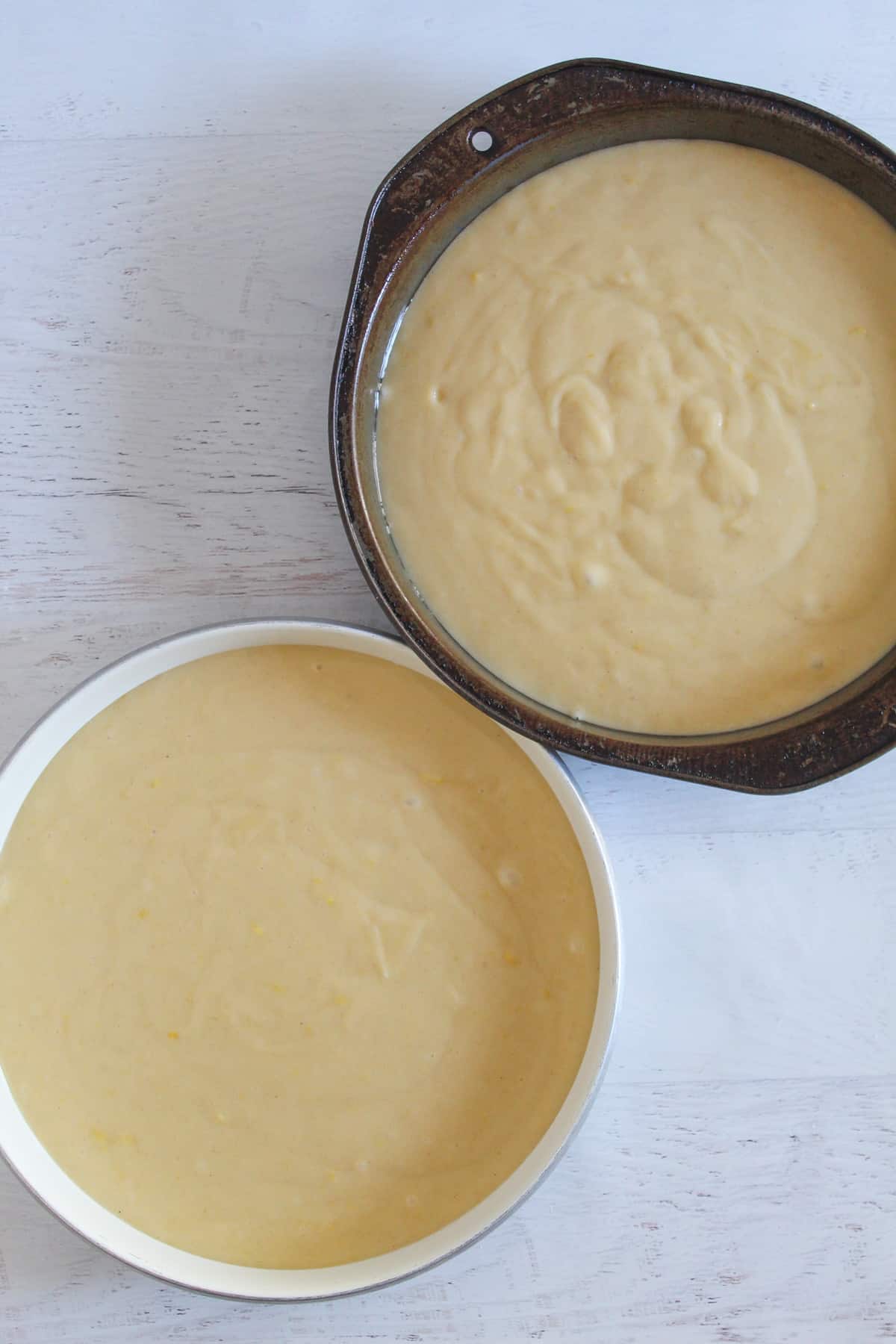
Step 6: Bake
Pour the batter evenly into the pans. Bake at 350F for 25-28 minutes or until a toothpick inserted into the center comes out clean.
Step 7: Cool The Cake
Let the cakes cool in the pans for 15 minutes. Then flip the pans over and transfer to a wire rack.
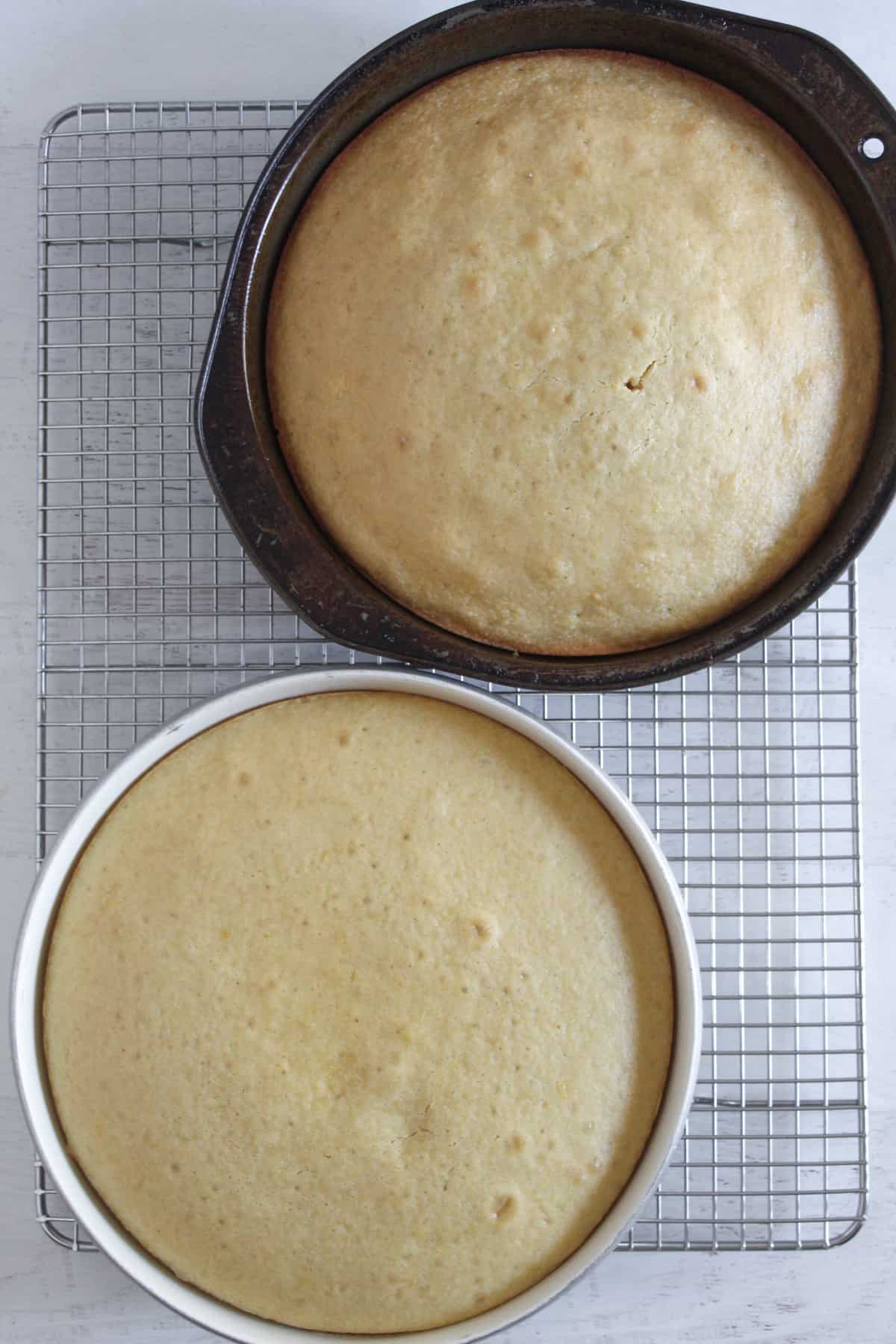
Step 8: Frost The Cake
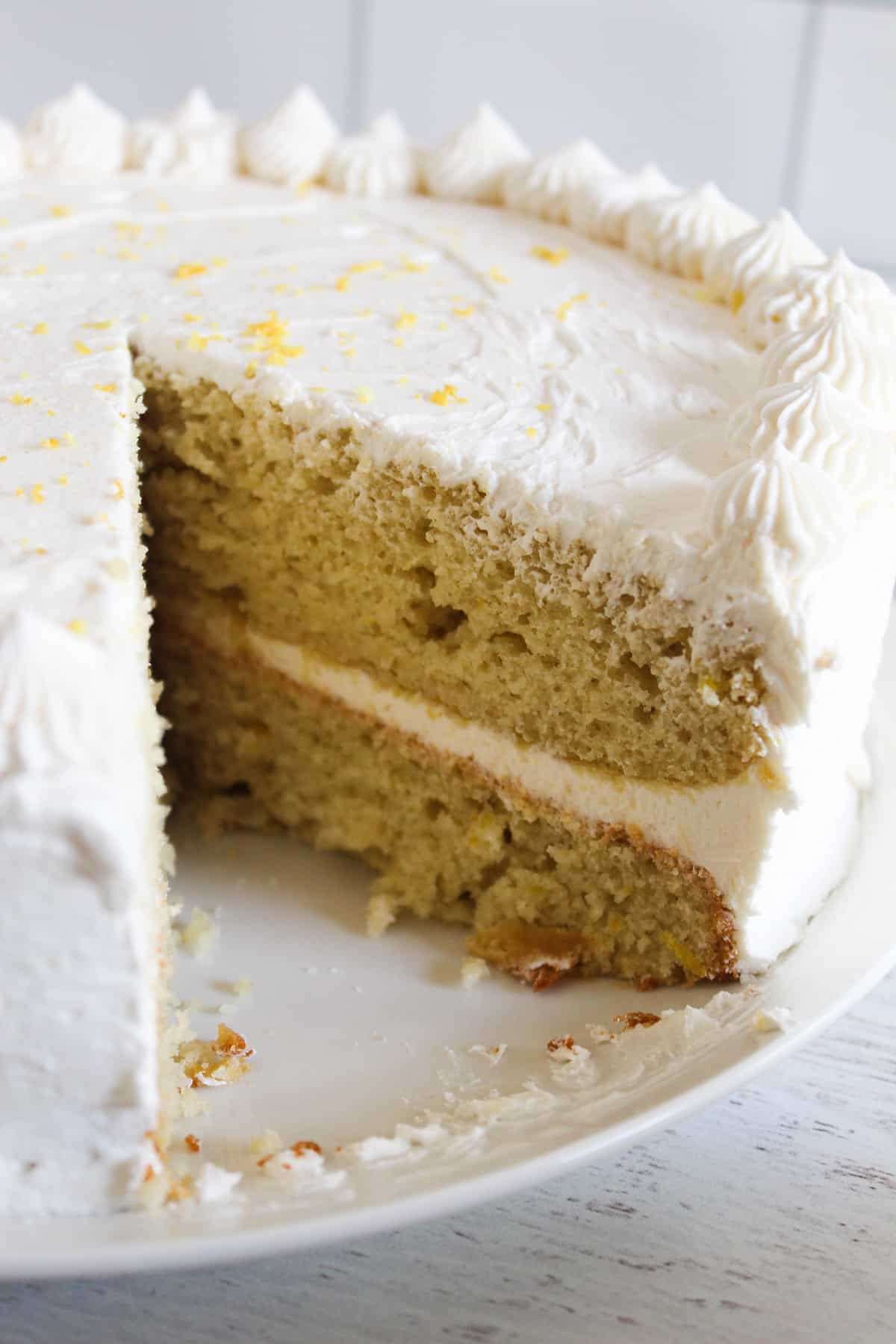
Cool the cakes completely before making the frosting. Place a dollop of frosting on the bottom cake layer and frost with ⅔ -1 cup frosting.
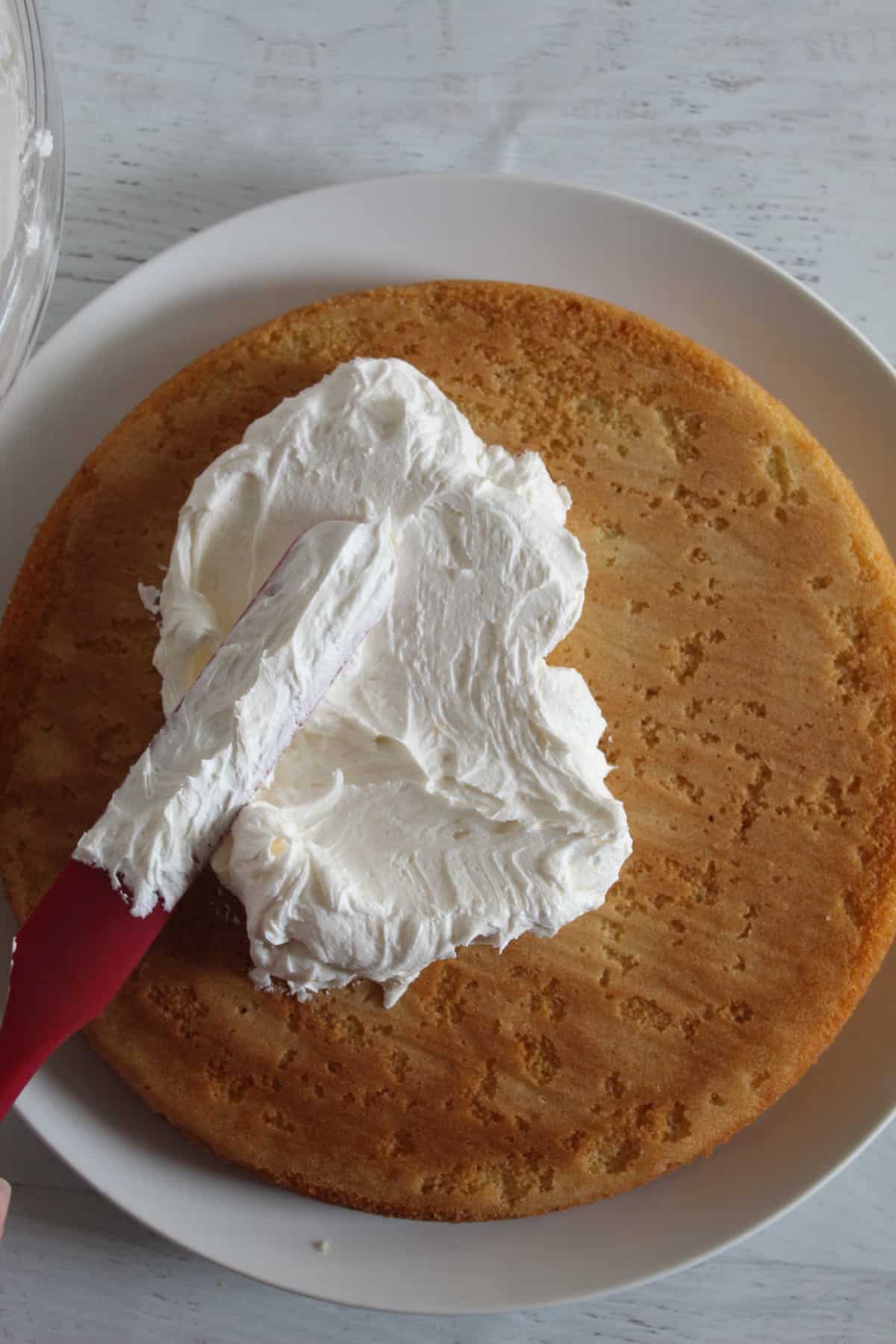
Lemon Buttercream Frosting and Decorating
This lemon buttercream frosting is the perfect pairing for this gluten-free lemon cake. Made with just 4 simple ingredients, it has a smooth, ultra-creamy texture and a bright, tangy flavor that comes together in about 10 minutes.
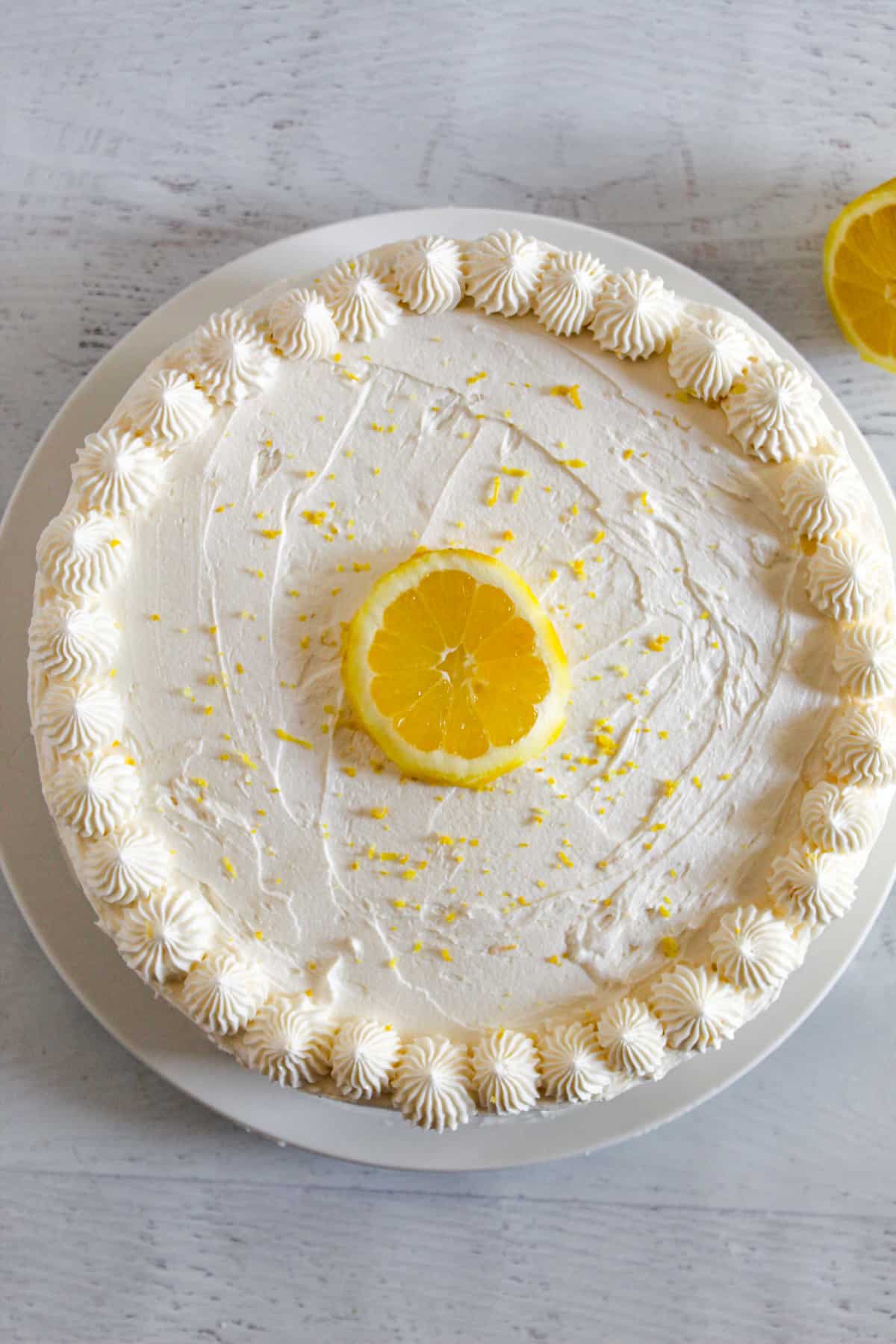
With that in mind, here’s how to add the final finishing touches:
- Place one cake in the center of your serving dish and frost the top.
- Top with the second cake and frost the top of that cake.
- Finally, frost the edges and give the top an extra swirl of two as desired or needed.
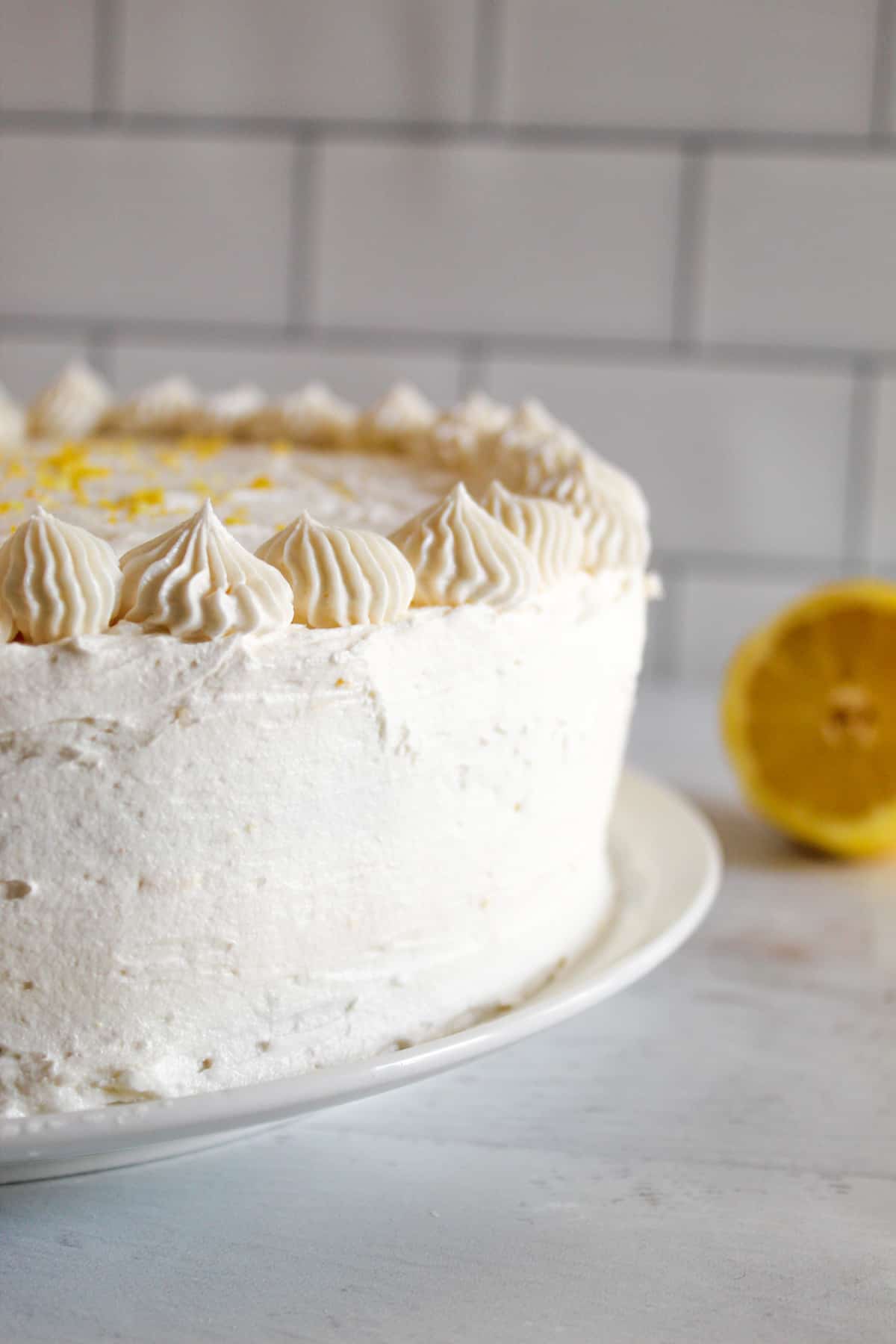
- Use large dollops of the remaining frosting to frost the sides. Smooth the frosting at the end.
- Place the remaining frosting in a decorator’s bag and pipe stars around the top of the cake. Sprinkle with the remaining lemon zest or yellow-colored sugar, if desired.
Expert Tips for Baking The Perfect Gluten-Free Lemon Cake
The following pointers will help you make this gluten-free lemon cake successfully.
- Select a gluten-free flour blend that already contains xanthan gum to replicate gluten’s elasticity and avoid a crumbly texture.
- Weigh the ingredients for accuracy, as gluten-free flours tend to pack too densely.
- Before mixing, rub the lemon zest into the sugar to release its citrus oils and create a much stronger, better-balanced lemon flavor.
- Be careful not to overmix. Simply mix the batter until it is well combined.
- Let the batter sit for 10 to 15 minutes before baking to allow the flours to fully hydrate.
The Secret to Well-Balanced Lemon Taste
One of the main challenges with this dessert is balancing the lemon’s acidity with enough sweetness and richness, so the flavor tastes bright and vibrant rather than overly sharp or sour.
1. Bloom the zest in the sugar.
Before creaming the butter, rub the lemon zest into the granulated sugar with your fingertips until the sugar looks moist and very fragrant.
This releases the lemon oils and evenly distributes the flavor throughout the batter, so you taste lemon in every bite, not just in concentrated spots.
2. Balance acidity with sweetness and fat.
Use enough sugar and oil to smooth the lemon’s tartness. The richness from this blunts sharp edges and keeps the lemon taste rounded, not puckering.
3. Finish with the lemon buttercream.
To create more lemon punch without making the baked cake too wet or acidic, frost it with a lemon buttercream after baking. This keeps the cake’s structure intact while adding an extra lemony “top note” to every slice.
Effective Solutions for Common Baking Problems
Baking mishaps can happen to anyone, no matter your skill level. To help you get the best results, here are some common problems you may face and practical solutions to make sure your next cake turns out just right.
Cake Dry
Overbaking is one of the most common reasons cakes turn dry. Too much flour or an oven that runs too hot can also be to blame. Check for doneness early using a toothpick, measure flour by spooning it into the cup and leveling it off, reduce the oven temperature slightly if needed, and be sure to use the correct pan size for the recipe.
Cake Sticking to Pan
A poorly greased pan tears the cake on release. Fixing this requires greasing with butter or spraying, lining with parchment, and cooling for 10 minutes before unmolding.
Cake Sinking
Avoid premature oven peeks to prevent this. Wait 20-30 minutes before checking, and test baking powder’s freshness by mixing with hot water.
Weak or flat lemon flavor
Using too little zest or skipping the step of rubbing it into the sugar can dull the lemon flavor. For the brightest taste, use fresh lemon zest and work it into the sugar until fragrant. You can also enhance the citrus flavor after baking with the lemon buttercream frosting.
Why Is This Gluten Free Lemon Cake More Beneficial?
Gluten-free lemon cake can be a more wholesome dessert option than a traditional wheat-based lemon cake, especially since you have control over the ingredients, sugar level, and any added nutrients. It may be nutritionally preferable for several key reasons:
Gluten‑free and grain‑sensitive friendly
The gluten-free flour mix in this recipe offers a safe and enjoyable option for people with coeliac disease, wheat allergy, or gluten sensitivity. Those who need to avoid gluten can still enjoy cake and social treats without worrying about gluten-related digestive discomfort, bloating, or inflammation.
Opportunity for better ingredient choices
This gluten-free lemon cake recipe also gives you the flexibility to improve its nutritional value by choosing a flour blend with more fiber and protein rather than one made mostly of starches. You can further lighten the recipe by reducing the salt and sugar, while still relying on fresh lemon zest to provide vibrant flavor and a small boost of vitamin C.
Source of micronutrients
With this recipe, you also gain nutrients such as calcium, iron, and a modest amount of protein from the eggs and lemon buttercream. The lemon zest can further contribute small amounts of vitamin C and vitamin A, adding a little extra nutritional value along with fresh citrus flavor.
Creative Variations for This Gluten-Free Lemon Cake
The best variations of a gluten‑free lemon cake focus on flavor twists, texture upgrades, and dietary tweaks while keeping that bright lemon base you love. Here are the most popular and reliable ones:

Lemon‑filled layer cake
This variation can turn your gluten‑free lemon cake into a showstopper. To do this, bake two or three layers, then fill them with lemon curd. Then frost with the lemon buttercream frosting for a tangy, creamy finish. This is ideal for birthdays, tea parties, or when you want a more “restaurant‑style” lemon cake.
Lemon drizzle or loaf version
If you want a cake that’s perfect for afternoon tea, easy to slice, or for gifting, switch from a layer cake to this variation. All you have to do is bake in a loaf or bundt pan, then pour a hot lemon syrup or powdered‑sugar‑lemon glaze over the warm cake. The syrup soaks in, keeping the crumb extra moist and intensely lemony.
Vegan variation
To modify your recipe to suit vegan diets, swap the eggs for flax or chia egg or a commercial egg replacer.
Flavor‑pairing twists
If you want to impress guests or match the cake to a seasonal menu, add complementary flavors. These lemon cranberry muffins bring together a delightful contrast of sweet and tangy. There’s also this Blueberry Lemon Coffee Cake, which combines juicy blueberries, zesty lemon, and a light, fluffy cake for a delightful treat.
How to Properly Store, Freeze, and Reheat Your Cake
To keep your gluten‑free lemon cake tasting fresh, moist, and full of lemon flavor, follow these simple rules for storage, freezing, and reheating.
Storing At Room Temperature
Once the cake is cool, wrap it in plastic wrap or store it in an airtight container at room temperature. Unfrosted cake is fine for 1–2 days, while frosted cake stays moist for 2–3 days, depending on frosting type.
Fridge Storage
If you won’t finish the cake in 2–3 days, or if the frosting is very soft or dairy‑heavy, place the cake in the fridge. Slice or store whole, then place in a sealed container or tightly wrap in plastic wrap.
Freezing Unfrosted Layers & Cakes
If you want to save unfrosted layers for later or bake ahead, cool completely, then wrap each layer or cake in plastic wrap, followed by foil or a freezer‑safe bag. You can also freeze for up to 3 months and thaw in the fridge or on the counter for 2–4 hours. Frost after thawing for the freshest look and texture
Freezing Frosted Cake Or Slices
Put the cake or slices in the freezer, uncovered, for 15–20 minutes to “set” the frosting, then wrap tightly in plastic wrap and foil, or put in a freezer‑safe container. You can freeze the individual slices for 1–3 months in airtight bags or containers.
Reheating Tips
This cake is best softened to room temperature, not baked again, unless you specifically want a warm slice. If it’s frozen, thaw at room temperature for 2–4 hours or overnight in the fridge in the container.
Frosting Storage
Store in an airtight container, pressing plastic wrap directly on the surface if it’s a runny icing, to prevent a skin. Most buttercream‑style frostings last about 2 weeks in the fridge.
This guide to storing and freezing cakes offers useful tips for keeping your desserts fresh, moist, and flavorful for longer.
Frequently Asked Questions (FAQs)
The questions below are among the most frequently asked about baking this gluten-free lemon cake with oat flour. We’ve also included simple, helpful answers to make it easier for you to customize the recipe and make it your own.
Can I make this cake vegan?
You definitely can. Using an egg substitute will easily make it vegan.
Can this recipe be made into cupcakes?
Absolutely! This recipe will make about 24 cupcakes. Bake at the same temperature, just check for doneness at 22 minutes. You can also make a sheet cake in a 9″x13″ pan if you bake at the same temperature and start checking at 30 minutes.
Can I freeze lemon cake?
You can. All you have to do is cut the cake into slices and store it in the freezer until you want to have it. Thaw at room temperature or defrost in the microwave when you’re ready for a slice of cake.
Can I use any gluten‑free flour mix?
Make sure you use light, all‑purpose “cup‑for‑cup” blends with xanthan gum. They work best for cakes like this.
Can I Make This Ahead?
You can bake the cake layers a day ahead, then make the frosting and frost the cake the next day before serving.
More Desserts You’ll Love
If you’re here for desserts packed with lemon goodness, explore these delicious picks that highlight its flavor:
- Gluten-Free Lemonade Scones — a rich, buttery dessert with a tender, golden brown exterior sweetened by a touch of tangy lemon glaze.
- Easy Gluten-Free Lemon Poppy Seed Muffins Recipe — fluffy, sweet, and bursting with citrus flavor, these muffins make a perfect snack or on-the-go breakfast.
- Easy Lemon Shortbread Cookies — a tender, melt-in-your-mouth sweet snack that freezes well.
- Lemon and Chocolate Mini Tarts — combines tangy lemon curd, rich chocolate ganache, and a crisp tart shell for an elegant, hassle-free dessert.
Whether you’re craving cookies, muffins, tarts, or scones, these lemony desserts are a sweet way to keep the citrus flavor going.
Let Us Know in the Comments!
We’ve walked through every step. Now it’s your turn. Every bake has its own story, so don’t just say you made it. Share how it turned out.
Did you frost your cake or enjoy it plain? What flavor combinations did you try? And what occasion did you bake it for?
Your experience can help other bakers better understand the recipe and explore it creatively. Drop your comments below. We’d love to hear how it went.