Have you been looking for the very best flourless cornbread recipe because you’ve missed having cornbread since going gluten-free? If so, you landed in the right place to return cornbread to its place beside your favorite wintertime soups and stews!
Although most cornbread recipes use both flour and yellow cornmeal (like my other gluten-free cornbread recipe), this cornbread is unique. It’s made without any flour at all, not even your favorite gluten-free flour blend. This gluten-free cornbread recipe also compensates for the lack of flour by adjusting the ratios of other ingredients for the perfect fluffy texture without being too dense or heavy.
Table of Contents
Is this the very best gluten-free cornbread recipe? I’ll be honest, I love having this with a nice bowl of chili soup on a cold day. I also love it when people put it to the test. Feel free to give this one a try and let us know what you think in the comments below!

Looking for more gluten-free quick breads? Check out the best gluten-free yeast-free bread (perfect for sandwiches), or try these gluten-free dairy-free dinner rolls to serve as a delicious side dish at your next meal.
Flourless Cornbread Recipe – Ingredients
This flourless cornbread is made with just a handful of gluten-free pantry staples. Below are the ingredients you’ll need.

- Cornmeal – Use certified gluten-free medium grind cornmeal, not corn flour. This is important for avoiding the chance that the “corn flour” has been mixed with other types of flour, and also helps with texture. (You could grind your own cornmeal with a dry variety of corn, but it’s a lot of work!)
- Baking powder – Since this cornbread contains no flour at all, it needs leavening agents like baking powder to help give the cornbread that fluffy texture.
- Baking soda – Baking soda will react with the sour cream to boost the cornbread’s volume.
- Salt – While you definitely shouldn’t add too much salt, it’s important for several chemical reactions in baking that help with texture and flavor.
- Vegan sour cream – Cornbread typically needs some sort of dairy to get a tender texture. Vegan sour cream is a great dairy-free option.
- Eggs – Eggs bind the cornbread batter together and give the batter a little extra lift. If you prefer to go egg-free, a flax-based egg alternative should work.
- Shortening – Shortening makes for the best cornbread. Although you can use vegan butter or regular butter instead, shortening has the best texture.
Measurements for each ingredient, along with instructions for making the homemade cornbread, are in the recipe card below.
Note about Temperature
Make sure the ingredients are at room temperature before baking. This helps create lighter textures and better volume in the finished cornbread because they can incorporate air better while being mixed and baked.
Why This Flourless Cornbread Recipe Works
Flour typically interacts with leavenings like baking soda or yeast (plus sugar) to keep baked items from getting too dense. The secret to successful flourless recipes is preserving the dough’s ability to incorporate air, which helps “fluff it up” the same way you’d fluff up a pillow that’s gone flat. That usually means adjusting the amounts of leavening, fats, and liquids to compensate for the lack of flour.
By making this cornbread recipe flourless, it’s possible for people on a gluten-free diet or who might be allergic to wheat to enjoy cornbread with their favorite wintertime soups and stews.
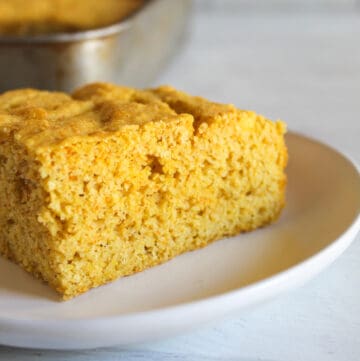
Easy Flourless Cornbread Recipe Card
Ingredients
- 320 grams cornmeal about 2 cups
- 1 teaspoon baking powder
- 1 teaspoon baking soda
- 1/2 teaspoon salt
- 2 cups vegan sour cream 1 16-oz container
- 2 large eggs
- 1/4 cup shortening melted
Instructions
- Preheat the oven to 400F.
- In a large bowl, mix the cornmeal, baking powder, baking soda, and salt.
- To the large bowl, add the sour cream, eggs, and shortening.
- Mix the batter well, until completely combined, about 15-20 seconds.
- Prepare a 9" baking pan by buttering it well with vegan butter. Place in the oven to heat the pan while the oven preheats.
- Pour the batter into the hot pan and bake immediately for 20 minutes or until a toothpick inserted into the middle comes out clean.
- Remove from the oven, slice, and serve warm.
Notes
- Make sure the ingredients are at room temperature.
- This batter does not need a rest time. Pour it into the prepared pan and bake right away.
- Melted butter or vegan butter can be used, but the shortening is highly recommended.
- Cool the cornbread in the pan for 5 minutes, then remove it from the pan and serve.
- This cornbread can be stored at room temperature for up to 2 days – reheat individual pieces in the microwave for 30 seconds.
- For longer storage, freeze individual slices of cornbread in an airtight container. Defrost each piece in the microwave for 30 seconds to 1 minute. Serve immediately.
Nutrition
Did you make and love this recipe? Give it your review and  rating below! And make sure to follow me on Instagram, Pinterest and Facebook too!
Flourless Cornbread Recipe – Directions
This flourless cornbread comes together quickly and easily. Here’s how to make it step by step.
Step One: Preheat the Oven
Preheat your oven to 400°F (205°C).
Step Two: Prepare Pan
Prepare a 9″ baking pan by buttering it well with vegan butter. Place the pan in the oven as it preheats.
Step Three: Mix the Dry Ingredients
Mix the cornmeal, baking powder, baking soda, and salt in a large bowl.

Step Four: Add Wet Ingredients
Add eggs, sour cream, and shortening to the cornmeal mixture.

Step Five: Mix Thoroughly
Mix the batter well, until completely combined, about 15-20 seconds.

Step Six: Add Batter To Pan
Pour the batter into the hot pan. Be careful not to burn your fingers on the edge of the pan during this step.

Step Seven: Bake Your Cornbread
Bake for 20 minutes or until a toothpick inserted into the middle comes out clean. Remove from the oven, slice, and serve warm.

Substitutions
If you need to make a few adjustments based on dietary needs or what you have on hand, these easy substitutions will help you customize the recipe without sacrificing texture or flavor
- Melted butter or vegan butter can be used, but the shortening is highly recommended.
- Use regular sour cream if you aren’t dairy-free.
- You can replace the egg with a flax egg.
These substitutions have all been tested, but keep in mind that small changes can slightly affect texture and browning.
Variations for Gluten-Free Cornbread Without Flour
- Sweet gluten-free cornbread: Add approximately ⅓ cup white sugar or ¼ cup honey with the wet ingredients for a sweet cornbread.
- Bake it in a cast-iron skillet: It’s traditional to bake cornbread in a cast-iron pan. Just be sure to use an 8-inch diameter pan and butter it well.
- Gluten-free cornbread muffins: For delicious cornbread muffins, add the batter to a buttered muffin tin and bake for approximately 12-15 minutes or until they pass the toothpick test.
- Add extra flavor: Bake a deliciously savory cornbread by stirring in green chiles, shredded cheese, and/or sliced green onions.
- Cornbread stuffing – use it in this cornbread stuffing recipe. This works especially well with a slightly savory cornbread!
- Use an egg substitute: Use a flax egg to make this easy gluten-free cornbread recipe completely vegan.
What’s the “toothpick test?” That’s a good question! The toothpick test is a good way to make sure baked items like flourless cornbread are done when they come out of the oven. When you take it out of the oven, stick a toothpick in the center of the cornbread. If it comes out clean, the cornbread is done.
Equipment & Tools
Cornbread is typically an easy recipe, and this version is no exception. You just need these simple supplies:
- Digital scale – to measure the cornmeal (and other dry ingredients) by weight
- Large mixing bowl
- Whisk
- 9″ baking dish
- Measuring cups and spoons
Storage
Storing cornbread is luckily quite easy. If you expect to use it up fairly quickly, you can just keep it on your counter with a bit of plastic wrap to cover it for a couple of days. Or you can freeze cornbread slices in airtight containers until you need them.

- This cornbread can be stored at room temperature for up to 2 days – reheat individual pieces in the microwave for 30 seconds.
- For longer storage, freeze individual slices of leftover cornbread in an airtight container. Defrost each piece in the microwave for 30 seconds to 1 minute. Serve immediately.
Top Tip
The batter does not need a rest time. Pour it into the prepared pan and bake right away. After baking, cool the cornbread in the pan for 5 minutes, then remove it from the pan and serve.
Food Safety Tips
- Wash your hands and sanitize your workspace after using raw egg.
- If you use dairy sour cream, try not to leave it sitting out much longer than it takes to get it to room temperature.
Flourless Cornbread FAQs
Before you head to the kitchen, let’s tackle a few common questions about flourless cornbread. And if something comes up while you’re baking, drop a question in the comments below.
Why does cornbread need flour?
If you bake cornbread without flour, it tends to be overly dense and hard to eat. To combat this, most recipes require equal parts wheat flour and cornmeal. However, you can make a completely flourless version using just cornmeal and the right proportions of liquids and fats.
If you want to leave the flour out and still get the correct texture, you’ll need more good leavening agents in your flourless cornbread recipe.
I previously suggested using more leavening agents like baking powder and baking soda to help get that fluffy texture. Leavening agents work by trapping air in the dough, which can either make the dough rise if you let it sit or give the finished product a much better texture, even if you don’t have to let the dough rise.
The ones I included in this recipe are chemical leavening agents that purely use chemical reactions with other ingredients to get the carbon dioxide needed to improve the texture.
Leavening Agents to Consider
Yeast, which I didn’t include in this recipe, is a biological leavening agent that usually consumes the sugar in dough and metabolizes it into carbon dioxide to make the dough rise.
- If a recipe for a baked item like this cornbread doesn’t call for yeast, you usually don’t have to let the dough rise – the yeast is usually just there to make it happen fast!
Egg whites can act as a physical leavening agent that traps air during the process of mixing them with other ingredients.
- Beating or whipping them works especially well for trapping air. Creaming, or rapidly whipping together fat and sugar, can add air to the ingredients being mixed, using a similar process.
Steam can also add to the gases used to fluff the cornbread up, which is the reason I adjusted the liquid ingredients to account for the lack of flour.
Can you eat cornbread with celiac disease?
Most cornbread recipes use wheat flour because the gluten helps give the cornbread a good crumb and fluffy texture. Unfortunately, this means people with celiac disease can’t eat this cornbread.
Fortunately, there are many great gluten-free cornbread recipes, and many use gluten-free flour blends instead of wheat flour.
This recipe, however, uses cornmeal purely with no flour at all. As long as you use certified gluten-free cornmeal, it will be safe to eat for individuals with celiac disease who miss having a nice slice of cornbread with their soups and stews.
Is gluten-free cornbread the same as regular cornbread?
Not exactly. Gluten-free cornbread replaces the flour in regular cornbread recipes with a gluten-free flour alternative, like almond flour or a gluten-free flour blend.
You can make gluten-free cornbread with just cornmeal if you have the right proportions of ingredients. This usually means adding more leavening agents that help make it more fluffy. Adding slightly more liquid ingredients also helps add air to the mix while you’re stirring it. It’s a great way to enjoy moist cornbread without adding any gluten.
More Gluten-Free Bread Recipes
Did you like this recipe? If so, be sure to come back for more gluten-free bread recipes like the ones below. I particularly like the gluten-free potato bread!
If you have more tips for making cornbread or would like to share your favorite variation, feel free to leave us a comment below.