A truly great gluten-free bread flour blend can change everything about your baking!
The right flour can make the difference between dense, crumbly loaves and soft and tender breads and baked goods. This homemade gluten-free flour blend is simple, reliable, and designed to deliver for all your recipes. So, look no further!
Table of Contents
While store-bought gluten-free flours can be convenient at times, they come with a hefty price tag and a lengthy list of ingredients with names I struggle to pronounce. So before grabbing that bag of pricey flour mix, try making your own at home.
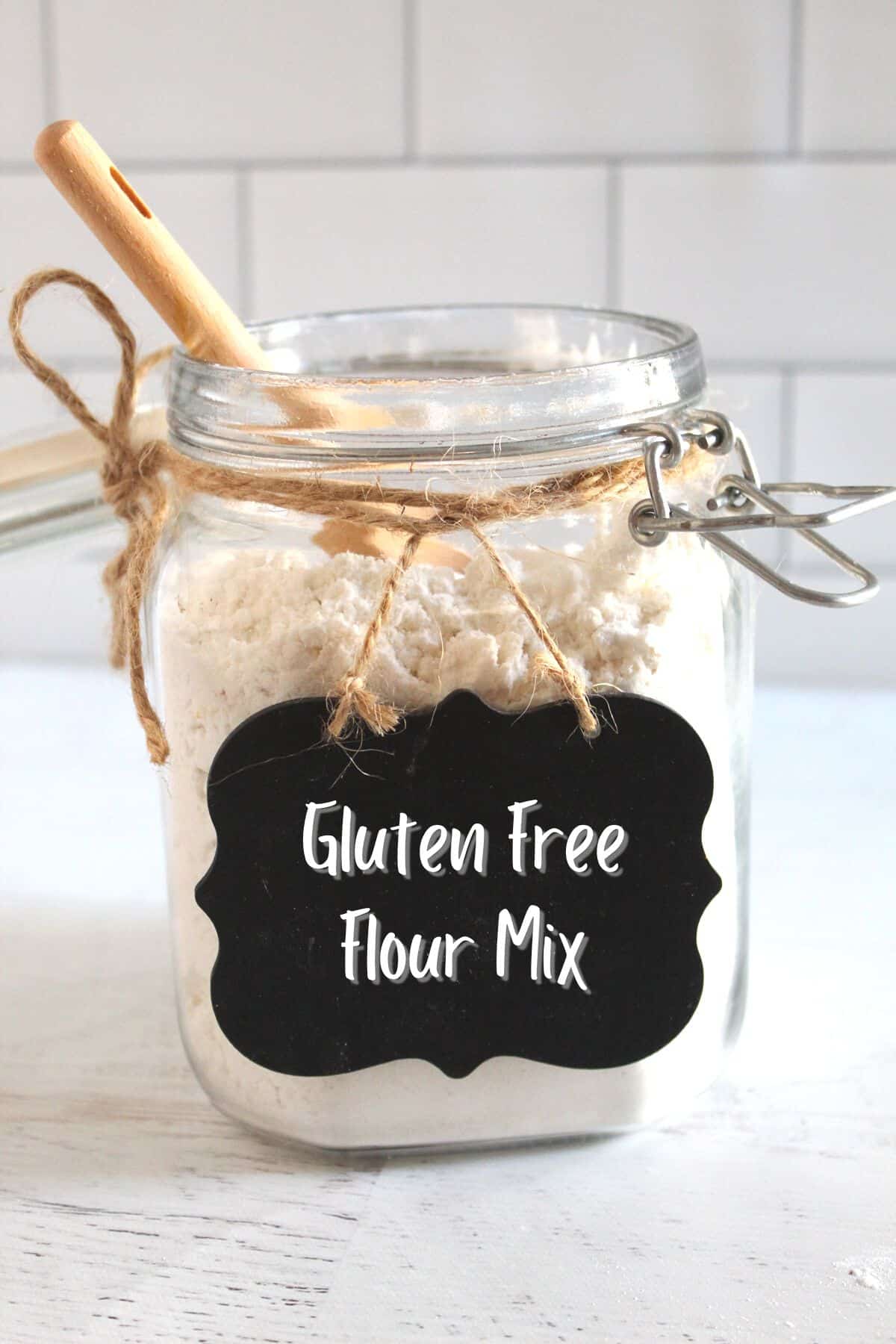
Here I’ve created a blend that can be your go-to replacement for gluten-free all-purpose flour. I’ve used this flour blend as a foundation for many of my gluten-free recipes, like breads and muffins, any many other everyday baked goods. It’s clean, simple, and works every time.
Best Results for a Gluten-Free Bread Flour
Before diving into the individual flours that make up a successful gluten-free flour blend, it helps to understand what gluten actually does in traditional baking, and why replacing it takes more than just a single type of gluten-free flour.
Want our human-written content to rank above AI-generated garbage? Help us out by clicking this button!
What many people don’t know is that freshly milled wheat flour does not contain gluten. That’s right, wheat flours don’t contain any gluten in their dry state. Gluten forms only when two wheat proteins, glutenin and gliadin, are hydrated.
Once liquid is added, the two proteins bond and form a network of proteins, or gluten molecules, which trap gases such as air. This is what gives bread its structure, chew, and ability to rise. Think of gluten as the “glue” for dough.
Gluten-free baking doesn’t naturally create this protein network that occurs with these wheat proteins. That’s why no single gluten-free flour, whether it’s almond flour or rice flour, can successfully mimic all-purpose flour on its own.
Instead, you need a combination of flours and starches. Flours provide protein and fiber, and starches help to bind ingredients together. The result is this gluten-free flour blend that provides just the right balance of flours and starches for gluten-free baking.
I have a printable version of the different flours and starches and their weight conversions.
Check out the Ultimate Guide to Gluten-Free Flours for a printable, handy substitution chart!
Ingredients in Gluten-Free Bread Flour Mix
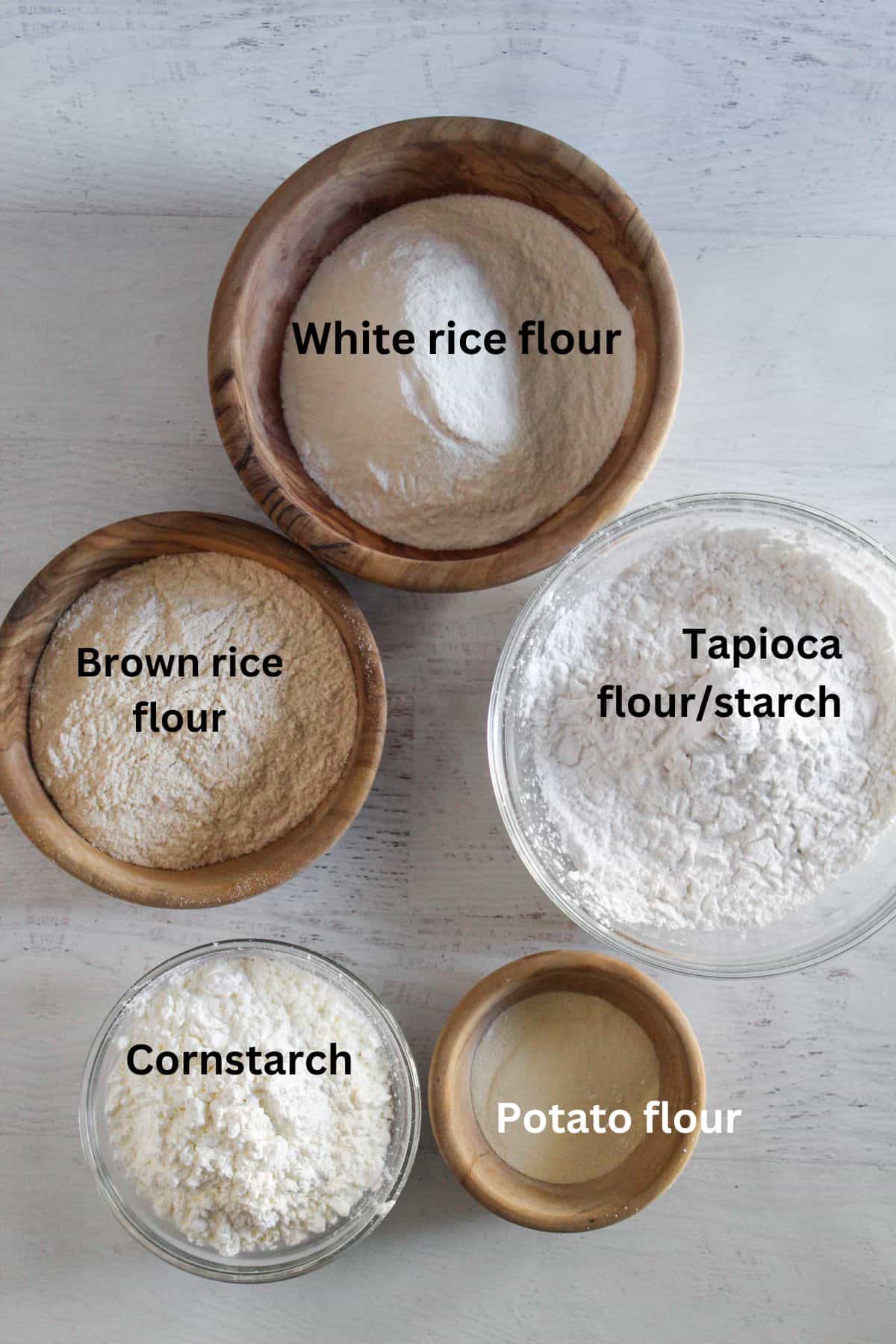
This gluten-free flour mix is made of just 5 ingredients:
- White Rice flour
- Brown Rice
- Tapioca
- Cornstarch
- Potato Flour
White Rice Flour
White rice flour is a wonderful (and affordable) ingredient made from finely milled rice. It has a light, fine texture and no strong flavor, making it a widely used gluten-free alternative by chefs and restaurants around the world. This brand is a great option!
Brown Rice Flour
Brown rice flour is very similar to white rice flour. It’s made from all parts of the rice grain, so it retains more natural nutrients and has a slightly nutty flavor. This organic brown rice flour is one of my pantry staples.
Tapioca Flour
Tapioca flour (also known as tapioca starch) is made from the starchy pulp of the cassava root. This fine, starchy flour makes for an excellent gluten-free flour due to its high starch content and binding properties. It works best in conjunction with other gluten-free flours and starches, so it’s perfect for this flour mix.
Cornstarch
Cornstarch is exactly what it sounds like – the starch extracted from corn. It’s a very accessible and affordable gluten-free ingredient that makes light and tender baked goods while also helping to bind ingredients together.
Potato Flour
Potato flour is made from the whole potato (different from potato starch) and is essential for binding together ingredients and adding moisture to recipes. It can have a strong potato flavor and works best when used in small amounts, making for excellent breads and rolls. Just a few tablespoons of it are perfect in this gluten-free flour mix.
Exact measurements for each ingredient are in the recipe card below.
Gluten-Free Bread Flour Blend Recipe Card
Ingredients
- 350 grams white rice flour (about 2 cups)
- 310 grams brown rice flour (about 2 cups)
- 360 grams tapioca flour (about 3 cups)
- 270 grams cornstarch (about 2 cups)
- 45 grams potato flour (about 3 tbsp)
Instructions
- Add all flours and starches to a large mixing bowl or bowl of a stand mixer.
- Mix on low speed for 5 minutes, until fully combined.
- Store flour mix in a large plastic bag or an airtight container.
- For longer storage, store in the refrigerator.
Notes
- Measure the flours and starches by weight, not a measuring cup.
- Use a large mixing bowl to ensure all the flour mixes.
- Store flour in a sealed container.
- For longer storage, refrigerate. Bring flour mix to room temperature before using.
Nutrition
Step by Step: Gluten-Free Bread Flour
The easiest way to make this gluten-free flour blend is by using a stand mixer. This recipe yields about 9 cups of flour, so a large mixer makes it much easier to combine everything evenly.
Of course, you can mix this by hand in a large bowl as well, just be sure to whisk it together very well!
Step One
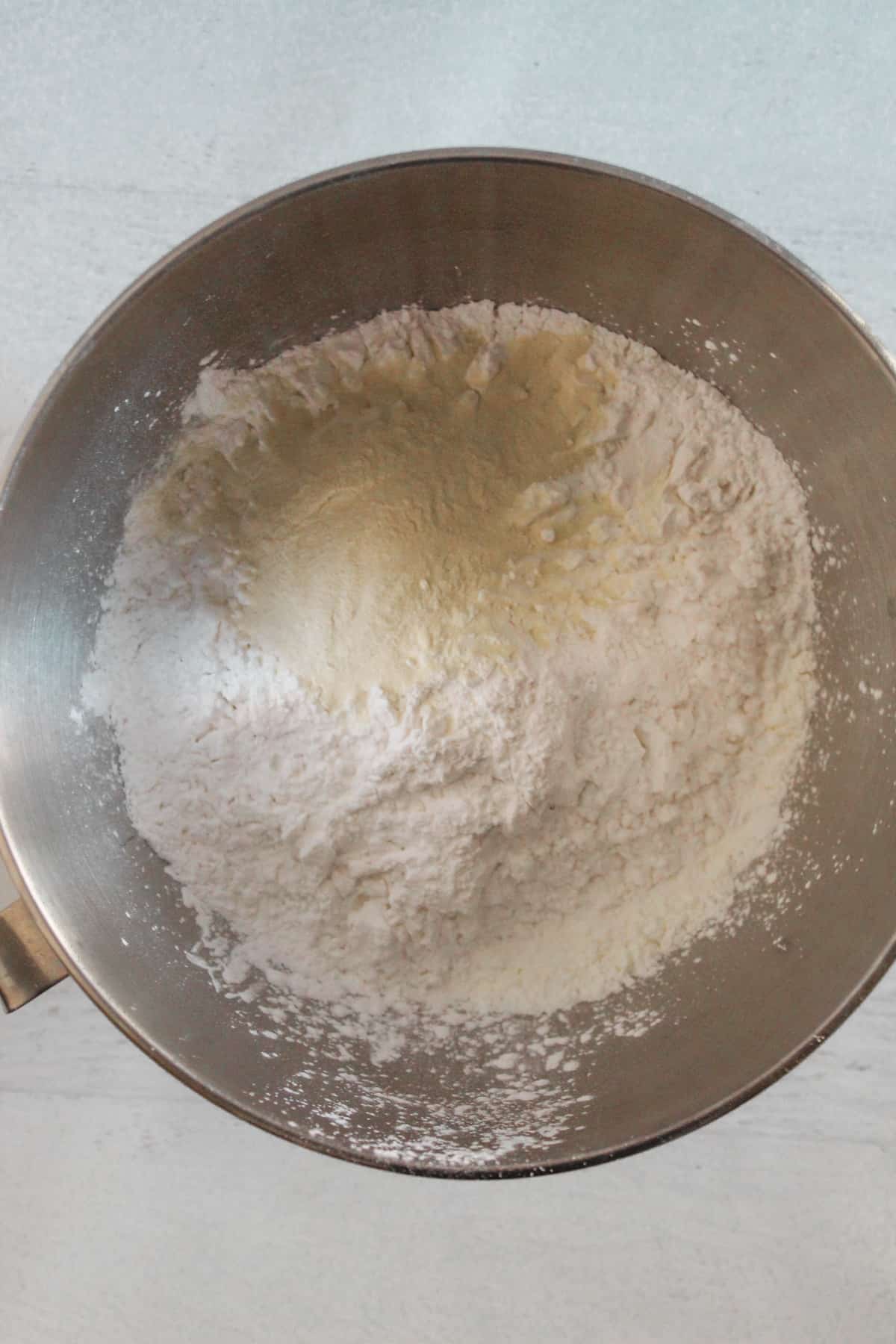
Add the flours and starches to a large mixing bowl or the large bowl of a stand mixer.
Step Two
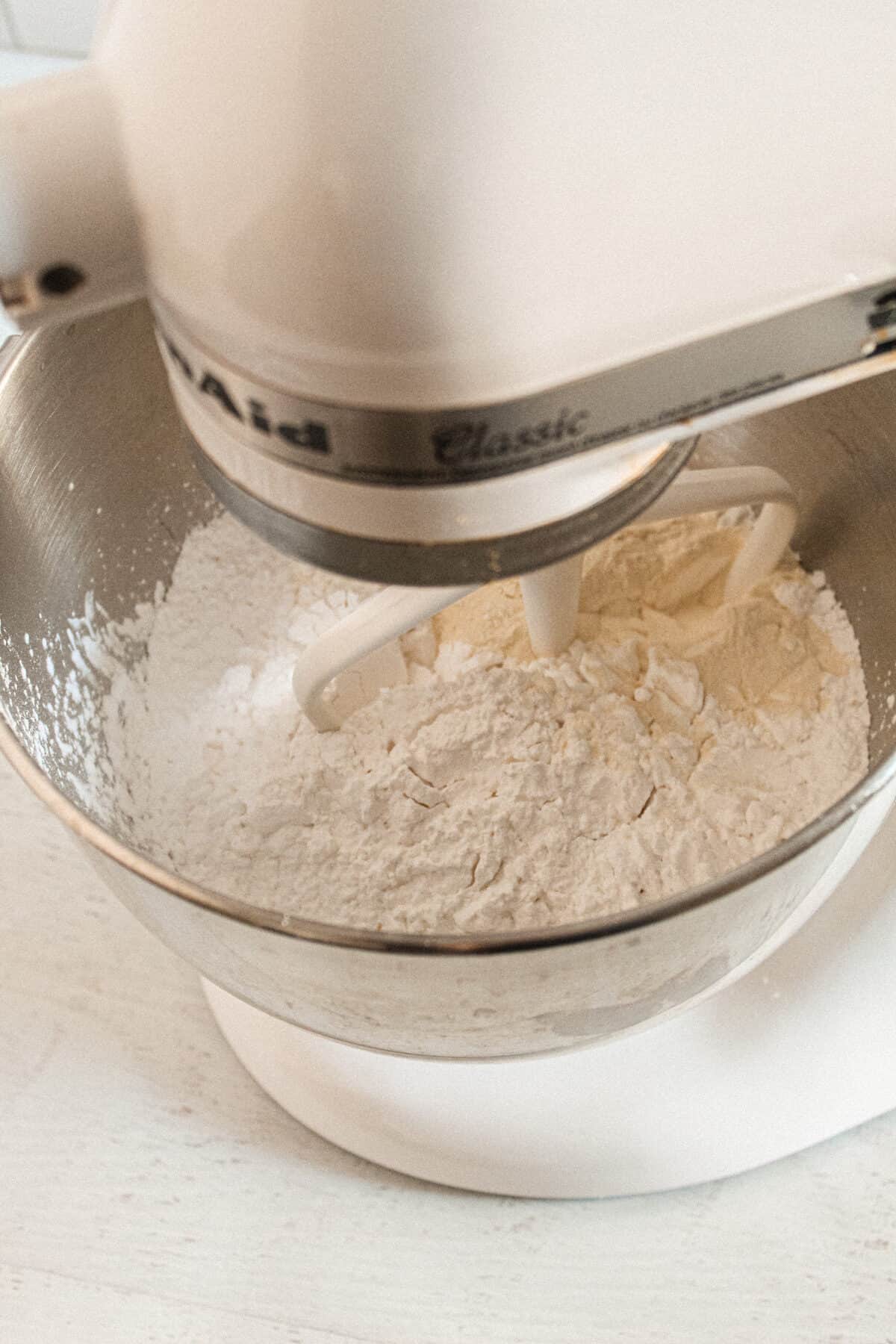
Mix on low speed for 5 minutes, until fully combined.
Step Three
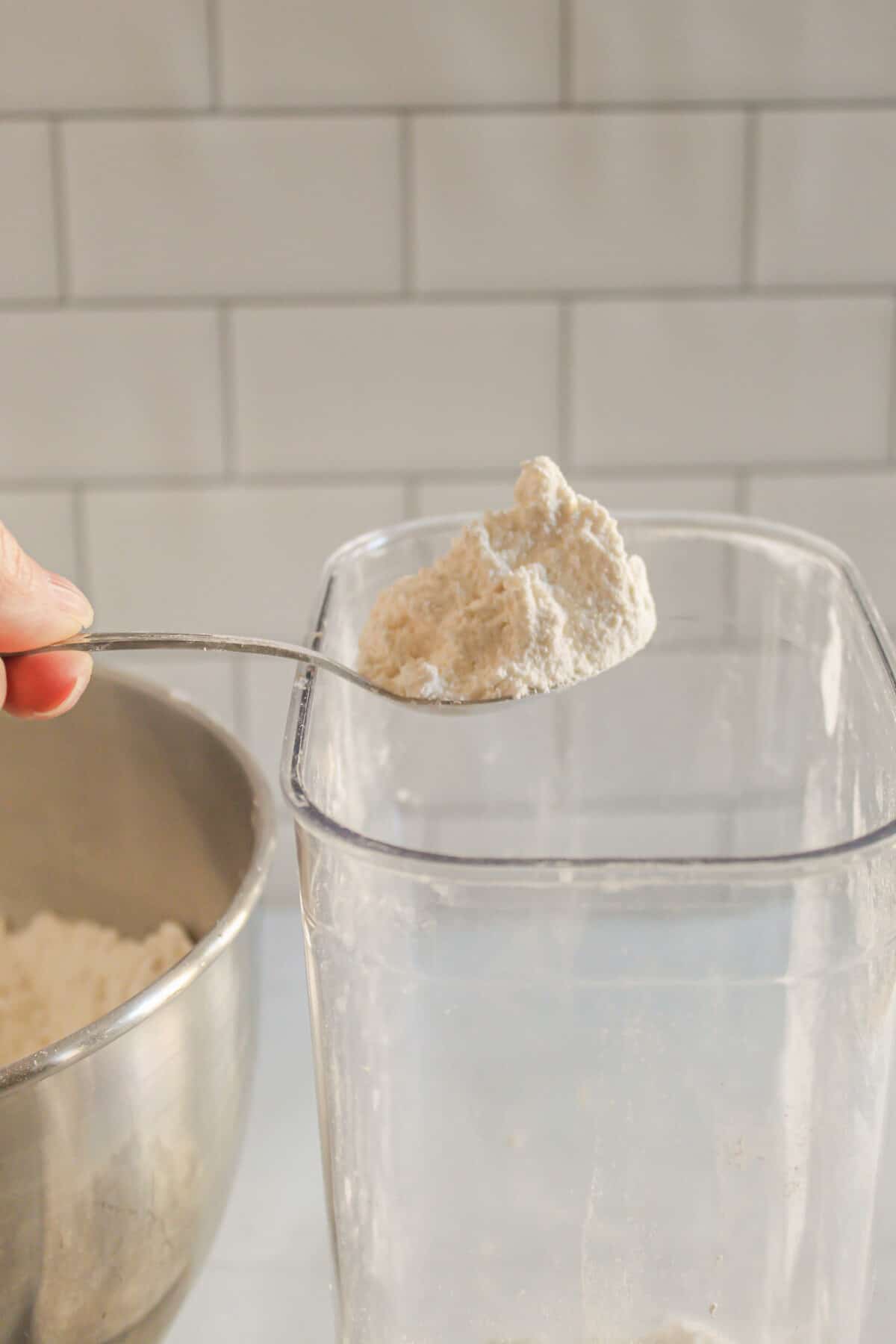
Store the flour mix in a large plastic bag or an airtight container. (See below)
Storage
To maintain freshness and longevity, store your gluten-free flour in an airtight container in a cool, dry, and dark place.
For more on gluten-free storage, I’ve covered that in detail here. Because this blend makes approximately 9 cups, a large, airtight container works best, though a heavy-duty plastic bag is a fine backup. Just be sure to fold the bag down to keep flour from sticking to the seal.
For longer-term storage, keep your flour in the refrigerator or freezer. If stored properly in an airtight container, it can stay fresh for up to 8 months.
Why This Recipe Works
When developing this gluten-free flour mix, I wanted a recipe that could be as versatile as an all-purpose flour, but for those of us who can’t handle wheat flours. This recipe works because it’s built around balance.
Traditional wheat flour naturally contains a mix of proteins and starches, which provide doughs with elasticity, structure, and the ability to rise. Since gluten-free flours don’t naturally have that, this recipe recreates it by choosing a mix of flours and starches that each play a role in providing that balance to baked goods.
From a health perspective, this recipe gives you control. No additives, preservatives, or other unnecessary ingredients. You know exactly what’s going into your flour. While some people choose to be gluten-free for lifestyle reasons, it’s especially important for anyone managing celiac disease or other food allergies.
From a baking standpoint, this blend pairs flours that provide structure with light, moisture-retaining starches. This results in doughs that have a better rise, a softer crumb, and less of that dense, crumbly texture that scares most people away from gluten-free breads.
Finally, this blend is practical. Made with five simple ingredients, it mixes easily, stores well, and can be used across multiple recipes, making gluten-free baking more approachable and less intimidating, as baking should be.
Now, you can rely on one dependable blend for every recipe that will give you consistent, satisfying results every time!
These Tips Can Make Working with Gluten-Free Flours Much Easier:
- Different flours work for different uses. Not all gluten-free flours are interchangeable. Below you’ll see a list of many gluten-free flours, all with different protein and fiber contents. Keep in mind that you can’t always substitute one gluten-free flour for another.
- Adding protein can help improve the structure of your baked goods. Gluten is a protein, so with gluten-free baking, you’re often missing that natural support that comes from gluten. Try replacing 1/2 cup of water with egg whites to add protein and help improve texture. You can also experiment with some of the high-protein flours mentioned below.
- Store gluten-free flours properly. Keeping flours and starches in the refrigerator significantly extends their shelf life. Flours can also be frozen. Just be sure to bring them to room temperature before baking with them.
If you’re looking for a gluten-free white bread recipe, check out this gluten-free bread without xanthan gum.
List of Gluten-Free Flours
The following flours are gluten-free and can safely be used in gluten-free recipes
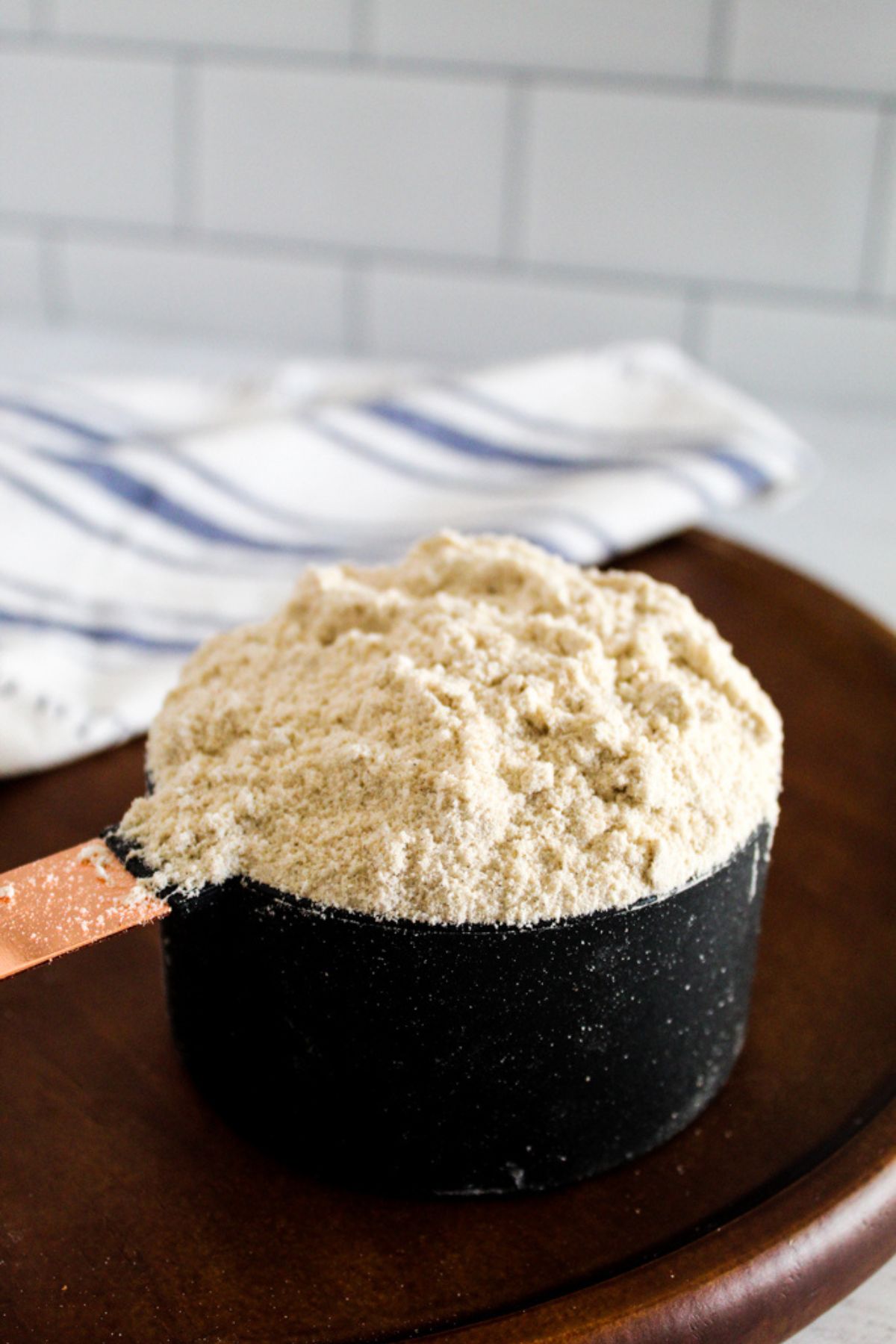
- Sorghum flour – gluten-free baking staple; adds protein with a mild taste and works perfectly in this gluten-free outback steakhouse bread and this sorghum bread.
- White rice flour/brown rice flour – either one is great in a gluten-free baking mix recipe.
- Sweet rice flour – great for breads, like this gluten-free Irish soda bread.
- Tapioca starch/flour – an excellent thickener.
- Potato starch – a thickener for gravy; adds moisture to baked goods.
- Arrowroot starch – one of the most neutral gluten-free thickeners for gravy
- Teff flour – great for desserts and teff pancakes; has a slightly sweet flavor.
- Buckwheat flour – great for waffles and these buckwheat pancakes.
- Quinoa flour – nice nutty taste and a great source of protein in your baked goods, like these apple quinoa muffins.
- Certified oat flour – make sure it is certified gluten-free; good in breads – like this oat bread.
- Coconut flour – great for desserts; coconut pairs well with anything sweet, like this omega-3 loaded cinnamon bread.
- Almond flour – great for desserts; the light and fine texture makes it great for cakes and cookies like these almond flour oatmeal cookies.
- Hazelnut meal – great for special desserts like cakes and tarts to give texture and a slight nutty flavor.
The following list of flours DO contain gluten:
Always double-check the labels on all flours (even some that appear to be gluten-free) to be certain that what you are buying truly is gluten-free.
- All-purpose flour
- Bulgar flour
- Brown flour
- Bread flour
- Cake flour
- Durham flour
- Granary flour
- Graham flour
- Kamut flour
- Sauce flour
- Self-rising flour (packaged)
- Semolina flour
- Spelt flour
- Triticale flour
- Wheaten flour
- Wholemeal flour
These lists contain some of the more popular and accessible flour options, but there are even more varieties out there to try.
Gluten-Free Bread Flour FAQs
Here are answers to some of the most common questions about gluten-free bread flour. If you don’t see yours, please let us know in the comments section below.
Can this Gluten-Free Flour Mix be Substituted for All-Purpose Flour?
The good news is that when the right balance of gluten-free flours is used, like in this recipe, the blend can replace regular flour in many, but not all, recipes. Keep in mind that this mix does not include xanthan or guar gum, which are ingredients commonly added to gluten-free doughs to create their stretch and structure.
If you’d rather not add it, we have a helpful guide to great xanthan gum substitutes.
Why Doesn’t this Blend Contain Xanthan Gum?
This gluten-free flour blend doesn’t have any xanthan gum in it for a couple of reasons. First, not everyone can tolerate xanthan gum, and often, something like psyllium husk powder or chia seeds would be a perfect substitute.
Also, not all gluten-free recipes call for xanthan gum, and those that do often call for different amounts.
With some recipes, like many quick breads (pancakes, muffins, scones), you’ll just need the original recipe for the flour blend, and with others, you may need to add xanthan gum. So I recommend adding your own as needed.
Can this Blend be Used as a 1:1 Substitute in Bread Recipes?
In certain recipes, this gluten-free flour mix works well as a 1:1 replacement, but it isn’t universal. Whether it works perfectly can depend on the specific recipe.
The great news is, this flour mix is made to be used with my recipes, so there’s no need for any trial and error! Start putting your flour mix to use with this gluten-free sandwich bread recipe and these banana muffins.
Ways to Use This Gluten-Free Bread Flour Mix
Now that you have this gluten-free bread flour mix ready to go, the possibilities are endless. Use it in your favorite bread recipes, try it in muffins or quick bread, and don’t be afraid to experiment as you learn what works best for you in your kitchen.
Gluten-free baking is rarely a one-size-fits-all, and this blend was made to be a bit flexible and forgiving and most definitely versatile!
Here’s a nice variety of some of my favorite ways to use this gluten-free bread flour mix.
If you give this flour mix a try, I’d love to hear how it works for you. Share your results, leave a comment, or let me know what recipes you’d like to see next in the comments section below!
Did you make and love this recipe? Give it your review and rating below! And make sure to follow me on Instagram, Pinterest, and Facebook , too!