Gluten-free muffins have a reputation problem: one wrong flour blend, one skipped rest time, or a few extra minutes in the oven can turn them dry, dense, or gummy in the center.
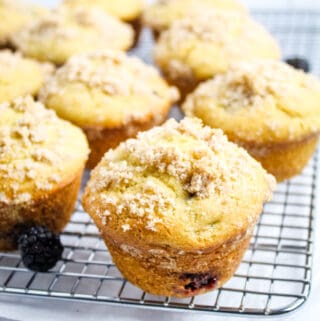
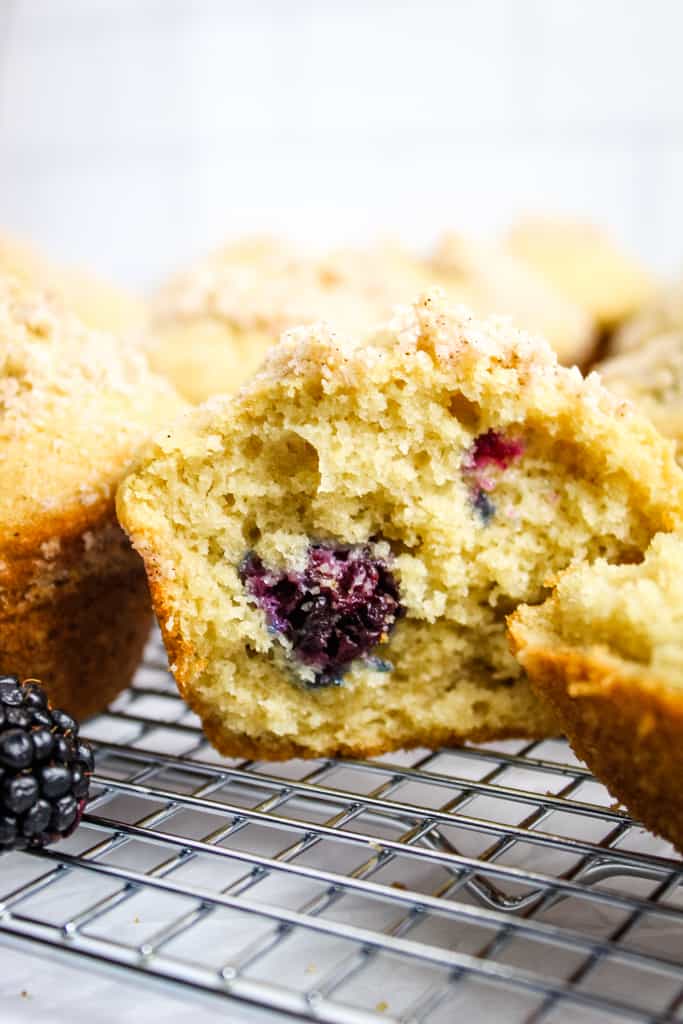
These gluten-free blackberry muffins are designed to avoid all of that. They bake up soft and moist with juicy, sweet-tart blackberries, a tender crumb, and a buttery cinnamon topping that makes them feel like they came from a bakery case.
Table of Contents
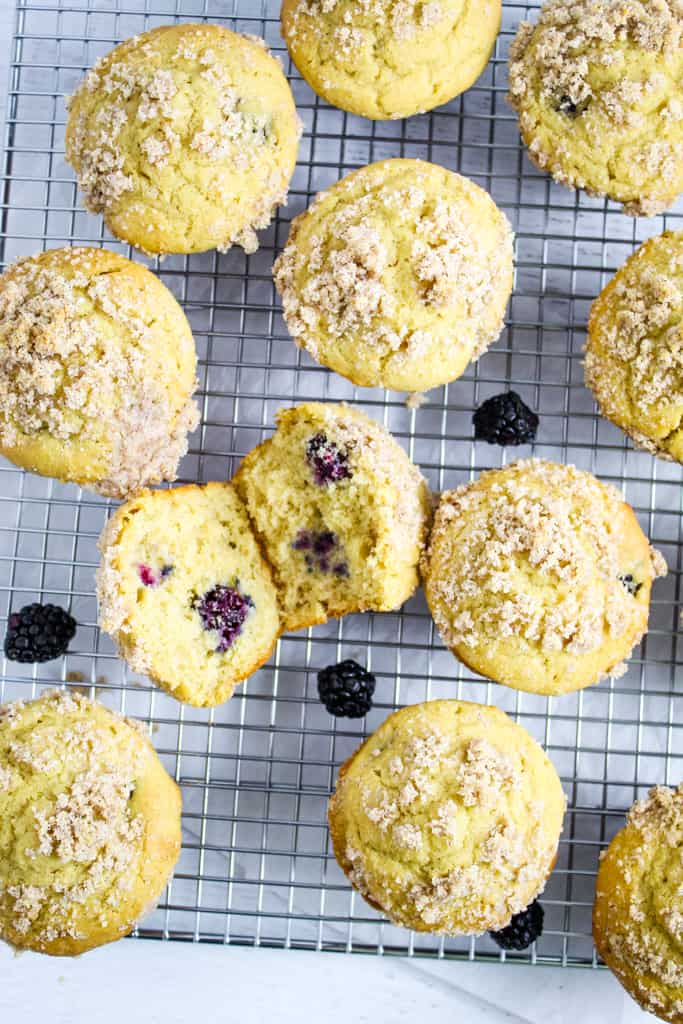
The real secret is not complicated. A balanced gluten-free flour blend, a little almond flour, room-temperature ingredients, and a 30-minute batter rest give these muffins the structure and moisture that gluten-free baking often misses. If blueberry muffins are your default, this blackberry version makes breakfast feel a little more special.
Recipe Snapshot
- Texture: Soft, moist, bakery-style crumb
- Flavor: Sweet-tart blackberry with cinnamon crumb topping
- Diet: Gluten-free with a dairy-free option
- Prep Time: 20 minutes
- Rest Time: 30 minutes
- Bake Time: 20–22 minutes
- Yield: 15 muffins
- Best Tip: Rest the batter before baking so the gluten-free flours hydrate fully.
Why You’ll Love These Gluten-Free Blackberry Muffins
Gluten-free muffins have a bad reputation for turning out dry, dense, or crumbly. These blackberry muffins are different. They’re soft, flavorful, and finished with a sweet crumb topping that makes them feel bakery-worthy without adding much extra work.
Here are 5 reasons you’ll love them:
Want our human-written content to rank above AI-generated garbage? Help us out by clicking this button!
- They bake up soft and tender. A short batter rest helps the gluten-free flours hydrate, giving the muffins a better texture.
- They’re full of juicy blackberry flavor. The berries add bright, sweet-tart pockets in every bite.
- The crumb topping makes them feel special. It adds a buttery, cinnamon-sweet finish without making the recipe complicated.
- They’re gluten-free without tasting “gluten-free.” The texture is sturdy, moist, and satisfying.
- They’re perfect for breakfast, brunch, or snacks. Make a batch and enjoy them throughout the week.
It’s natural to be skeptical. Many gluten-free muffin recipes promise a perfect bakery-style crumb, but end up with the wrong texture. I’ve been there; it took me several tries to get this recipe exactly right! Now, with this recipe, I can get the perfect crumb for my muffins every time.
The secret lies in the balance of ingredients, the mixing method, and one simple step many bakers skip: letting the batter rest before baking. That short rest gives the gluten-free flours time to hydrate, so the muffins rise better and hold together beautifully instead of turning crumbly or dense.
Save this recipe before blackberry season disappears: these muffins freeze beautifully for quick breakfasts and snacks.
Equipment for Blackberry Muffins
- Digital Food Scale
- Stand Mixer with Paddle Attachment
- Rubber Spatula
- Medium Mixing Bowl
- Handheld Mixer
- Two Muffin Tins
Ingredients You’ll Need for Gluten-Free Blackberry Muffins
Before we really get started, let’s make sure we have all the ingredients! While you probably already have a lot of them if you do a lot of gluten-free or dairy-free baking, it never hurts to have a handy list. If you need to pick up a few things at the grocery store, feel free to print or save the recipe card below.
Ingredients For Muffins:
- Gluten-Free Flour Mix
- Almond Flour
- Brown Sugar
- Baking Powder
- Baking Soda
- Xanthan Gum
- Salt
- Dairy-Free Butter
- Almond Milk
- Dairy-Free Sour Cream
- Eggs
- Pure Vanilla Extract
- Apple Cider Vinegar
- Blackberries
Ingredients for Crumb Topping
- Almond Flour
- Tapioca Powder
- Coconut Sugar
- Ground Cinnamon
- Salt
- Dairy-Free Butter
Key Ingredient Roles for Gluten-Free Blackberry Muffins
Curious about any of these ingredients? Each of them brings something unique to these muffins.
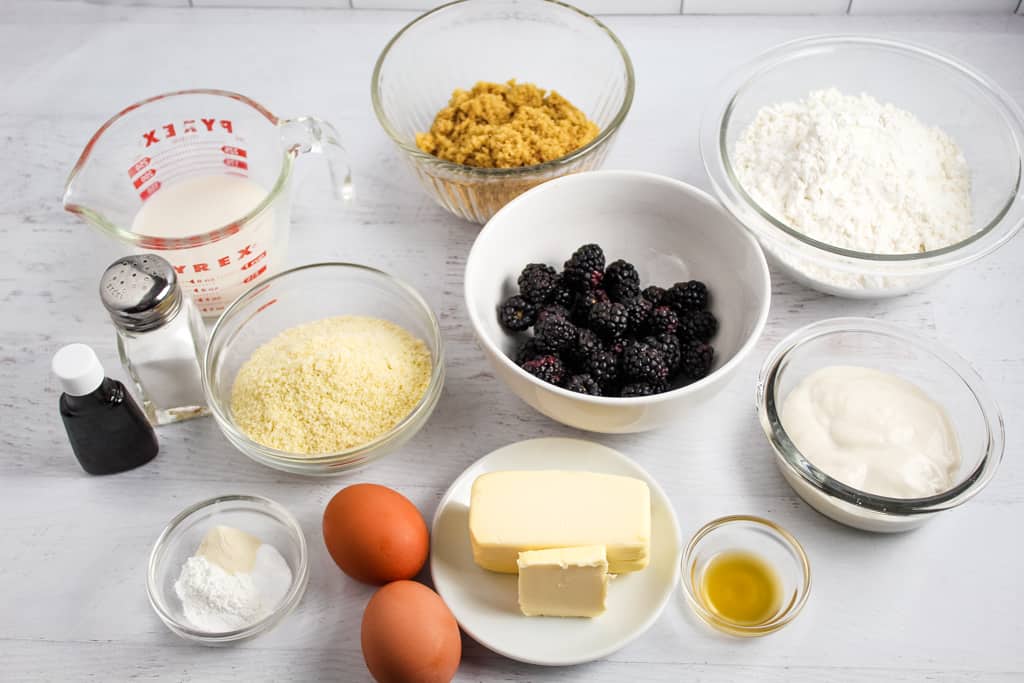
Gluten-Free Flour Mix
280 grams gluten-free flour mix (about 2 1/2 cups)
I like to use this recipe for gluten-free flour because it’s a workable mix of white rice flour, brown rice flour, tapioca, cornstarch, and potato flour. You may notice it doesn’t include xanthan gum, which is common in store-bought flour mixes, but that’s okay. We’ll add the xanthan gum separately.
Why a flour mix? It’s rare for “single-grain” gluten-free flours to include everything needed to replace the gluten in wheat flour. Gluten forms when two proteins in wheat are exposed to water. They combine to form a web that holds in moisture and supports the structure of baked goods. I’m going for the right blend of protein, carbohydrates, and dietary fiber to simulate the effects of gluten. So I’ll use a mix of flours and starches.
Almond Flour
80 grams almond flour (about 3/4 cup) for muffins
47 grams of almond (about 1/2 cup) flour for crumble topping
I originally called these “almond flour blackberry muffins” until someone pointed out that you can barely notice the almond flavor you’d expect from this flour. Which is fair, since it’s not even the majority of the flour in this recipe.
I like to add this flour because it includes a slightly higher protein content than other gluten-free flours. The USDA’s FoodData Central reports that 100 grams of almond flour contains 26.2 grams of protein. This makes almond flour one of the best at absorbing moisture, which helps achieve the right balance between “too dry” and “too gummy” in baked goods.
Incidentally, this is one major reason I’ll talk so often about the importance of using a digital food scale to get precise measurements for dry ingredients. Precision is important for getting the right texture in gluten-free baking!
Brown Sugar
150 grams brown sugar (about 3/4 cup)
If brown sugar seems to have a more robust sweet flavor than white granulated sugar, you aren’t fooling yourself. The brown color actually comes from a bit of molasses added to the sugar! When shopping for brown sugar, look at the ingredients list. If the ingredients have only two items, sugar and molasses, it’s genuine brown sugar.
Baking Powder
2 teaspoons baking powder
Baking powder is one of two chemical leavening agents that you’ll need for these muffins. Baking powder typically includes a weak base, such as a carbonate or bicarbonate, a weak acid, and a starch that prevents the two other components from reacting before it is added to the recipe. When mixed into the muffin batter, the base and acid react to produce the carbon dioxide bubbles that give the muffins a fluffier texture.
Baking Soda
1/2 teaspoon baking soda
Baking soda is another chemical leavening agent, consisting of pure sodium bicarbonate, that reacts with the acid in other ingredients to produce more carbon dioxide bubbles.
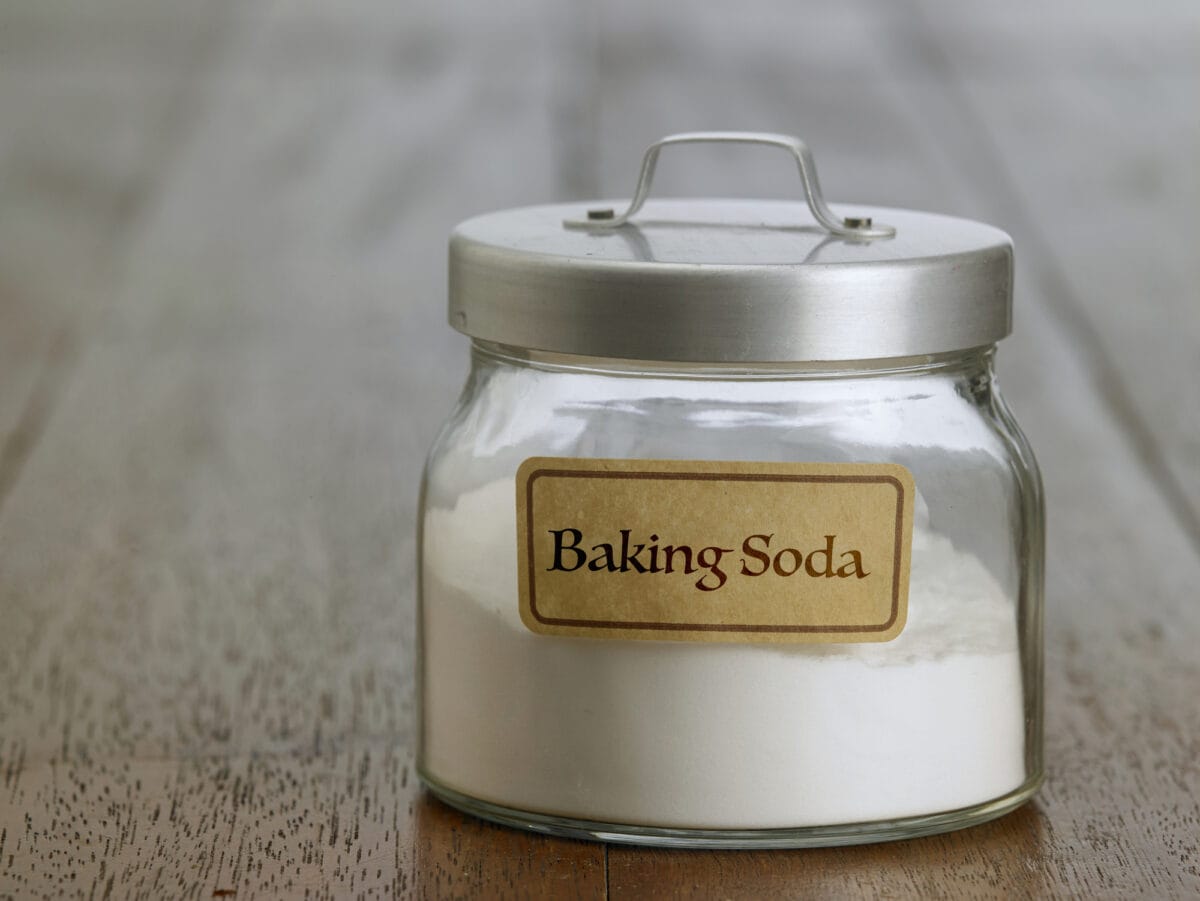
Note on baking soda: It is quite good at absorbing and neutralizing odors, so keeping an open container of baking soda in the refrigerator or sprinkling a little on a carpet is usually recommended for neutralizing most “stinky” smells. The downside is that the baking soda will usually have to be discarded after about a month if you use it for this purpose, and if it hasn’t eliminated the smell by then, your refrigerator likely needs a thorough cleaning.
How to tell if baking soda is still good: Add a little of the baking soda to a little vinegar. If it fizzes, the baking soda is still usable. Once opened, baking soda will keep longer if you store it in an airtight container.
Xanthan Gum
1/2 teaspoon xanthan gum
I know that’s not much xanthan gum, but you usually won’t need much for muffins. In gluten-free baked goods, xanthan gum is most often used to add elasticity and stickiness to batters.
Salt
1/4 teaspoon salt in muffins
1/8 teaspoon in crumbly topping
Salt supports many of the chemical reactions that give these muffins some flavor. In the topping, it balances the sweet flavors, though I like to limit it to 1/8 teaspoon to keep from overwhelming the sweetness.
Dairy-Free Butter
127 grams dairy-free butter (about 9 tablespoons) for muffins
2 tablespoons dairy-free butter for crumble topping
Dairy-free butter provides much of the fat these muffins need. For recipes like these muffins, I like to use stick butter. For dairy-free butter, Country Crock Plant Butter is my favorite.
For the crumble topping, the butter will provide something to mix the dry ingredients with, making it look “crumbly.”
Almond Milk
4.5 ounces almond milk (about 2/3 cup)
Almond milk is one of my favorite dairy-free milks for adding creamy moisture to baked goods. It may also add a little more nutty flavor to these muffins, though it rarely gets overwhelming.
Dairy-Free Sour Cream
140 grams sour cream (about 2/3 cup)
The dairy-free sour cream adds a bit more creaminess and a little of the acid that the chemical leavening agents need to react with.
Eggs
2 eggs
Eggs provide the binder needed to keep these muffins from falling apart after baking. They contain a protein that uncurls and binds with other ingredients to help hold the muffins together. The yolks also contain an emulsifier called lecithin that helps the fat and water mix together more thoroughly.
Pure Vanilla Extract
1 1/2 teaspoons pure vanilla extract
Vanilla extract enhances the flavor of baked goods with its sweet, aromatic notes. It can also have a slight bitter note due to its alcohol content, so it may not be pleasant to taste on its own. (Don’t worry, most of the alcohol will likely evaporate while the muffins are baking.)
When shopping for vanilla extract, look for brands that list only vanilla beans, water, and alcohol as ingredients. That way, you can be more confident that you’re buying genuine vanilla extract.
Did you somehow get your hands on some vanilla beans? It’s possible to make your own vanilla extract! In the video below, “Barefoot Contessa” shows us how to make her version of vanilla extract.
Apple Cider Vinegar
1 teaspoon apple cider vinegar
Apple cider vinegar contains most of the acid that the baking soda needs to react with. It is a little stronger-tasting than white vinegar, so it’s usually a good idea to use a little less to avoid overwhelming the flavor of your muffins.
Fresh Blackberries
1 cup fresh blackberries
Of course, the blackberries are the whole point! I like to use fresh blackberries for the flavor. When they’re in season, I might even go out to one of those “pick your own berries” farms near me to see if they have blackberries!
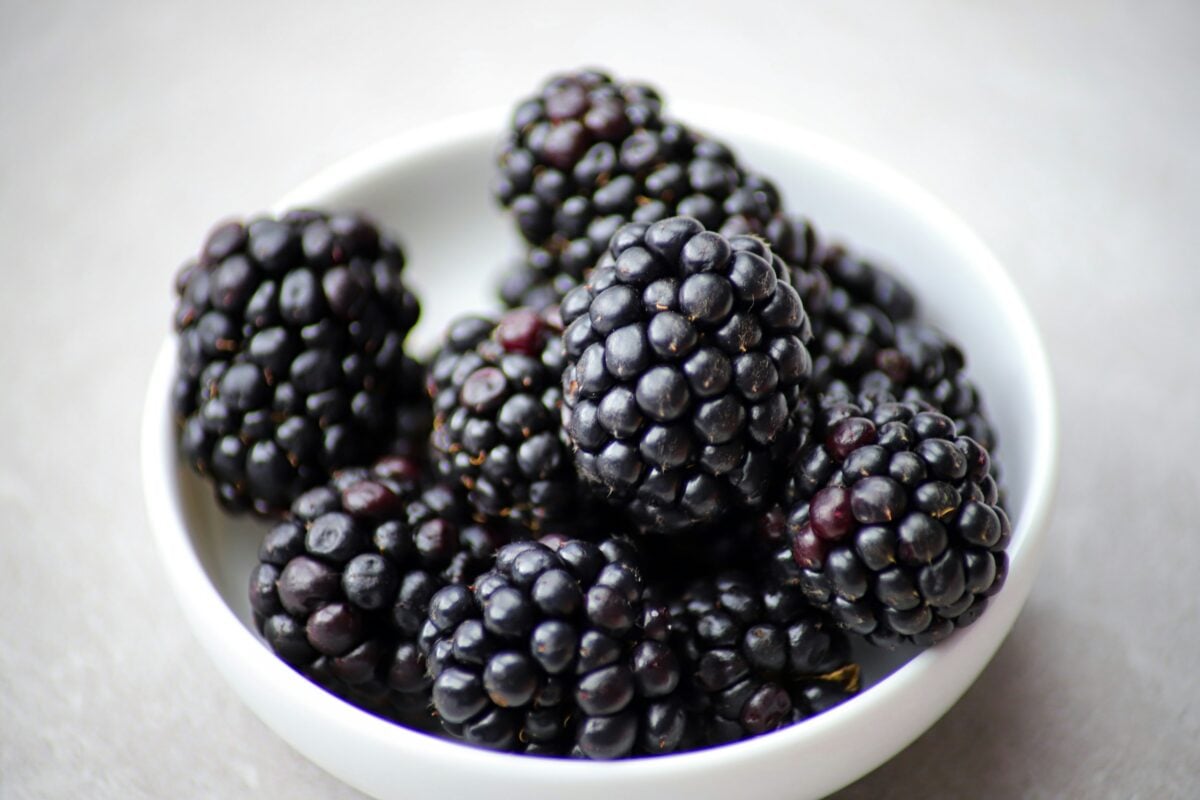
Can I Use Frozen Blackberries?
Yes, frozen blackberries can work, but do not thaw them first. Thawed berries release more juice, which can turn the batter purple and make the muffins gummy. Add frozen berries straight from the freezer and fold gently. You may need to add 1–3 extra minutes to the bake time.
Tapioca
32 grams tapioca starch/flour (about 1/4 cup)
You’ll sometimes see tapioca referred to as “tapioca flour.” However, it’s technically a type of starch derived from cassava root. Tapioca’s binding power can help keep the crumbly topping from completely falling apart and off the muffins.
Coconut Sugar
1/4 cup coconut sugar
I like coconut sugar because it adds sweetness and a light coconut flavor to the crumble you’ll sprinkle on top of the muffins.
Ground Cinnamon
1/2 teaspoon ground cinnamon
Cinnamon is a favorite for complementing the sweetness in desserts and snacks. It adds a slight sweet-spicy taste to the crumble that won’t overwhelm the berry flavor in the muffins.
Printable Gluten-Free Blackberry Muffins Recipe Card
Ingredients
Muffins
- 280 grams gluten free flour mix about 2 ½ cups
- 80 grams almond flour about ¾ cup
- 150 grams brown sugar about 2/3 cup
- 2 teaspoons baking powder
- ½ teaspoon baking soda
- ½ teaspoon xanthan gum
- ¼ teaspoon salt
- 127 grams dairy free butter 9 Tablespoons, softened
- 4.5 ounces almond milk about 2/3 cup
- 140 grams dairy free sour cream about 2/3 cup
- 2 eggs
- 1 ½ teaspoons pure vanilla extract
- 1 teaspoon apple cider vinegar
- 1 cup blackberries washed and patted dry
Crumb topping
- 47 grams almond flour about 1/2 cup
- 32 grams tapioca about 1/4 cup
- 1/4 cup coconut sugar
- 1/2 teaspoon ground cinnamon
- 1/8 teaspoon salt
- 2 Tablespoons butter cold
Instructions
- Bring all ingredients up to room temperature.
- In the bowl of the stand mixer, add the gluten-free flour mix, almond flour, brown sugar, baking powder, baking soda, xanthan gum, and salt. Mix with the paddle attachment for 30 seconds or until combined.
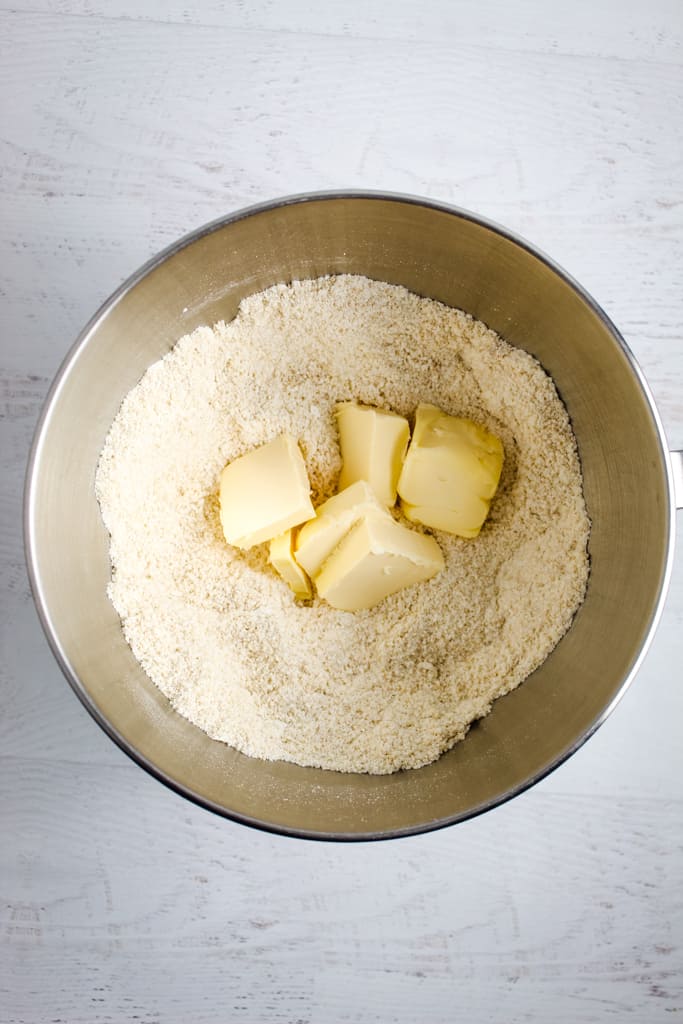
- Add the butter and mix for 45 seconds, scraping down the butter occasionally, until mixture looks crumbly.
- In a small bowl or measuring cup, mix the almond milk, sour cream, eggs, vanilla extract and apple cider vinegar until combined.
- With the mixer on low, slowly add the liquid ingredients to the dry ingredients. Mix until combined.
- Scrape down the bowl and turn the speed up to medium. Mix for 2 minutes.
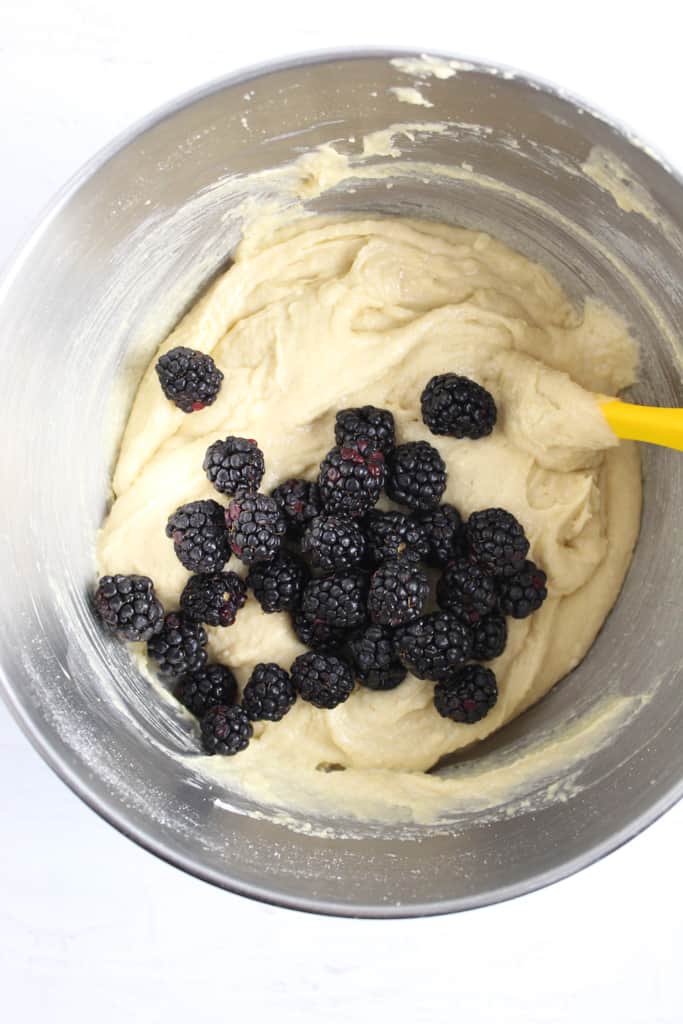
- Gently fold the blackberries into the batter.
- Set batter aside to rest for 30 minutes.
- Toward the end of the rest time, preheat the oven to 375 degrees Fahrenheit (190 degrees Celsius. Spray each cup of a 12-cup muffin tin and 3 cups of another muffin tin with cooking spray.
- Mix almond flour, tapioca, coconut sugar, cinnamon, salt, and butter until a crumbly texture forms.
- Portion the batter into the cups, filling each to the top. Sprinkle each muffin with 2 teaspoons of crumb topping.
- Bake for 20-22 minutes or until toothpick test done.
- Cool in the pan on a wire rack for 10 minutes. Remove from pan.
- Serve warm or store in an airtight container on the counter.
Notes
- This recipe was created using our gluten free flour mix – other mixes may work, but they haven’t been tested.
- Make sure ingredients are at room temperature.
- Mix batter well for the full 2 minutes.
- Allow the batter to rest for 30 minutes before baking for the best height and texture on the muffins.
Nutrition
If these muffins turned out soft and fluffy for you, please comment and leave a star rating below. It helps other gluten-free bakers know the recipe works.
6 Tips for Success
Gluten-free muffins are simple once you know what makes them different. These quick tips will help you get soft, tender muffins instead of dry, dense, or gummy ones.
- Let the batter rest.
This is one of the most important steps. Resting gives the gluten-free flours time to absorb moisture, which helps the muffins bake up softer and hold together better. - Use room-temperature ingredients.
Room-temperature eggs, milk, and sour cream mix more smoothly into the batter and help create a better texture. - Measure the flour carefully.
Too much gluten-free flour can make muffins dry or heavy. For the best results, use a kitchen scale or spoon the flour into the measuring cup and level it off. - Fold in the blackberries gently.
Blackberries are delicate and can streak the batter if overmixed. Fold them in slowly, just until they are evenly distributed. - Do not overbake.
Gluten-free muffins can dry out quickly. Pull them from the oven when the tops are set, and a toothpick comes out clean or with a few moist crumbs. - Let the muffins cool before serving.
The crumb continues to set as the muffins cool. Giving them a little time helps them hold together better.
How to Make Gluten-Free Blackberry Muffins
Now for the fun part: Actually making the gluten-free blackberry muffins. (Well, actually, the fun part is eating them. But making them is not so bad, too.)
Step One: Bring Ingredients Up to Room Temperature
I’ll start by bringing all the ingredients up to room temperature. It’s easiest to measure them out, and then cover them and leave them on the counter for a bit.
This helps the ingredients mix more smoothly. It may also help with some of the necessary chemical reactions in the batter, such as chemical leavening agents reacting with acids to produce carbon dioxide bubbles.
Step Two: Mix the Dry Ingredients
In the stand mixer’s bowl, add the gluten-free flour mix, almond flour, brown sugar, baking powder, baking soda, xanthan gum, and salt. Mix with the paddle attachment for 30 seconds or until combined.
Step Three: Add Butter
Add the butter and mix for 45 seconds, occasionally scraping down the butter, until the mixture looks crumbly.
Step Four: Mix Liquid Ingredients
In a medium-sized mixing bowl, use a handheld mixer to combine the almond milk, sour cream, eggs, vanilla extract, and apple cider vinegar.
Step Five: Add Liquid Ingredients to Dry Ingredients
Add the liquid ingredients to the dry ingredients in the stand mixer’s mixing bowl. Adjust the mixer to the low setting and mix until fully combined. Stop the mixer and scrape it down, then mix again for 2 minutes.
Step Six: Gently Add the Blackberries
The key with delicate blackberries and any delicate fruit is to gently fold them into the batter. You don’t want to crush the berries, so use a rubber spatula and gently fold them just until they’re mixed in.
Step Seven: Let Batter Rest
Set the batter aside and cover it with some plastic wrap. Let it rest for 30 minutes. Make sure you keep young children and pets away from it while it’s resting.
Step Eight: Preheat Oven and Prepare Muffin Tin
While the batter is resting, preheat the oven to 375 degrees Fahrenheit (190 degrees Celsius). Spray each cup of a 12-cup muffin tin and 3 cups of another pan with cooking spray.
Step Nine: Make Crumbly Topping
Mix almond flour, tapioca, coconut sugar, cinnamon, salt, and butter until a crumbly texture forms.
Step Ten: Add Batter to Muffin Tin Cups
Portion the batter into the cups, filling each to the top.
Step Eleven: Sprinkle Crumbly Topping Over Muffins
Sprinkle 2 teaspoons of crumb topping over the top of each muffin
Step Twelve: Bake Muffins
Place the muffins in the preheated oven. Bake for 20-22 minutes until a toothpick inserted into the center of a muffin comes out clean.
Step Thirteen: Cool Muffins
Cool in the muffin tins for 10 minutes. Remove from the muffin tins.
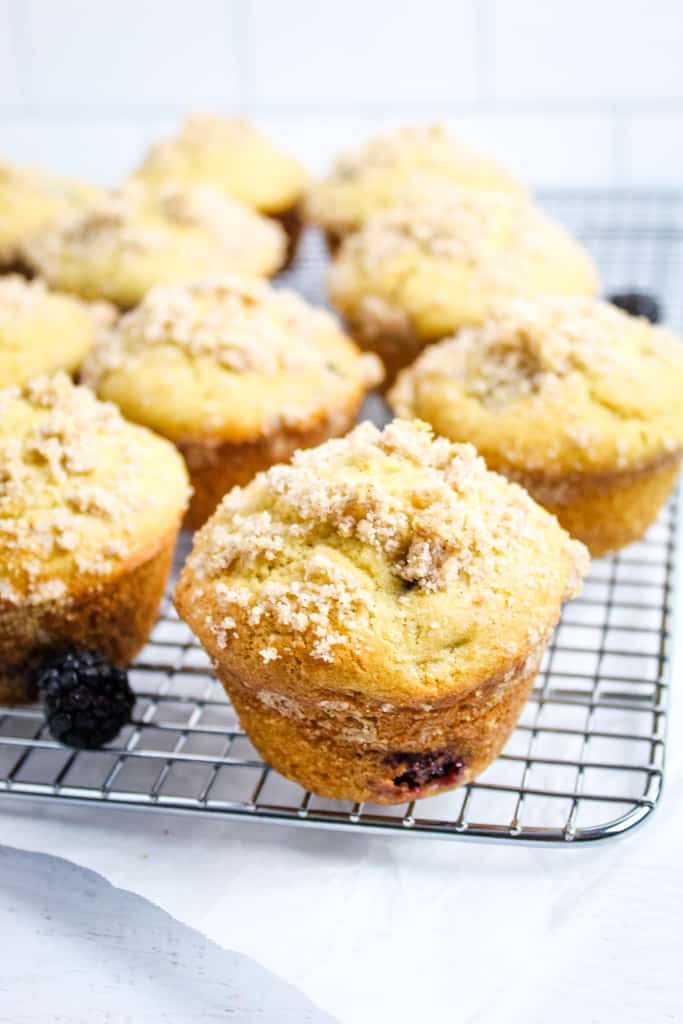
Step Fourteen: Serve Muffins or Store in an Airtight Container
I like to serve these muffins while they’re still a little warm. They can also be stored in an airtight container on the counter for 2-3 days.
Storage Tips
Store cooled blackberry muffins in an airtight container at room temperature for up to 2 days. For longer storage, keep them in the refrigerator for up to 5 days.
To freeze, place the cooled muffins in a freezer-safe bag or container and freeze for up to 3 months. Thaw at room temperature, or warm one muffin in the microwave for 15–20 seconds.
For the best texture, let the muffins cool completely before storing, so extra steam does not make the crumb topping soft.
Substitutions for Gluten-Free Blackberry Muffins
My favorite part: Most berries that are somewhat similar to blackberries will work in these muffins. Blackberries bring a nice sweet-tart flavor, and I also like to use raspberries, blueberries, and even boysenberries when I can get my hands on some.
You can use dairy milk, butter, and sour cream in this recipe instead of the dairy-free alternatives if you don’t mind the muffins not being dairy-free. If you still want to use a dairy-free milk, coconut milk can work almost like almond milk in a recipe.
Don’t want to use xanthan gum? Psyllium husk powder makes the best 1:1 replacement for xanthan gum. Here’s a handy guide to replacing xanthan gum in gluten-free baking.
Problems & Quick Fixes
Gluten-free muffins can be a little less forgiving than traditional muffins, but most problems are easy to prevent. Here are the most common issues and how to fix them before they happen.
| Problem | Quick Fix |
|---|---|
| Muffins turned out dry | Measure the flour carefully and pull the muffins when a toothpick comes out with a few moist crumbs. |
| Muffins are dense or heavy | Rest the batter for the full 30 minutes and mix only until combined. |
| Muffins are gummy in the middle | Bake until the tops are set and avoid adding extra moisture from wet berries. |
| Blackberries sank to the bottom | Pat fresh blackberries dry before folding them into the batter. |
| Crumb topping melted | Use cold butter and keep the topping crumbly before sprinkling it on the muffins. |
| The batter turned purple | Fold the blackberries in gently at the end and stop as soon as they are evenly distributed. |
FAQ for This Gluten-Free Blackberry Muffin Recipe
While I think this recipe is relatively easy to make, we do get questions sometimes! I did my best to answer some of the most common questions here. If you think of one we haven’t answered yet, feel free to ask in our comments section, and we’ll do our best to answer.
Why did my muffins turn out dry?
Muffins can turn out dry if too much flour is added, the wrong type of gluten-free flour is used, or they are overbaked. It’s also possible that too little liquid was added.
I insist on measuring my flour in grams because precision is important when adding it. Flour can vary in density, which affects how much of it can fit into a measuring cup. So it’s important to use a digital food scale to avoid muffins turning out too dry or too gummy.
The number one thing to remember about gluten-free flours is that they aren’t always easy to substitute for one another. They can vary in protein and dietary fiber content, which affects their ability to absorb moisture. If you try replacing the gluten-free flour mix with a flour that’s notorious for absorbing moisture, like amaranth flour, your muffins can come out dry!
It’s also important to add enough liquid to ensure the flour has moisture to absorb. I’ve seen people skimp on the almond milk because they didn’t like it, and then their muffins came out dry. If that’s the case, use dairy milk or coconut milk!
Why are my muffins too dense or heavy?
Muffins can come out dense if the batter was overmixed or the leavening agents had lost their effectiveness. I know it’s a delicate balance when mixing. You want all the dry ingredients to be thoroughly mixed with the wet ingredients. Overmixing it can also cause the “binder” proteins, like the ones in eggs, to over-extend themselves and lose effectiveness. It can also cause air bubbles to pop, which makes the muffins less fluffy.
It is also possible for baking soda to absorb too much of the ambient “odors” and react to them. This causes it to lose effectiveness. Again, you can make sure the baking soda hasn’t lost effectiveness by adding a little to some vinegar. If it fizzes, it’s still good.
Why did my blackberries sink to the bottom?
Blackberries can sink to the bottom of the muffins if they’re damp. If you rinse them before adding to the batter, gently pat them dry with some paper towels. Make sure they’re completely dry before adding to the batter.
Why are my muffins gummy in the middle?
Gummy muffins might have been underbaked, or they had too much liquid. The blackberries might have also been damp or especially juicy. Very often, a few more minutes in the oven can help them become less gummy. They may also need to cool in the muffin tins for a little bit longer to let the centers set.
Why is the crumb topping melting instead of staying crumbly?
This usually happens if the butter is too soft or the topping is overmixed. The topping should look crumbly before it goes on the muffins. If needed, chill it for a few minutes before sprinkling it over the batter.
Why do my blackberries make the batter purple or streaky?
Blackberries are more delicate than blueberries and can break apart easily during mixing. Fold them in very gently so they stay more intact. A little streaking is normal and does not affect the flavor.
Can I make the muffin batter ahead of time?
I don’t recommend making the batter too far ahead because the leavening starts working once the wet and dry ingredients are mixed. For the best rise and texture, let the batter rest for the recommended 30 minutes, then bake right away.
Other Berry Recipes You May Like
Did you like these muffins? If so, you might also like these additional berry recipes!
- Gluten-Free Strawberry Shortcake
- Almond Flour Blueberry Muffins
- Gluten-Free Blueberry Cake
- Gluten-Free Blackberry Scones
- Gluten-Free Blackberry Cobbler
- Almond Flour Cranberry Cookies
Whether you’re baking with fresh summer berries or frozen fruit from the freezer, these recipes are sweet, simple ways to keep the berry baking going.
Ready to Bake These Gluten-Free Blackberry Muffins?
Did you like these muffins? Do you have any questions or suggestions? Feel free to let us know in the comments section, and don’t forget to rate this recipe!