Need a gluten-free Bisquick substitute you can make in minutes and without xanthan gum? This homemade baking mix is cheaper than store-bought, easy to keep on hand, and works beautifully in biscuits, pancakes, waffles, and more.
Instead of relying on a one-size-fits-all binder, this mix lets you choose the best gum or substitute for each recipe, which gives you more control over texture and results. Once you make one batch, you’ll have a flexible gluten-free shortcut ready anytime a craving hits.
Table of Contents
Why This Recipe for Gluten-Free Imitation Bisquick?
I know you’ve probably seen lots of recipes for gluten-free imitation Bisquick just on the first page of search results. What makes this one different?
The most important thing: This recipe gives you better control over your gluten-free baking! With no Xanthan gum, you get to choose any substitute you prefer if the recipe you’re following calls for one of the most common gluten replacements.
This recipe keeps it simple with seven gluten-free ingredients you can easily combine in your food processor. I like to use my larger food processor when I need to double or triple this recipe for heavy-duty baking. No worries if you have a smaller one, though. You may just need to split it into batches if you’re making a lot of it.
Want our human-written content to rank above AI-generated garbage? Help us out by clicking this button!
Equipment Needed for Gluten-Free Imitation Bisquick
One thing to remember about making gluten-free recipes is that they can be finicky about the amount of dry ingredients you add! So you’ll need a way to measure them to the nearest gram, an easy way to mix this imitation Bisquick thoroughly, and a way to store it.
These are my go-to items for making this GF bisquick mix:
Ingredients for Gluten-Free Imitation Bisquick
If you compare the ingredients to the original Bisquick (the Betty Crocker version), you’ll notice this ingredient list is rather simple:
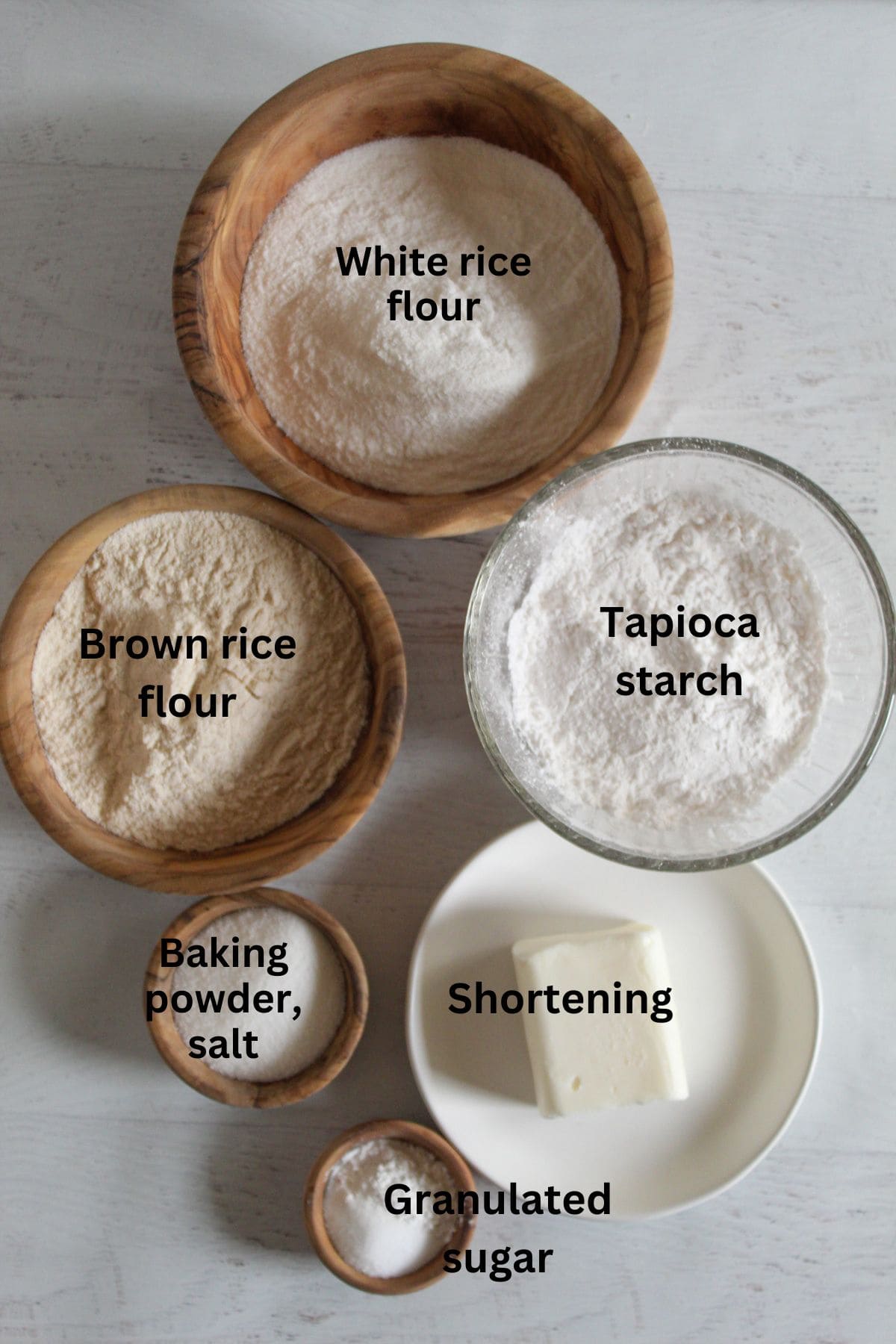
- Brown rice flour
- White rice flour
- Tapioca starch
- Sugar
- Baking powder
- Salt
- Shortening
About These Ingredients for Gluten-Free Imitation Bisquick
Why these ingredients? Well, in gluten-free baking, you generally need a replacement for flour made from grains that produce gluten when added to batter or dough, such as ordinary wheat flour. Each of these ingredients adds something that can get the job done.
Brown Rice Flour
155 grams brown rice flour (about 1 cup)
Brown rice flour can add a slightly grittier texture to the mix, making it suitable for baked goods like slightly denser biscuits that are meant to have some substance.
White Rice Flour
175 grams white rice flour (about 1 cup)
White rice flour balances the brown rice flour with a slightly lighter and more delicate texture.
What to remember about using white rice flour in baking: White rice flour doesn’t absorb as much moisture as some gluten-free wheat flour substitutes. So if you use it on its own in a recipe, you may have to adjust the amounts of liquid ingredients to suit.
Tapioca Starch
120 grams tapioca starch (about 1 cup)
Tapioca starch adds binding properties and a chewier texture to many baked goods, such as breads and pastries. Using it in a mix that also includes rice flours improves that mix’s moisture retention.
Sugar
30 grams sugar (about 2 tablespoons)
Sugar adds the slight bit of sweetness that Bisquick is known for.
Baking Powder
1 1/2 tablespoons baking powder
Baking powder is a common chemical leavening that uses a chemical reaction with other ingredients in batter or dough to produce carbon dioxide bubbles. The carbon dioxide bubbles help give your baked goods the texture you want.
Salt
1 teaspoon salt
A small amount of salt adds flavor to many baked goods without overdoing it with saltiness.
Solid Vegetable Shortening
1/2 cup solid vegetable shortening
Solid vegetable shortening is a hydrogenated vegetable oil that is solid at room temperature. It is typically used as a substitute when a recipe calls for butter or lard. Crisco is one common example of solid vegetable shortening.
Printable Gluten-Free Imitation Bisquick Recipe Card
Ingredients
- 155 grams brown rice flour about 1 cup
- 175 grams white rice flour about 1 cup
- 120 grams tapioca starch about 1 cup
- 30 grams granulated sugar about 2 Tablespoons
- 1 1/2 Tablespoons baking powder
- 1 teaspoon salt
- ½ cup solid vegetable shortening
Instructions
- Place white rice flour, brown rice flour, tapioca starch, sugar, baking powder, and salt in the bowl of a food processor. Pulse about 5 times to combine.
- Add the shortening. Pulse 5-10 times to combine. No large pieces of shortening should remain.
- Store mix in an airtight container at room temperature for up to 6 weeks.
Nutrition
Did you make and love this recipe? Give it your review and rating below! And make sure to follow me on Instagram, Pinterest, and Facebook , too!
Step-by-Step Guide to Making Gluten-Free Imitation Bisquick
Because this imitation Bisquick is so easy and quick to make, we can just jump right into it once we have all the ingredients.
Step One: Check for Accurate Measurements
It’s hard to overstate the importance of getting accurate measurements for the dry ingredients when making a gluten-free recipe. It affects the variables that can impact the density and texture of the finished baked good. Use the food scale to measure the brown rice flour, white rice flour, tapioca starch, and granulated sugar.
Step Two: Mix Dry Ingredients in Food Processor
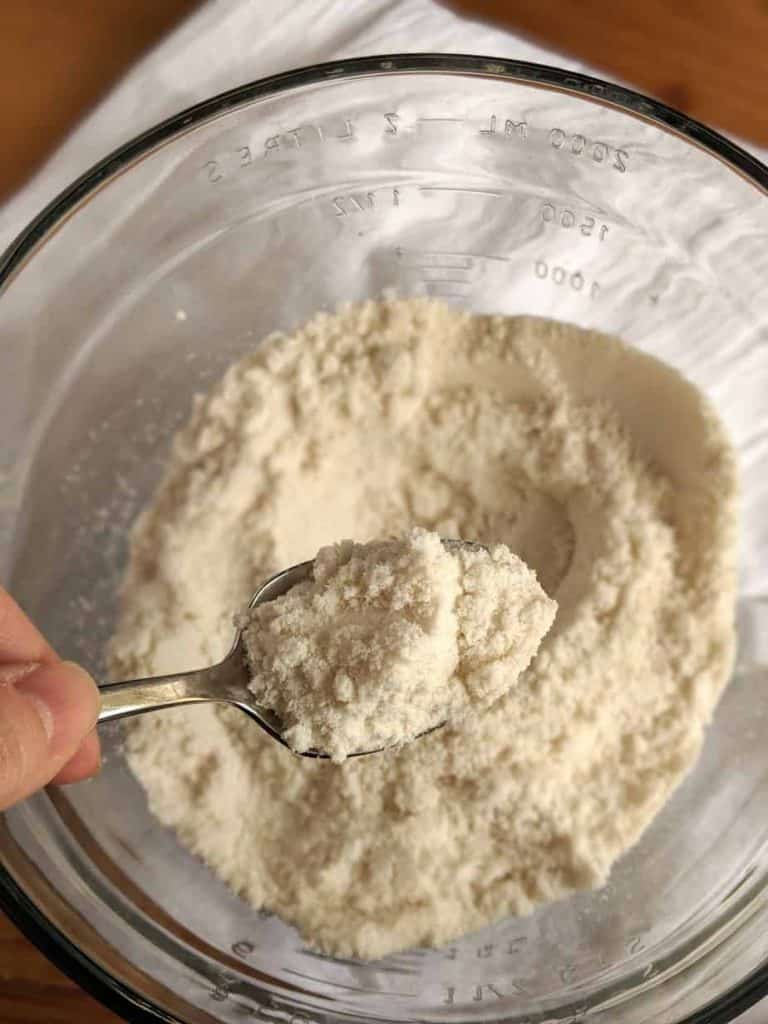
Place white rice flour, brown rice flour, tapioca starch, sugar, baking powder, and salt in the bowl of a food processor. Pulse about 5 times to combine.
Step Three: Add Solid Vegetable Shortening
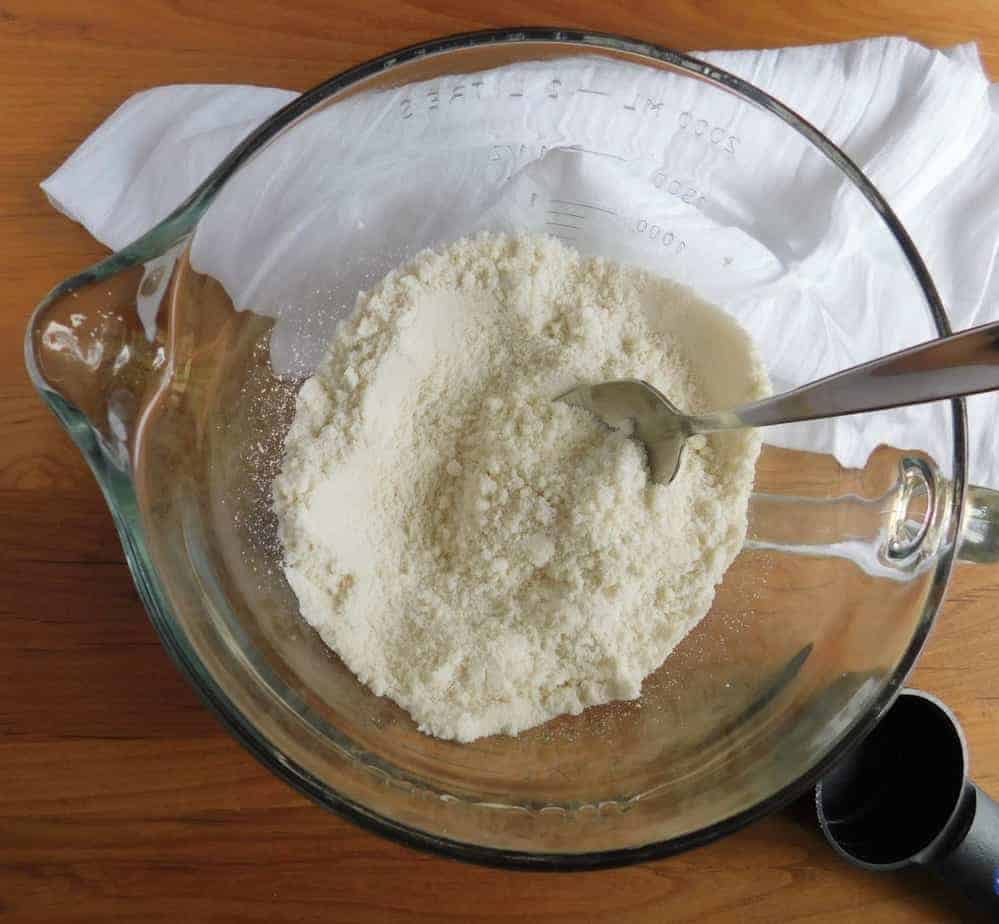
Add the solid vegetable shortening to the dry ingredient mix. Pulse until no large chunks of vegetable shortening remain. This can take 5 to 10 pulses.
Step Four: Use or Store Imitation Bisquick
Use the imitation Bisquick in your baking recipes. It can be stored in an airtight container at room temperature for up to 6 weeks. You can also store it in the refrigerator or freezer for up to 2 months and return it to room temperature before using it in a recipe.
Note about using it in recipes: I don’t necessarily recommend using this imitation Bisquick as a flour substitute. However, if you use it in a recipe that doesn’t explicitly call for Bisquick, you will likely have to reduce the amount of sugar, salt, baking powder, and fats to suit.
Substitutions for Gluten-Free Imitation Bisquick Recipe
If you’re out of tapioca starch, you can use cornstarch, arrowroot, or potato starch. I wouldn’t recommend potato flour as a replacement for tapioca starch, since making potato flour uses a different process than making potato starch.
Sorghum flour and millet flour make good substitutions for the brown rice flour.
Superfine sweet rice flour can make a good substitute for white rice flour. So can sorghum or millet flour, plus a little extra starch.
I haven’t really found a good alternative to solid vegetable shortening. Coconut oil might work, but it doesn’t always solidify at room temperature and adds a slight coconut flavor to any recipe it’s added to, so I’d be cautious about using it.
FAQs for Gluten-Free Imitation Bisquick
While making this imitation Bisquick should be fairly straightforward, we do sometimes get questions, as you can see in our comments section! I tried to answer the most common ones here. If you think of one we haven’t answered here, feel free to ask, and we’ll do our best to answer as soon as possible.
Why should I avoid Xanthan gum?
That’s a fair question, considering that so many gluten-free products and ingredients use it as a gluten alternative! However, it might be necessary to avoid it for health reasons.
A University of Michigan-backed study shows that it can alter the gut microbiome with uncertain effects on gut health.
So I’ve been steering away from Xanthan gum. That includes not only finding substitutes for Xanthan gum in my baking, but also coming up with my own gluten-free recipes like this Bisquick recipe that doesn’t include Xanthan gum.
There’s no need to panic if a recipe calls for Xanthan gum! If you’re leery too, just grab one of these usually handy-to-obtain alternatives.
If I’m using this in a recipe, can I add Xanthan gum or an alternative separately?
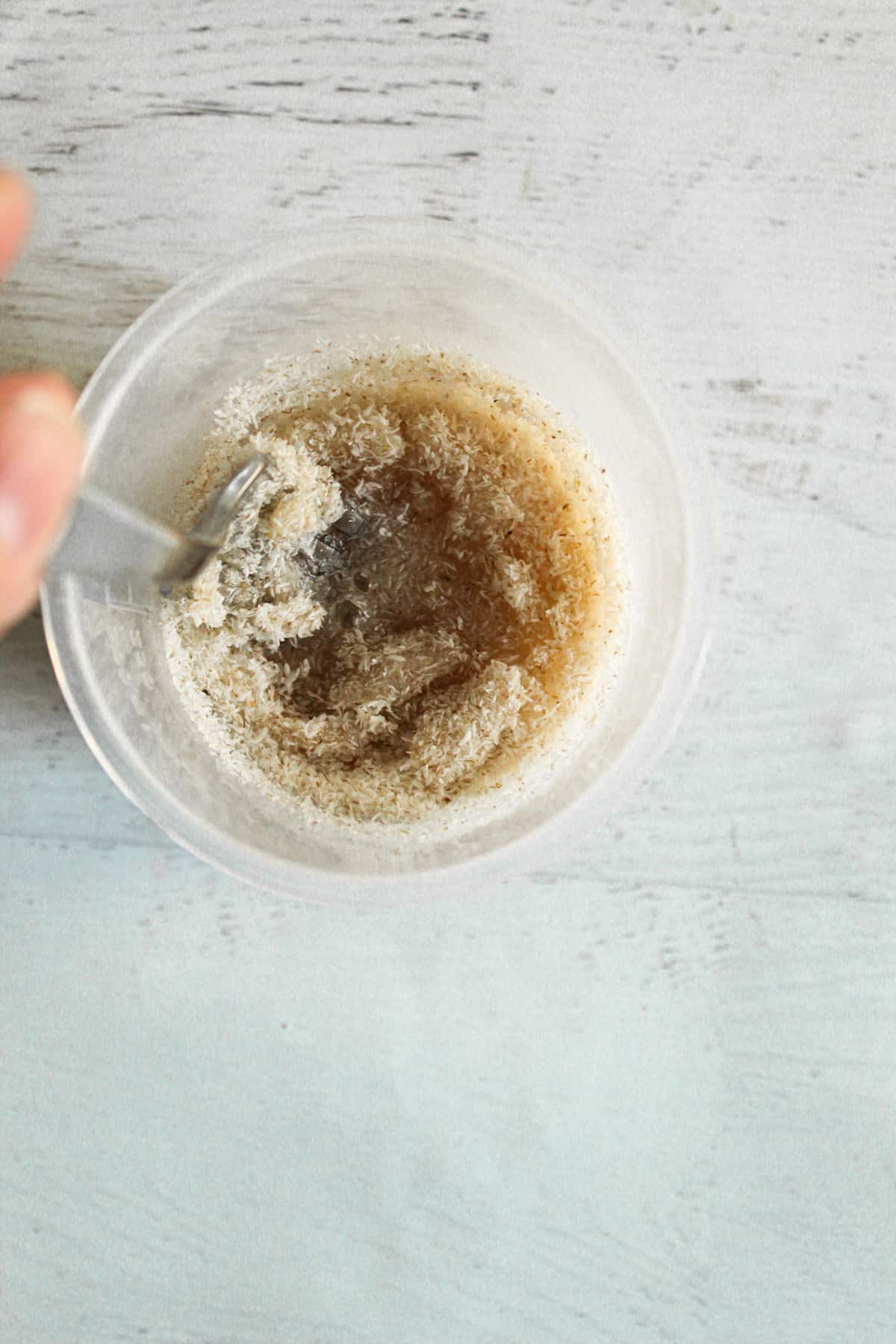
If the recipe calls for it, sure! If you want an alternative to Xanthan gum, I think psyllium husk powder works well.
What’s a good recipe to use this for?
Of course, I like to use it to make gluten-free biscuits! You can actually use this imitation Bisquick to make a decent variety of biscuits, though, of course, some of them are best eaten the same day that they’re made.
I also like using it for pancakes, dumplings, shortcake, and anything else I’d normally use Bisquick for!
What could I use if my food processor doesn’t work?
Before it occurred to me to use my food processor, I had gotten good results with a pastry cutter and a fork. The important thing is to mix the solid vegetable shortening in until no large clumps remain in the mix.
Is this imitation Bisquick cheaper than store-bought?
It can be if you aren’t overspending on the “fancy” brands of rice flour or any substitutions. Somebody told us that arrowroot can be expensive, which is fair!
More Gluten-Free Bread Recipes to Try
If you’re looking for more gluten-free baking ideas, these bread recipes are great next picks for everything from breakfast and dinner to snacks and sandwiches.
- Quick Gluten-Free Bisquick Biscuits
- Gluten-Free Sour Cream Biscuits
- Gluten-Free Hawaiian Bread
- Gluten-Free Pita Bread Recipe
- Buttery Gluten-Free Crescent Rolls
From soft rolls to flaky biscuits and versatile flatbreads, these recipes make it easy to keep your kitchen stocked with more homemade gluten-free favorites.
Ready to Make Your Own Gluten-Free Bisquick?
Make a batch, store it for later, and come back to let me know in the comments what you made first with your homemade gluten-free Bisquick mix.